Hosni Mubarak's Sentencing on June 2, 2012
2012 · Cairo, Egypt
Former Egyptian President Hosni Mubarak was sentenced to life imprisonment for his role in the killing of protesters during the 2011 Egyptian revolution.
June 3, 2013
The trial of former Egyptian President Hosni Mubarak resumed in Cairo, where he faced charges related to the killing of protesters during the 2011 Egyptian revolution.
Cairo, Egypt | Egyptian Judiciary
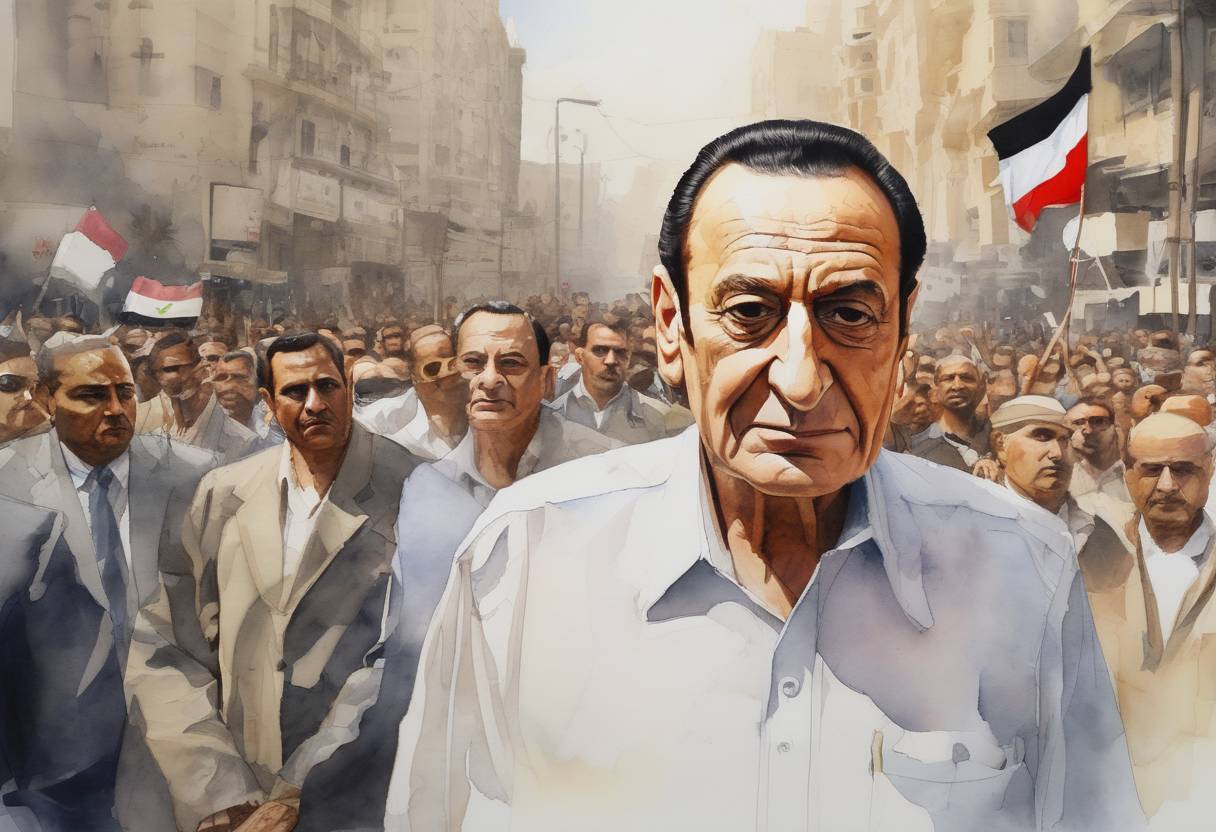
On June 3, 2013, the trial of former Egyptian President Hosni Mubarak resumed in Cairo. This trial was a significant event in the aftermath of the 2011 Egyptian revolution, during which Mubarak faced charges related to the killing of protesters.
Hosni Mubarak served as the President of Egypt from 1981 until his resignation on February 11, 2011, following 18 days of mass protests during the Egyptian revolution. The revolution was part of the wider Arab Spring movement that swept across the Middle East, demanding political reform and the end of autocratic regimes.
Mubarak was charged with complicity in the killing of hundreds of protesters during the 2011 uprising. The charges were serious, as they implicated him in the violent crackdown on demonstrators who were calling for democratic reforms and an end to his nearly 30-year rule.
The trial initially began in August 2011, marking the first time an Arab leader was tried in a court of law by his own people. However, the proceedings were fraught with delays and legal complexities. On June 3, 2013, the trial resumed after a retrial was ordered earlier that year.
The trial of Hosni Mubarak was emblematic of the broader struggles in post-revolutionary Egypt. It highlighted the challenges of transitioning from autocratic rule to a more democratic system and the difficulties in achieving justice for past abuses.
In summary, the resumption of Hosni Mubarak’s trial on June 3, 2013, was a pivotal moment in Egypt’s post-revolutionary history, reflecting the complexities and challenges of seeking justice in the wake of authoritarian rule.
Source: www.theguardian.com