Tajikistan's Declaration of Independence
1991 · Dushanbe, Tajikistan
Tajikistan declared its independence from the Soviet Union, becoming a sovereign nation.
September 1, 1991
Uzbekistan declares independence from the Soviet Union, marking a significant step in the dissolution of the Soviet Union.
Tashkent, Uzbekistan | Uzbek Government
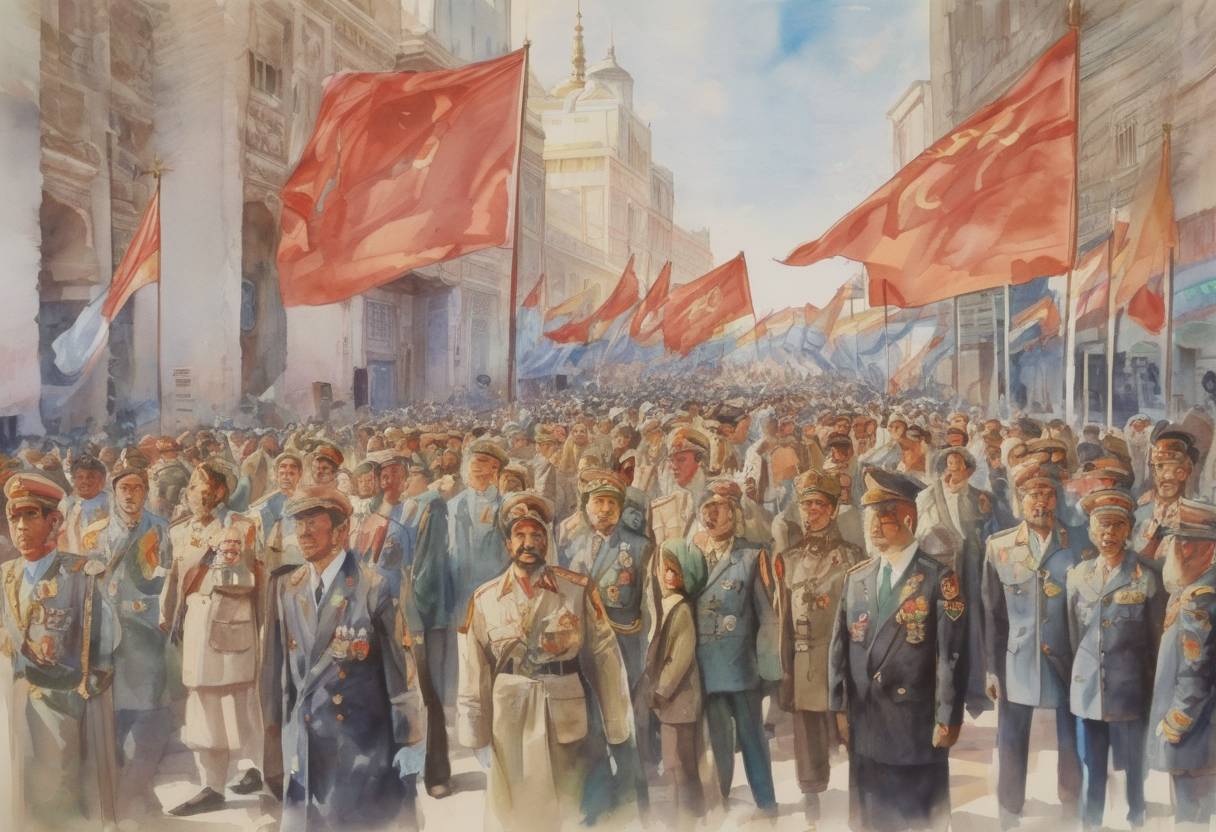
On September 1, 1991, Uzbekistan declared its independence from the Soviet Union, marking a pivotal moment in the dissolution of the Soviet Union and the reconfiguration of Central Asia’s political landscape.
The Soviet Union, established in 1922, was a federal socialist state composed of multiple republics, including Uzbekistan, which became a Soviet Socialist Republic in 1924. Throughout the 20th century, the Soviet Union maintained a centralized control over its republics, implementing policies that often suppressed local cultures and economies.
The late 1980s and early 1990s were characterized by significant political and economic turmoil within the Soviet Union. Under the leadership of Mikhail Gorbachev, policies such as glasnost (openness) and perestroika (restructuring) were introduced in an attempt to reform the Soviet system. However, these reforms inadvertently accelerated demands for greater autonomy and independence among the Soviet republics.
Rise of National Movements: Throughout the 1980s, national movements gained momentum in many Soviet republics, including Uzbekistan. These movements called for greater cultural recognition, economic autonomy, and political independence.
Failed Coup Attempt: In August 1991, a failed coup by hardline members of the Communist Party against Gorbachev further destabilized the Soviet Union. The coup’s failure weakened the central Soviet government and emboldened independence movements across the republics.
Declaration of Independence: On September 1, 1991, Uzbekistan’s Supreme Soviet declared the country’s independence from the Soviet Union. This declaration was part of a broader wave of independence declarations by Soviet republics during this period.
International Recognition: Uzbekistan’s independence was quickly recognized by the international community. The United Nations admitted Uzbekistan as a member state on March 2, 1992.
Economic and Political Transition: Post-independence, Uzbekistan faced the challenge of transitioning from a centrally planned economy to a market-oriented one. Politically, the country established a presidential system, with Islam Karimov becoming its first president.
Cultural Renaissance: Independence allowed for a revival of Uzbek culture, language, and traditions, which had been suppressed under Soviet rule.
Regional Impact: Uzbekistan’s independence was part of the larger dissolution of the Soviet Union, which officially ceased to exist on December 26, 1991. This event reshaped the geopolitical landscape of Eurasia and led to the emergence of 15 independent republics.
Uzbekistan’s declaration of independence was a significant step in the broader process of the Soviet Union’s dissolution, reflecting the widespread desire for self-determination and national sovereignty among its constituent republics.
Source: en.wikipedia.org