The Moore, Oklahoma Tornado of May 20, 2013
2013 · Moore, United States
A massive tornado strikes Moore, Oklahoma, causing widespread destruction and resulting in 24 fatalities.
June 8, 1966
Topeka, Kansas is the site of the first tornado to be rated F5 on the Fujita scale, causing significant damage and loss of life.
Topeka, United States | National Weather Service
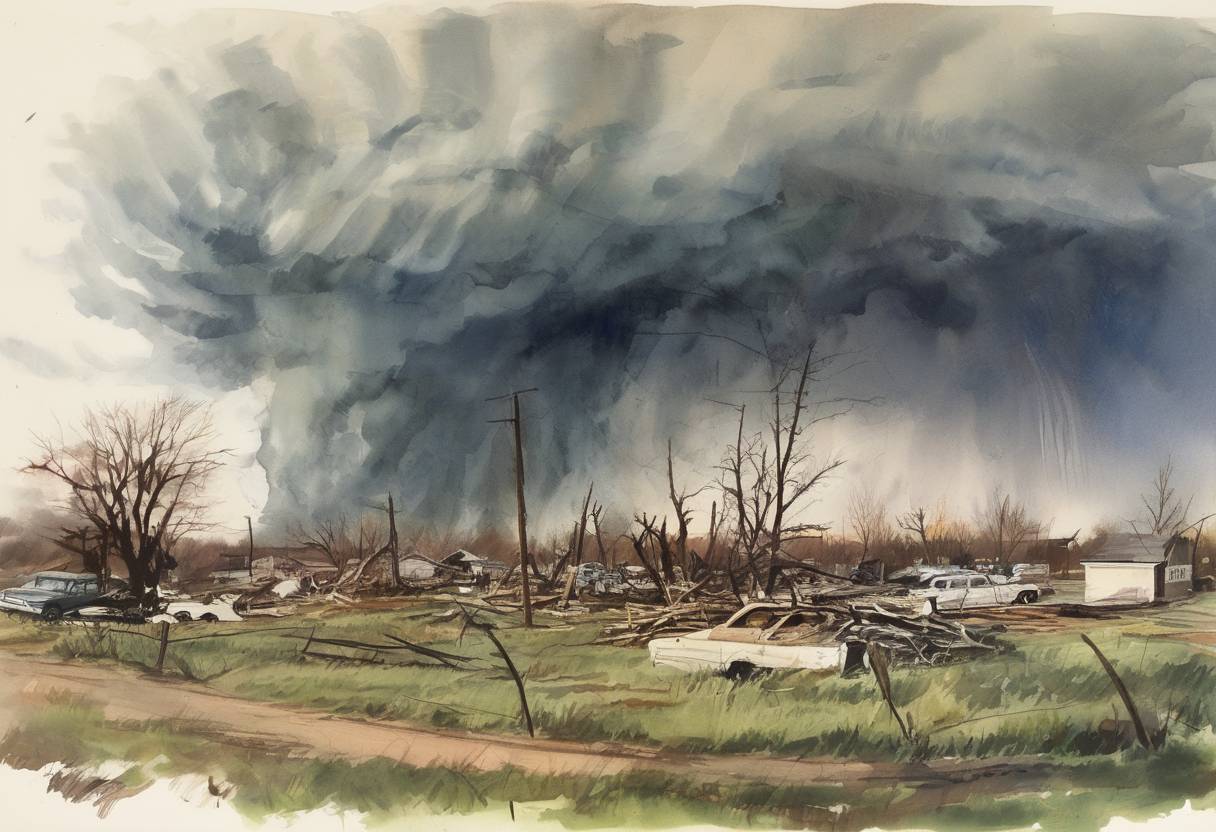
On June 8, 1966, Topeka, Kansas, experienced a devastating tornado that would become historically significant as the first tornado to be rated F5 on the Fujita scale. This powerful tornado caused extensive damage and loss of life, marking a pivotal moment in meteorological history and disaster preparedness.
The Fujita scale, developed by Dr. Tetsuya Theodore Fujita in 1971, is a system used to rate the intensity of tornadoes based on the damage they cause. Although the scale was not officially in use at the time of the Topeka tornado, the event was retrospectively rated as an F5, the highest possible rating, indicating incredible destruction.
The tornado formed in the late afternoon and moved northeast across the city of Topeka. It struck densely populated areas, including the campus of Washburn University, where it caused significant damage to buildings and infrastructure.
The Topeka tornado highlighted the need for improved tornado forecasting and warning systems. In response to the devastation, advancements were made in meteorological technology and public safety protocols. The event also underscored the importance of community preparedness and resilience in the face of natural disasters.
The 1966 Topeka tornado remains a significant event in the history of severe weather in the United States, serving as a reminder of the destructive power of tornadoes and the ongoing need for vigilance and preparedness in tornado-prone regions.
Source: en.wikipedia.org