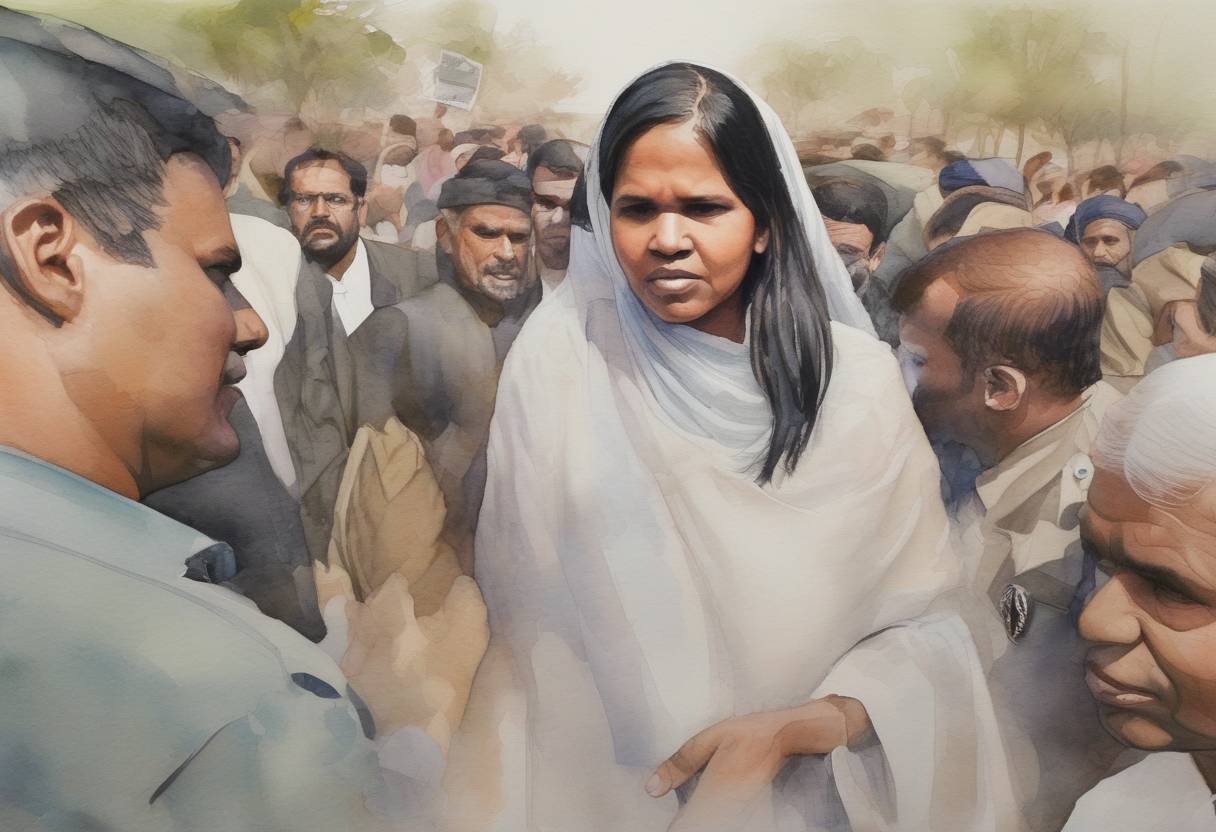
Acquittal of Asia Bibi: October 31, 2018
On October 31, 2018, the Supreme Court of Pakistan acquitted Asia Bibi, a Christian woman who had been on death row for blasphemy since 2010. This landmark decision was a significant moment in Pakistan’s legal and social history, sparking widespread reactions both domestically and internationally.
Background
- Asia Bibi, whose real name is Aasiya Noreen, was accused of blasphemy in 2009 following a dispute with Muslim coworkers. The altercation reportedly began over a shared water source, leading to allegations that Bibi had insulted the Prophet Muhammad.
- In 2010, she was convicted under Pakistan’s blasphemy laws and sentenced to death by hanging, making her the first woman in the country to receive such a sentence for blasphemy.
The Supreme Court’s Decision
- The Supreme Court’s ruling was based on a lack of evidence and inconsistencies in witness testimonies. The judgment emphasized the importance of evidence in upholding justice and highlighted procedural flaws in the initial trial.
- The decision was delivered by a three-member bench led by Chief Justice Mian Saqib Nisar, who stated that the prosecution had “categorically failed to prove its case beyond reasonable doubt.”
Reactions and Consequences
- Domestic Protests: The acquittal led to immediate and widespread protests across Pakistan, particularly by the Tehreek-e-Labbaik Pakistan (TLP), a hardline Islamist party. Demonstrators blocked roads, disrupted daily life, and demanded the reversal of the decision.
- Government Response: The Pakistani government initially reached an agreement with the TLP to end the protests, which included a review petition against the Supreme Court’s decision and placing Bibi on a no-fly list temporarily.
- International Reaction: The case drew significant international attention, with human rights organizations and foreign governments urging Pakistan to ensure Bibi’s safety and uphold the rule of law.
Aftermath
- Following her acquittal, Asia Bibi remained in protective custody due to threats against her life. In May 2019, she was allowed to leave Pakistan and was granted asylum in Canada, where she reunited with her family.
- The case highlighted the contentious nature of Pakistan’s blasphemy laws and sparked debates about religious freedom and the protection of minority rights in the country.
Broader Significance
- The acquittal of Asia Bibi is seen as a pivotal moment in Pakistan’s judicial history, reflecting the challenges of balancing religious sensitivities with human rights and legal principles.
- It underscored the ongoing tensions between conservative religious factions and progressive elements within Pakistani society, as well as the international community’s interest in Pakistan’s human rights practices.
This event remains a critical reference point in discussions about blasphemy laws and minority rights in Pakistan and continues to influence the country’s socio-political landscape.