The Founding of the Abbey of Cluny
910 · Cluny, France
The Abbey of Cluny was founded in Burgundy, France, which would become a major center of the Benedictine monastic reform movement.
November 2, 0998
All Souls' Day is established by Odilo, Abbot of Cluny, as a day to pray for the dead, marking the beginning of the tradition in the Christian calendar.
Cluny, France | Cluny Abbey
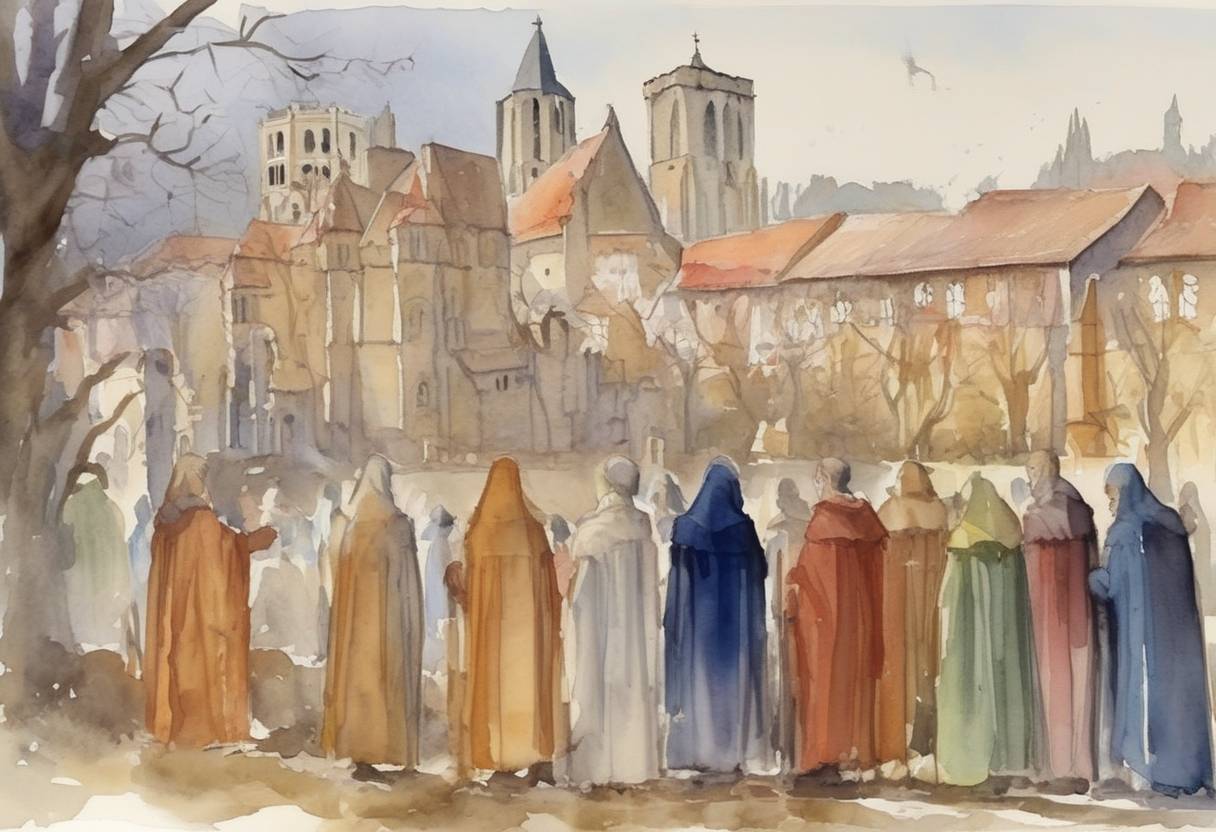
On November 2, 998, Odilo, the Abbot of Cluny, established All Souls’ Day as a day dedicated to praying for the souls of the deceased. This marked the beginning of a significant tradition within the Christian liturgical calendar, emphasizing the importance of intercessory prayers for the dead.
Cluniac Reforms: The establishment of All Souls’ Day occurred during a period of monastic reform known as the Cluniac Reforms. These reforms, initiated by the Abbey of Cluny in France, sought to revitalize monastic life and emphasize spiritual practices, including prayer and liturgical observance.
Medieval Beliefs: During the medieval period, there was a strong belief in the efficacy of prayers for the souls in purgatory. The concept of purgatory, a state of purification for souls who had died in a state of grace but still needed to atone for venial sins, was a central tenet of medieval Christian theology.
Odilo’s Decree: Odilo, who became the Abbot of Cluny in 994, decreed that November 2nd would be observed as a day of prayer and remembrance for all the faithful departed. This observance was initially intended for the monasteries under Cluniac influence but gradually spread throughout the Christian world.
Liturgical Practices: The observance of All Souls’ Day involved special masses and prayers for the dead. Monks and clergy would recite the Office of the Dead, a series of psalms and prayers, and offer masses specifically for the repose of souls in purgatory.
Spread of the Tradition: The practice of observing All Souls’ Day quickly spread beyond the Cluniac monasteries, becoming a widespread tradition in the Western Church. By the 14th century, it was universally recognized in the Christian liturgical calendar.
Cultural Impact: All Souls’ Day has influenced various cultural traditions and customs related to honoring the dead. In many cultures, it is a time for families to visit cemeteries, light candles, and offer prayers for deceased loved ones.
Theological Implications: The establishment of All Souls’ Day reinforced the theological understanding of the communion of saints, the belief in a spiritual solidarity between the living and the dead, and the power of prayer to aid souls in their journey to heaven.
In summary, the establishment of All Souls’ Day by Odilo, Abbot of Cluny, was a pivotal moment in Christian history, reflecting the medieval Church’s focus on the afterlife and the spiritual welfare of souls. This observance has endured through the centuries, continuing to be a significant day of remembrance and prayer in the Christian tradition.
Source: en.wikipedia.org