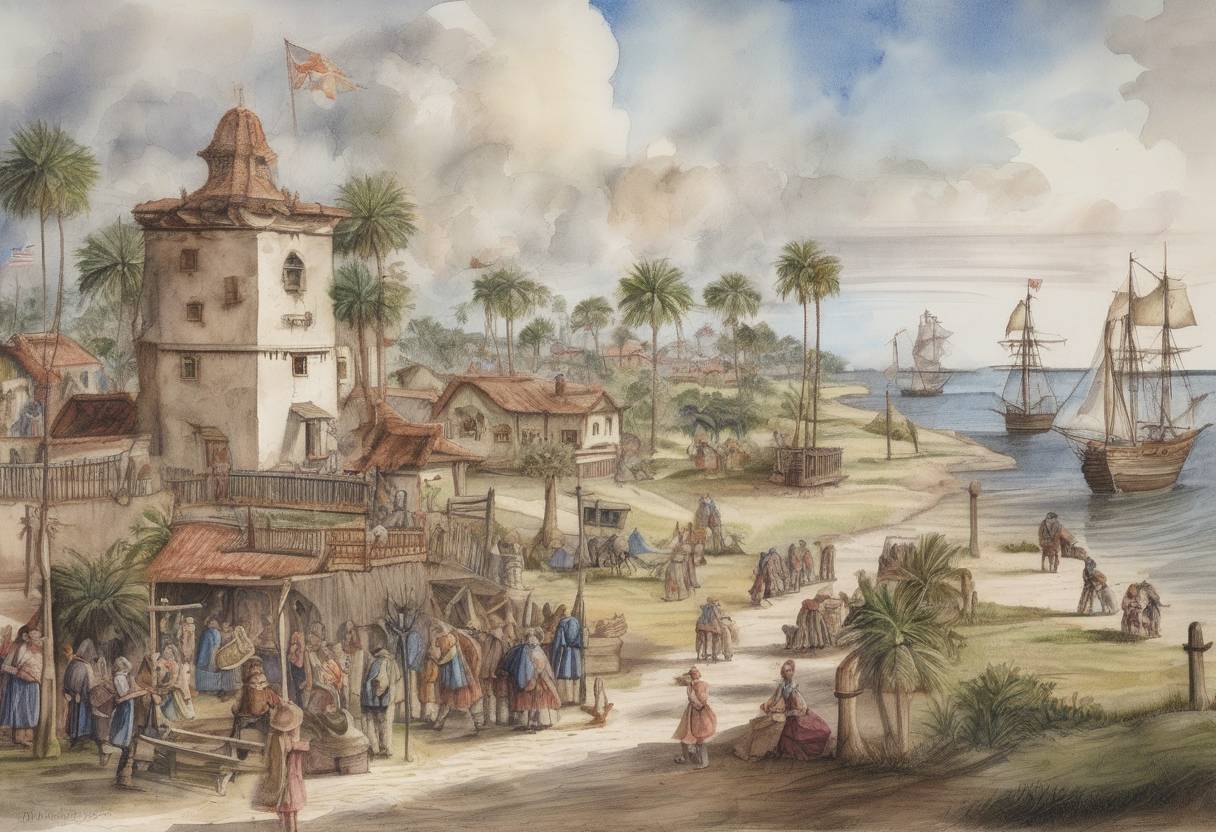
Establishment of St. Augustine: August 28, 1565
On August 28, 1565, Pedro Menéndez de Avilés, a Spanish admiral and explorer, founded St. Augustine in Florida, marking the establishment of the first permanent European settlement in what is now the continental United States. This event was a significant milestone in the history of European colonization in the Americas.
Context and Background
- Spanish Exploration: By the mid-16th century, Spain was actively exploring and claiming territories in the New World. The Spanish Crown sought to expand its empire, secure trade routes, and spread Christianity.
- French Competition: The French had established a presence in the region with the settlement of Fort Caroline, near present-day Jacksonville, Florida, in 1564. This posed a threat to Spanish interests in the area.
- Menéndez’s Mission: King Philip II of Spain appointed Pedro Menéndez de Avilés as the adelantado (governor) of Florida. His mission was to establish a Spanish presence and eliminate the French threat.
Founding of St. Augustine
- Arrival: Menéndez arrived off the coast of Florida on August 28, 1565, the feast day of St. Augustine of Hippo, after whom the settlement was named.
- Settlement: On September 8, 1565, Menéndez officially established the settlement, making it the oldest continuously inhabited European-established settlement in the continental United States.
- Conflict with the French: Shortly after founding St. Augustine, Menéndez led an attack on Fort Caroline, capturing it and effectively ending French colonial ambitions in the region.
Significance and Aftermath
- Strategic Importance: St. Augustine served as a strategic military outpost and a base for further Spanish exploration and missionary activities in the southeastern United States.
- Cultural Impact: The settlement became a melting pot of cultures, including Spanish settlers, indigenous peoples, and later African slaves, contributing to the diverse cultural heritage of the region.
- Legacy: St. Augustine remains a symbol of early European colonization efforts and has become a significant historical site, attracting visitors interested in its rich history and colonial architecture.
The founding of St. Augustine by Pedro Menéndez de Avilés was a pivotal event in the history of European colonization in North America, establishing a foothold that would influence the region for centuries to come.