Exile of Aleksandr Solzhenitsyn - February 13, 1974
1974 · Moscow, Soviet Union
Aleksandr Solzhenitsyn, Russian novelist and critic of Soviet totalitarianism, was exiled from the Soviet Union.
December 31, 1991
The Soviet Union was officially dissolved, marking the end of the Cold War and the beginning of a new era in Eastern Europe and Central Asia.
Moscow, Soviet Union | Soviet Government
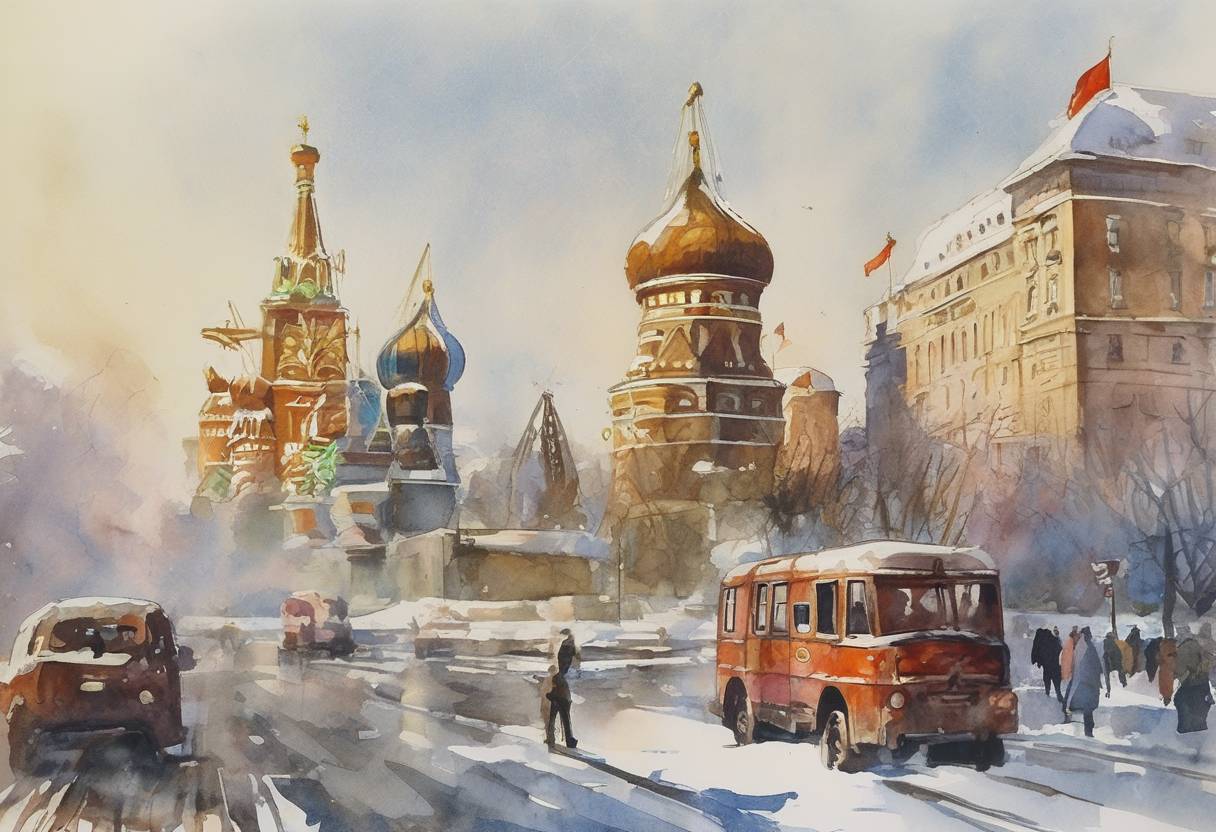
The dissolution of the Soviet Union on December 31, 1991, marked a pivotal moment in world history, signifying the end of the Cold War and ushering in a new era for Eastern Europe and Central Asia. This event was the culmination of a series of political, economic, and social changes that had been unfolding over several years.
The Soviet Union, established in 1922, was a federal socialist state that emerged from the Russian Revolution of 1917. It became a superpower, rivaling the United States during the Cold War, a period characterized by ideological, military, and political rivalry. However, by the 1980s, the Soviet Union faced significant internal challenges:
August Coup (1991): A failed coup by hardline communists in August 1991 aimed to reverse Gorbachev’s reforms but instead accelerated the disintegration of Soviet authority.
Belavezha Accords (December 8, 1991): Leaders of Russia, Ukraine, and Belarus met and signed the Belavezha Accords, declaring the Soviet Union effectively dissolved and establishing the Commonwealth of Independent States (CIS).
Recognition of Independence: By December 1991, all 15 Soviet republics had declared independence, and the international community began recognizing these new states.
On December 25, 1991, Mikhail Gorbachev resigned as President of the Soviet Union, acknowledging the end of the Soviet state. Six days later, on December 31, 1991, the Soviet Union was officially dissolved. The red Soviet flag was lowered for the last time from the Kremlin, replaced by the Russian tricolor.
The dissolution of the Soviet Union remains a defining moment in modern history, with lasting impacts on international relations, economic policies, and the political landscape of Eastern Europe and Central Asia.
Source: www.britannica.com