End of NASA's Space Shuttle Program: STS-135
2011 · Cape Canaveral, United States
NASA's Space Shuttle program officially ended with the landing of Atlantis on mission STS-135, concluding a 30-year era of shuttle missions.
November 15, 1990
The Space Shuttle Atlantis launches on STS-38, a classified mission for the U.S. Department of Defense.
Cape Canaveral, United States | NASA
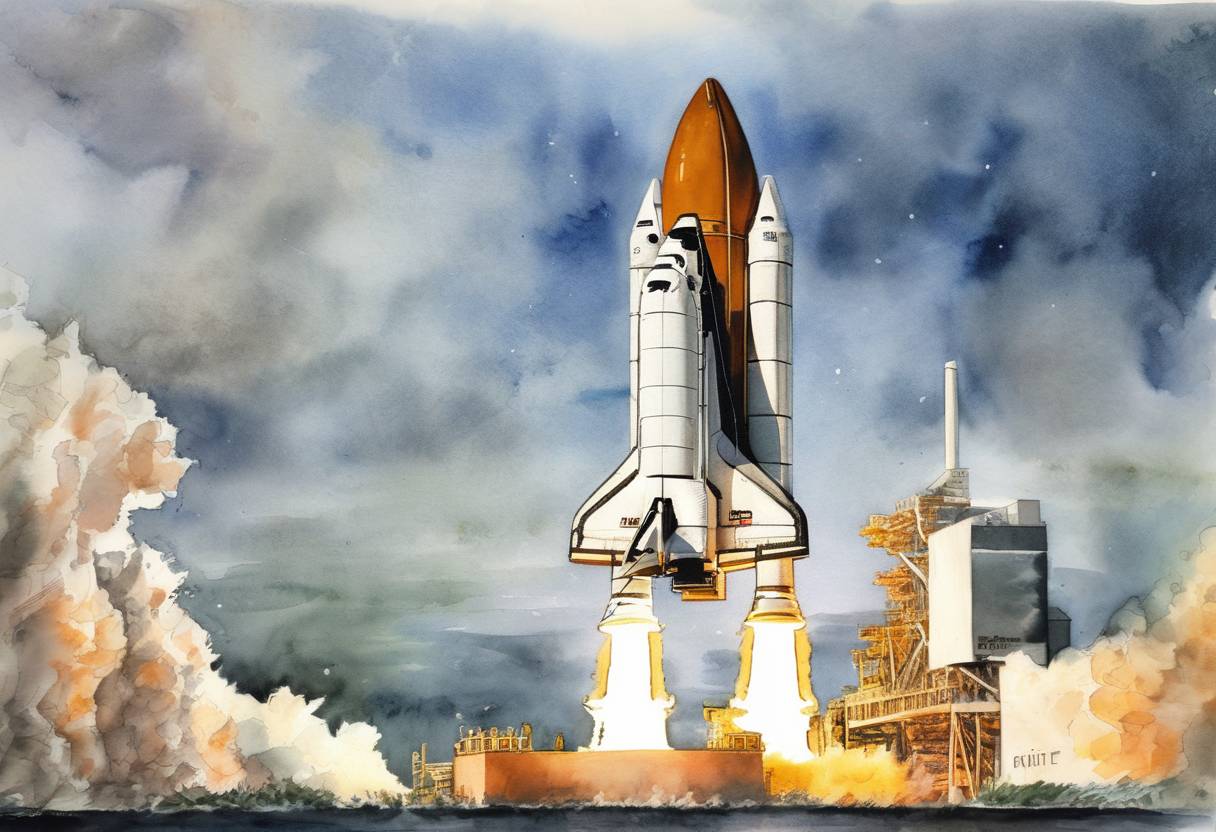
On November 15, 1990, the Space Shuttle Atlantis embarked on the STS-38 mission, a significant yet classified operation for the United States Department of Defense. This mission marked the seventh flight of Atlantis and the 37th mission of NASA’s Space Shuttle program.
The STS-38 mission was part of a series of shuttle flights dedicated to national security and defense purposes. During the late 1980s and early 1990s, the Space Shuttle program played a crucial role in deploying and servicing satellites for military and intelligence purposes. These missions were often shrouded in secrecy due to their sensitive nature.
Preparation and Delays: Originally scheduled for July 1990, the launch faced several delays due to technical issues and the need for additional checks on the shuttle’s systems. These postponements were not uncommon in the shuttle program, especially for missions involving classified payloads.
Crew: The mission was commanded by Richard O. Covey, with a crew consisting of Pilot Frank L. Culbertson Jr., and Mission Specialists Charles D. Gemar, Robert C. Springer, and Carl J. Meade. The crew was tasked with handling the classified payload and ensuring the mission’s objectives were met.
Launch Details: Atlantis lifted off from Kennedy Space Center’s Launch Complex 39A at 6:48 PM EST. The launch was executed smoothly, with the shuttle entering orbit as planned.
Mission Objectives: While the specific details of the mission remain classified, it is widely believed that STS-38 involved the deployment of a satellite or satellites for the Department of Defense. These could have been related to reconnaissance or communications, typical of shuttle missions during this period.
Mission Duration: The mission lasted approximately 4 days, 21 hours, and 54 minutes, with Atlantis landing safely at Kennedy Space Center on November 20, 1990.
Impact on Space and Defense: STS-38 underscored the strategic importance of the Space Shuttle program in supporting national defense objectives. It highlighted the dual-use nature of space technology, serving both civilian and military purposes.
Legacy: The mission contributed to the broader narrative of space as a domain of strategic interest, influencing subsequent policies and technological developments in both NASA and the Department of Defense.
In summary, the STS-38 mission of the Space Shuttle Atlantis was a pivotal event in the history of space exploration, demonstrating the intersection of space technology and national security. Despite its classified nature, the mission remains a testament to the capabilities and versatility of the Space Shuttle program.
Source: en.wikipedia.org