Henry Morton Stanley's Expedition to Find David Livingstone
1871 · Zanzibar, Tanzania
Journalist Henry Morton Stanley began his famous expedition to find the missing explorer and missionary David Livingstone in Africa.
November 10, 1871
Journalist Henry Morton Stanley found missionary and explorer David Livingstone in Ujiji, near Lake Tanganyika, famously greeting him with the words 'Dr. Livingstone, I presume?'
Ujiji, Tanzania | none
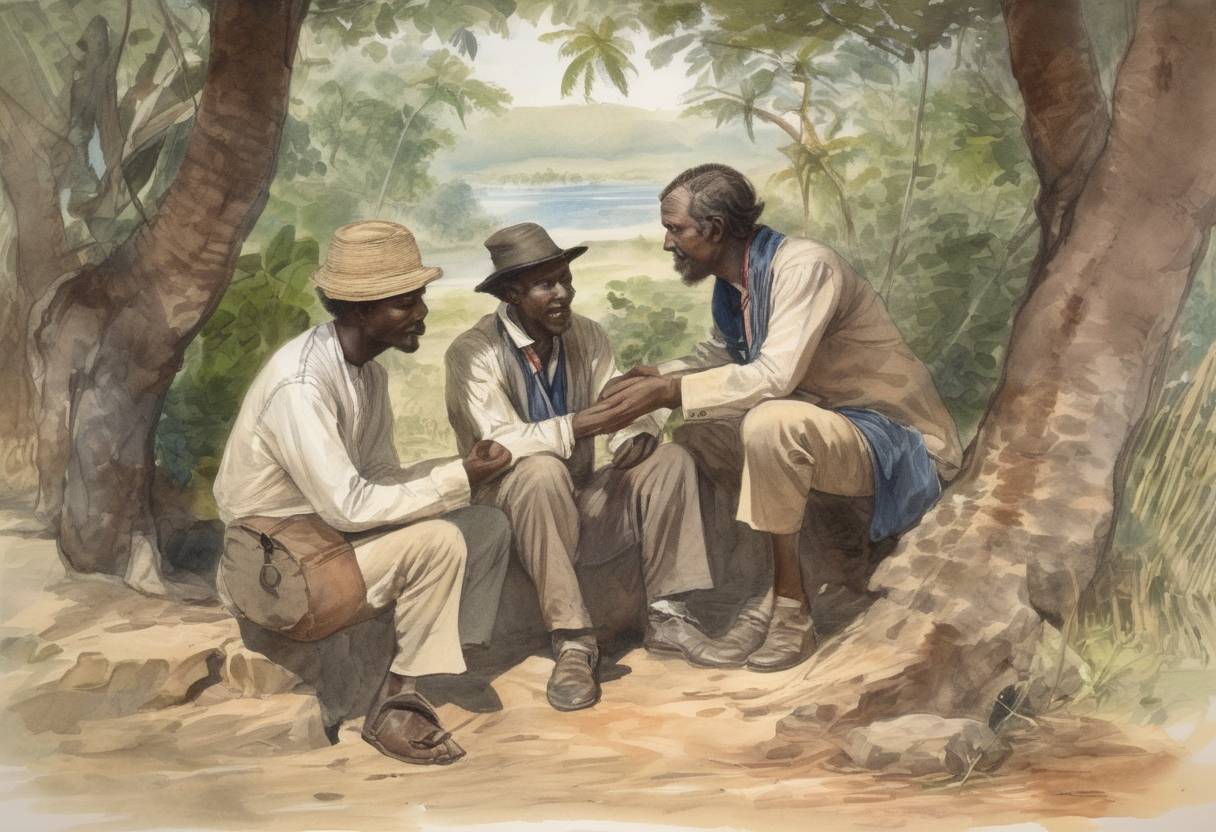
On November 10, 1871, a significant event in the history of exploration and journalism took place in Ujiji, near Lake Tanganyika, in present-day Tanzania. This was the day when journalist and explorer Henry Morton Stanley famously greeted the Scottish missionary and explorer David Livingstone with the words, “Dr. Livingstone, I presume?”
David Livingstone was a renowned missionary and explorer who had been in Africa for many years, dedicated to both spreading Christianity and exploring the continent’s uncharted territories. By the late 1860s, Livingstone had lost contact with the outside world, leading to widespread concern about his fate.
In 1869, the New York Herald commissioned Henry Morton Stanley, a Welsh-American journalist, to find Livingstone. Stanley embarked on a challenging expedition through Africa, facing numerous hardships, including disease, difficult terrain, and resistance from local tribes.
After an arduous journey, Stanley finally reached the town of Ujiji on the shores of Lake Tanganyika. On November 10, 1871, he encountered Livingstone, who was reportedly in poor health but still dedicated to his work. The greeting, “Dr. Livingstone, I presume?” has since become legendary, symbolizing the meeting of two great explorers and the bridging of worlds.
Journalistic Achievement: Stanley’s successful mission was a remarkable feat of journalism, showcasing the power of the press in connecting distant parts of the world.
Exploration and Mapping: The meeting highlighted the era’s spirit of exploration and the quest to map the unknown regions of Africa. Livingstone’s work contributed significantly to the geographical understanding of the continent.
Cultural Impact: The encounter captured the public’s imagination and became a symbol of exploration and adventure, inspiring future generations of explorers.
Following their meeting, Stanley and Livingstone spent several months together, exploring the region and gathering valuable information. Stanley eventually returned to Europe, where he published his accounts, further cementing his reputation as a leading journalist and explorer. Livingstone continued his explorations until his death in 1873, leaving a lasting legacy in both missionary work and African exploration.
The meeting of Stanley and Livingstone remains a pivotal moment in the history of exploration, illustrating the challenges and triumphs of discovering new frontiers.
Source: en.wikipedia.org