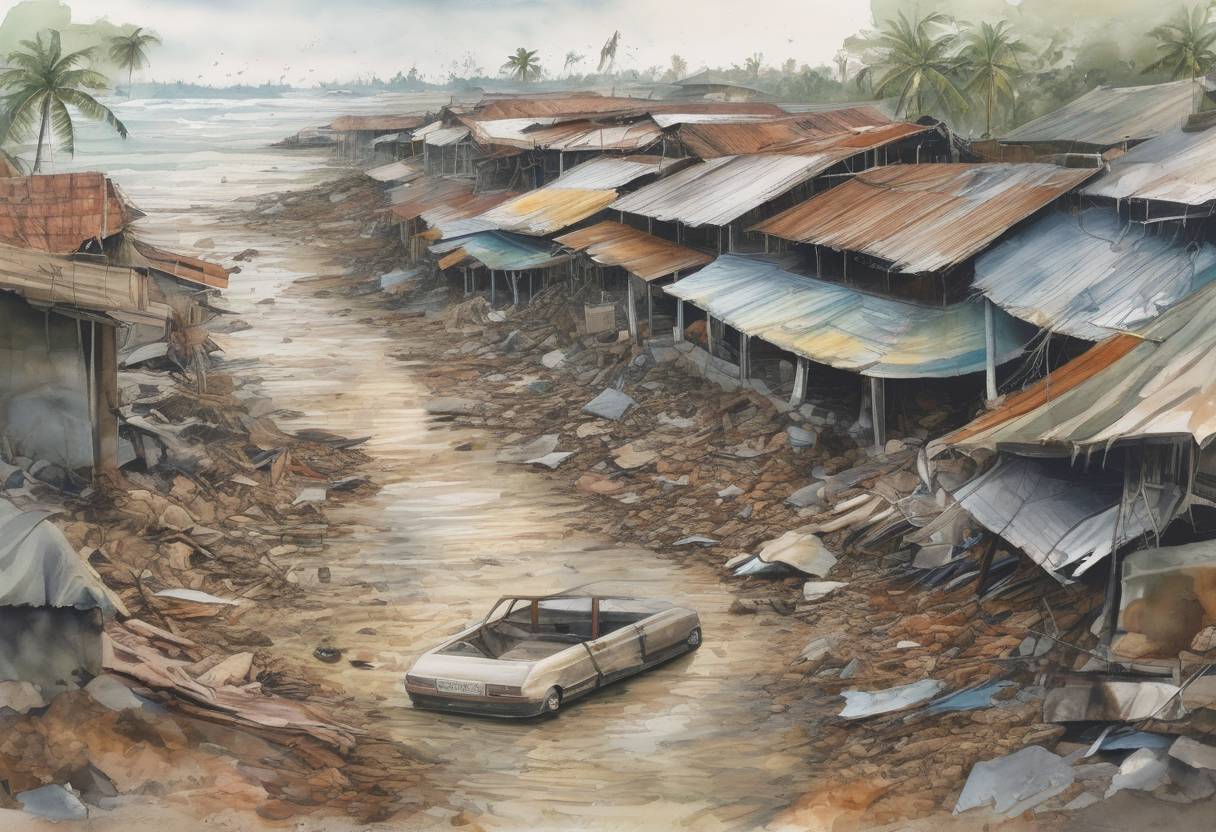
The Indian Ocean Tsunami: December 31, 2004
On December 31, 2004, the official death toll from the catastrophic Indian Ocean tsunami, which struck on December 26, 2004, was reported to have surpassed 125,000 people. This devastating natural disaster affected multiple countries across the Indian Ocean, with Indonesia suffering the most severe impact.
Background
The tsunami was triggered by a massive undersea earthquake off the west coast of northern Sumatra, Indonesia. The earthquake, which registered a magnitude of 9.1 to 9.3, was one of the largest ever recorded. The seismic event caused a series of large tsunamis that inundated coastal areas across the Indian Ocean.
Impact
Indonesia: As the epicenter of the earthquake was located near Sumatra, Indonesia experienced the highest casualties and destruction. The province of Aceh was particularly devastated, with entire communities wiped out.
Sri Lanka: The tsunami waves reached Sri Lanka within hours, causing widespread destruction along the eastern and southern coasts. Thousands of lives were lost, and infrastructure was severely damaged.
India: The southeastern coast of India, including the Andaman and Nicobar Islands, was heavily affected. The states of Tamil Nadu and Andhra Pradesh reported significant loss of life and property.
Thailand: Popular tourist destinations such as Phuket and the Phi Phi Islands were hit hard, resulting in numerous casualties, including many foreign tourists.
Other Affected Areas: Countries such as the Maldives, Somalia, Myanmar, and Malaysia also reported casualties and damage, though to a lesser extent compared to the hardest-hit regions.
Aftermath and Response
The scale of the disaster prompted an unprecedented international humanitarian response. Governments, NGOs, and individuals worldwide mobilized resources to provide relief and aid to the affected regions. Efforts included:
Immediate Relief: Emergency supplies, medical assistance, and temporary shelters were provided to survivors.
Reconstruction: Long-term rebuilding efforts focused on restoring infrastructure, housing, and livelihoods.
Tsunami Warning Systems: In the aftermath, there was a concerted effort to establish a comprehensive tsunami warning system in the Indian Ocean to prevent future tragedies.
Historical Significance
The 2004 Indian Ocean tsunami is remembered as one of the deadliest natural disasters in modern history. It highlighted the need for improved disaster preparedness and international cooperation in response to global emergencies. The event also underscored the vulnerability of coastal communities to natural disasters and the importance of sustainable development practices in mitigating such risks.
The tragedy of December 26, 2004, remains a poignant reminder of nature’s power and the resilience of the human spirit in the face of adversity.