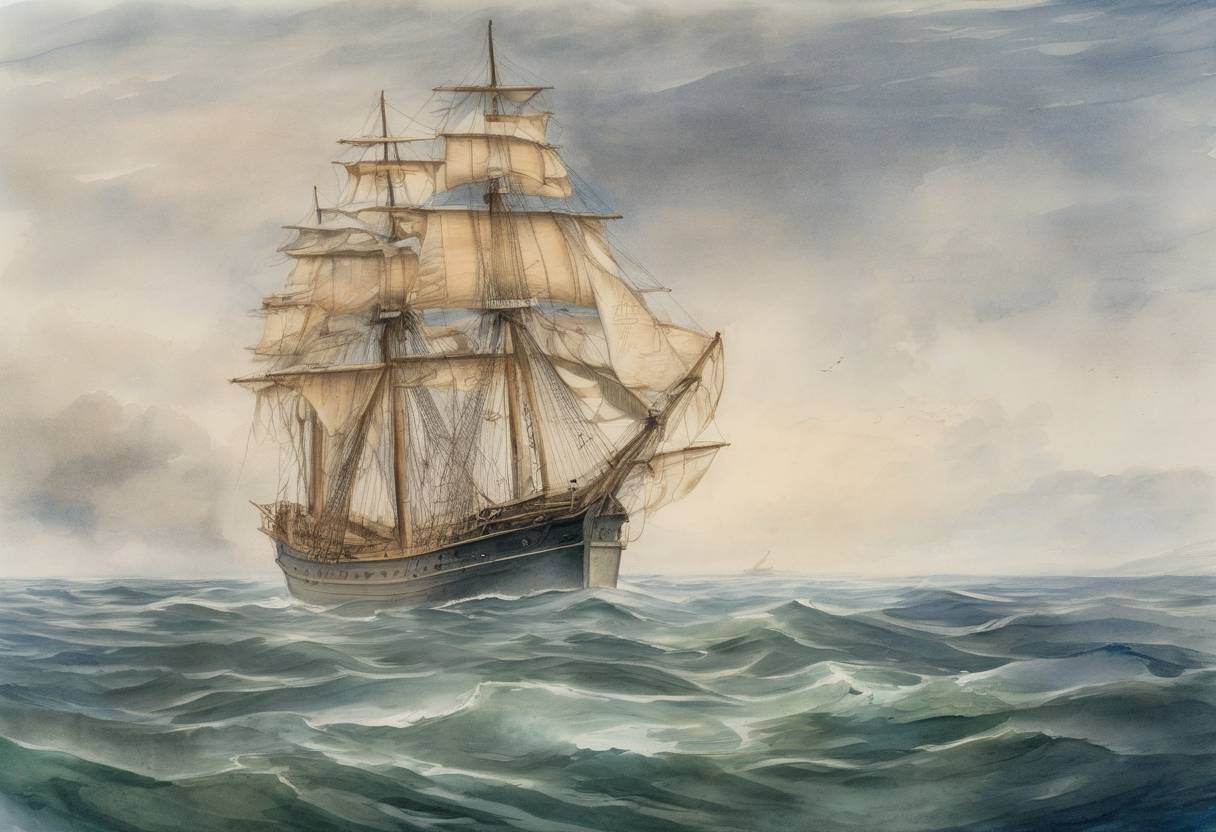
The Mystery of the Mary Celeste
On December 4, 1872, the American brigantine Mary Celeste was discovered adrift and deserted in the Atlantic Ocean, a maritime mystery that has intrigued historians and the public for over a century. The ship was found by the British brig Dei Gratia, approximately 400 miles east of the Azores Islands.
Background
The Mary Celeste was a 282-ton brigantine built in Spencer’s Island, Nova Scotia, in 1861. Originally named Amazon, she was later renamed Mary Celeste after a series of ownership changes and a troubled early career that included several accidents and a change of registry to the United States.
In November 1872, the Mary Celeste set sail from New York City bound for Genoa, Italy, under the command of Captain Benjamin Briggs. Onboard were Briggs’ wife, Sarah, their two-year-old daughter, Sophia, and a crew of seven experienced seamen. The ship was carrying a cargo of 1,701 barrels of denatured alcohol.
Discovery
When the Dei Gratia crew boarded the Mary Celeste, they found the ship in seaworthy condition, with her cargo largely intact. However, the lifeboat was missing, and there was no sign of the crew. Personal belongings, including valuables, were left undisturbed, and the ship’s logbook was last dated November 25, 1872, nine days before the discovery.
Theories and Speculation
The fate of the Mary Celeste’s crew has been the subject of much speculation and numerous theories, including:
- Piracy: Although piracy was considered, the lack of violence or theft made this unlikely.
- Mutiny: There was no evidence of a struggle, making mutiny improbable.
- Natural Phenomena: Some theories suggest a waterspout or seaquake could have caused the crew to abandon ship.
- Alcohol Fumes: A plausible theory is that fumes from the alcohol cargo might have led the crew to fear an explosion, prompting them to leave the ship in the lifeboat.
Aftermath
The Mary Celeste was eventually brought to Gibraltar, where a salvage hearing was held. Despite extensive investigations, no conclusive evidence was found to explain the crew’s disappearance. The ship continued to sail under different owners until it was deliberately wrecked in 1885 in an insurance fraud scheme.
Historical Significance
The mystery of the Mary Celeste remains one of the most enduring maritime enigmas. It has inspired countless books, documentaries, and fictional accounts, capturing the imagination of people worldwide. The case highlights the dangers and uncertainties of 19th-century sea travel and continues to be a subject of fascination for maritime historians and mystery enthusiasts alike.