Justinian I Becomes Sole Ruler of the Byzantine Empire
527 · Constantinople, Byzantine Empire
Justinian I becomes the sole ruler of the Byzantine Empire after the death of his uncle, Justin I.
July 9, 0518
Anastasius I, Byzantine Emperor, dies after a reign marked by internal reforms and religious conflicts.
Constantinople, Byzantine Empire | Byzantine Empire
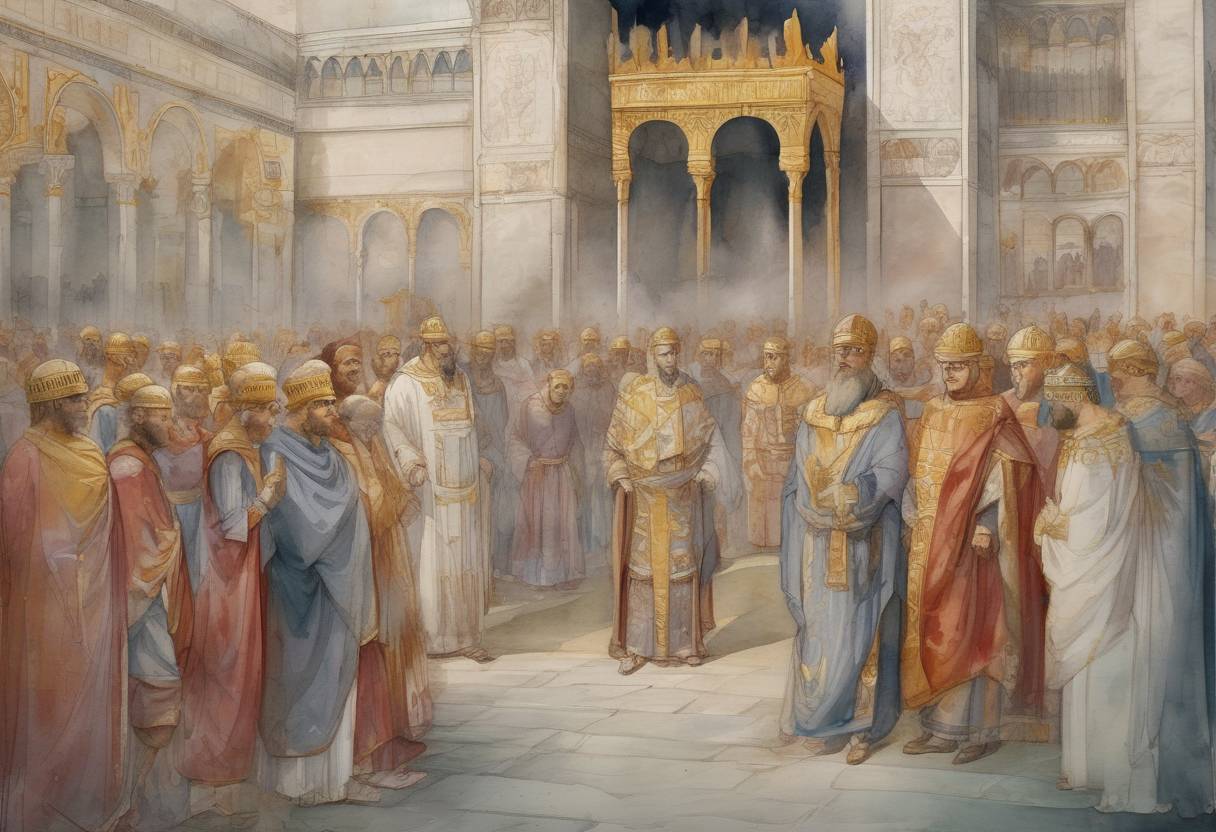
On July 9, 518, Anastasius I, the Byzantine Emperor, passed away, marking the end of a reign that was significant for its internal reforms and religious conflicts. Anastasius I, who ascended to the throne in 491, was a ruler whose policies and actions had a lasting impact on the Byzantine Empire.
Anastasius was born around 430 in Dyrrhachium (modern-day Durrës, Albania). Before becoming emperor, he served as a member of the imperial court. His rise to power came after the death of Emperor Zeno, when he was chosen by Zeno’s widow, Empress Ariadne, as a suitable successor due to his administrative skills and reputation for integrity.
Anastasius I is particularly noted for his administrative and fiscal reforms, which strengthened the empire’s economy:
Anastasius’s reign was also marked by religious tensions, primarily due to the ongoing conflict between Chalcedonian Christians and Monophysites:
Anastasius’s death led to a brief period of uncertainty until Justin I, a former soldier and commander of the palace guard, was proclaimed emperor. Anastasius left behind a treasury surplus, which provided financial stability for his successors.
His reign is often viewed as a period of transition that set the stage for the subsequent Justinian dynasty. The reforms he implemented had long-lasting effects on the Byzantine Empire’s administrative and economic structures, while the religious conflicts of his time highlighted the deep divisions within Christianity that would continue to shape the empire’s history.
Anastasius I’s legacy is a complex one, characterized by significant achievements in governance and enduring religious controversies.
Source: en.wikipedia.org