Coronation of Yohannes IV as Emperor of Ethiopia
1872 · Axum, Ethiopia
Yohannes IV is crowned Emperor of Ethiopia in Axum, marking a significant period in Ethiopian history.
January 17, 1608
Emperor Susenyos of Ethiopia surprised the Oromo army at Ebenat, resulting in a significant victory.
Ebenat, Ethiopia | Ethiopian Empire
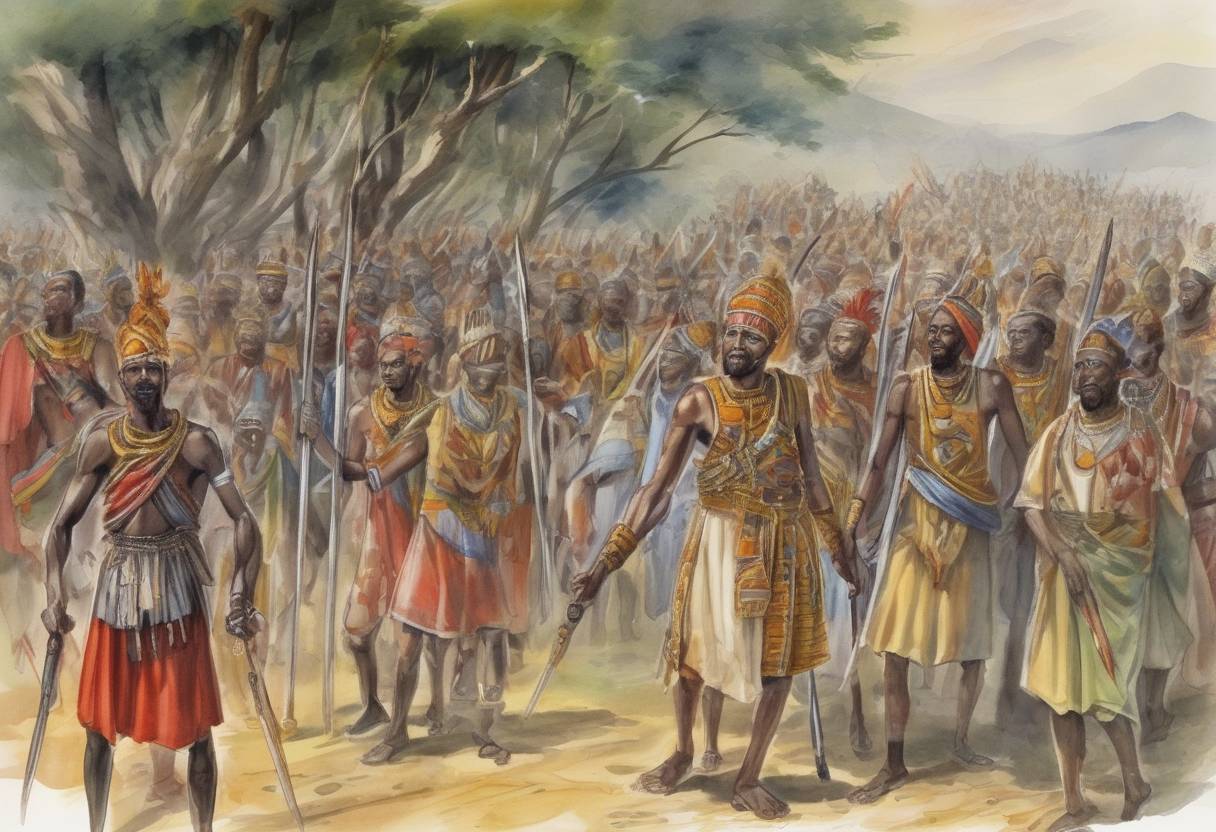
On January 17, 1608, Emperor Susenyos I of Ethiopia achieved a significant military victory against the Oromo forces at the Battle of Ebenat. This event marked a pivotal moment in the early 17th century, as it helped to consolidate Susenyos’s power and stabilize his reign during a period of internal and external challenges.
The early 1600s were a tumultuous time for the Ethiopian Empire. The Oromo, a powerful ethnic group, had been expanding their territory into the Ethiopian highlands, posing a significant threat to the stability of the empire. Their incursions were part of a broader series of migrations known as the Oromo expansions, which had begun in the late 16th century.
Emperor Susenyos I ascended to the throne in 1606, following a period of civil strife and succession disputes. His reign was initially marked by efforts to consolidate power and address the ongoing threat posed by the Oromo. The battle at Ebenat was part of these efforts to secure his rule and protect the empire’s territorial integrity.
The confrontation at Ebenat was characterized by strategic surprise and tactical prowess on the part of Susenyos. The emperor managed to catch the Oromo forces off guard, leveraging the element of surprise to his advantage. This surprise attack was crucial in overcoming the numerically superior Oromo army.
The victory at Ebenat was not only a military success but also a significant morale booster for Susenyos and his supporters. It demonstrated his capability as a military leader and helped to solidify his authority over the Ethiopian Empire.
The victory at Ebenat had several important consequences:
Consolidation of Power: The success against the Oromo helped Susenyos to further consolidate his power and stabilize his reign, which had been fraught with challenges from rival factions and external threats.
Military Prestige: The battle enhanced Susenyos’s reputation as a capable military leader, which was crucial for maintaining the loyalty of his troops and the nobility.
Temporary Peace: While the victory did not end the Oromo incursions, it provided a temporary respite and allowed Susenyos to focus on other aspects of governance and internal consolidation.
Historical Legacy: The battle is remembered as a significant event in Ethiopian history, illustrating the ongoing struggles between the Ethiopian Empire and the Oromo during this period.
In conclusion, the victory at Ebenat on January 17, 1608, was a defining moment in the reign of Emperor Susenyos I. It underscored the challenges faced by the Ethiopian Empire during this era and highlighted the emperor’s role in navigating these challenges to maintain the empire’s stability and integrity.
Source: en.wikipedia.org