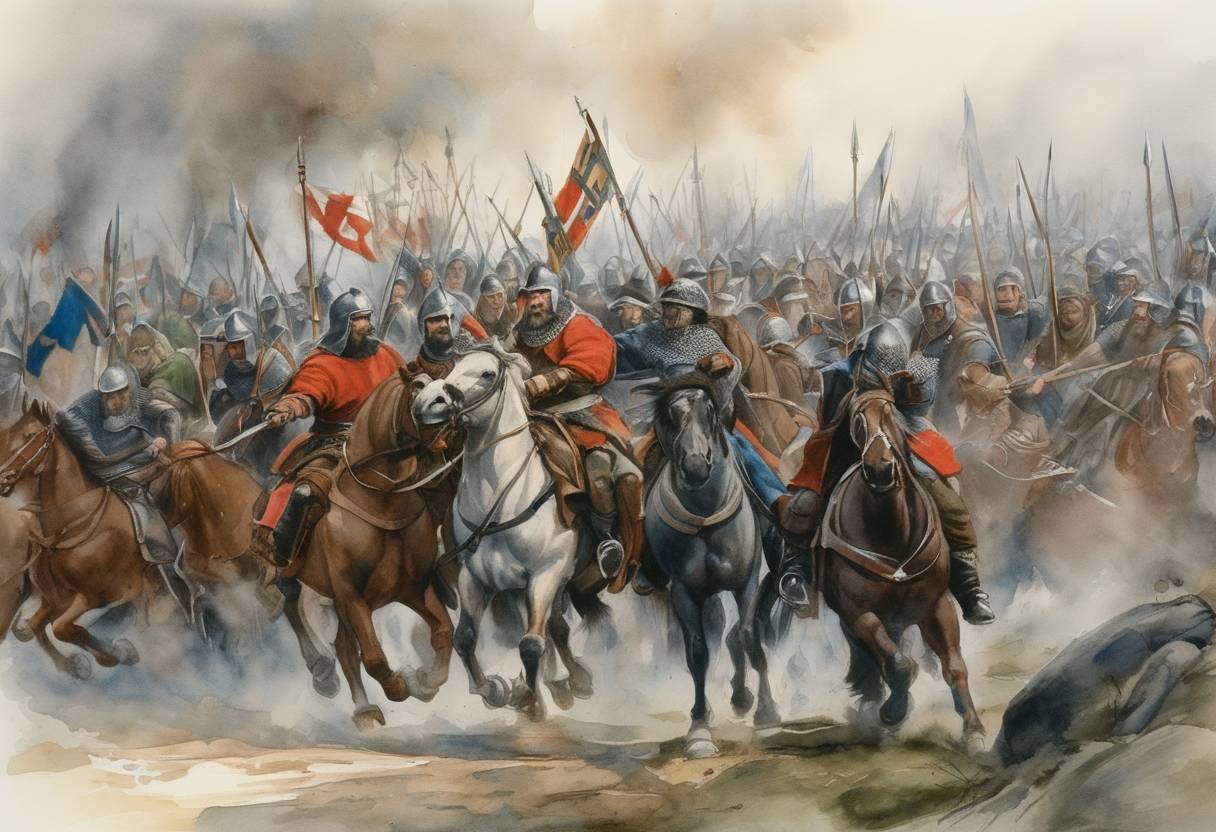
Second Swedish Crusade and Birger Jarl’s Campaign
The Second Swedish Crusade is a historically significant event that took place mainly in the mid-13th century, led predominantly by Birger Magnusson—later known as Birger Jarl. It forms part of the series of the Northern Crusades aimed at spreading Christianity among the pagan populations of the Baltic region, focusing prominently on Finland.
Overview of the Crusade
- Date and Context: While there is no specific record of a significant engagement on August 10, 1270, the broader conflict spans several years in the mid-13th century. The crusade was driven by the Swedish crown’s ambition to assert control over Finland, which was then a land inhabited by various pagan tribes, most notably the Finns.
- Christianization Goals: The primary objective was the conversion of the Finnish tribes to Christianity and to bring this region under the ecclesiastical influence of the Roman Catholic Church, along with extending Swedish territorial claims.
Birger Jarl’s Role
- Leadership: Birger Magnusson, known for his later influence in establishing several of Sweden’s foundational systems of governance and law, was a central figure in these expeditions. He is credited with conducting military campaigns into Finnish territories, though detailed records of a specific failed assault on August 10, 1270, are not a part of well-documented history.
- Military Campaigns: The campaigns led by Swedish forces involved combative engagements with indigenous Finnish populations resistant to foreign dominion and religious conversion.
Outcomes and Significance
- Impact on Finland: Through successive campaigns, the Swedish crown eventually solidified its influence over parts of Finland, culminating in the institutional presence of the Roman Catholic Church.
- Long-term Effects: The Second Swedish Crusade set the stage for further integration of Finland into the Swedish realm, significantly shaping Finnish medieval history and altering its religious landscape.
Historical Notes: Events like these, while pivotal, often lack specific daily records due to the period’s historiographical constraints. The chronicles of such military and religious expeditions are often cobbled together from varied and later accounts, leading to potential discrepancies in specific dates and accounts of battles.