Inaugural 24 Hours of Le Mans - May 27, 1923
1923 · Le Mans, France
The 24 Hours of Le Mans, the world's oldest active sports car race in endurance racing, is held for the first time at Circuit de la Sarthe, Le Mans, France.
July 4, 1903
Dorothy Levitt became the first British woman to compete in a motor race, taking part in a speed trial in Nice, France.
Nice, France | Automobile Club de Nice
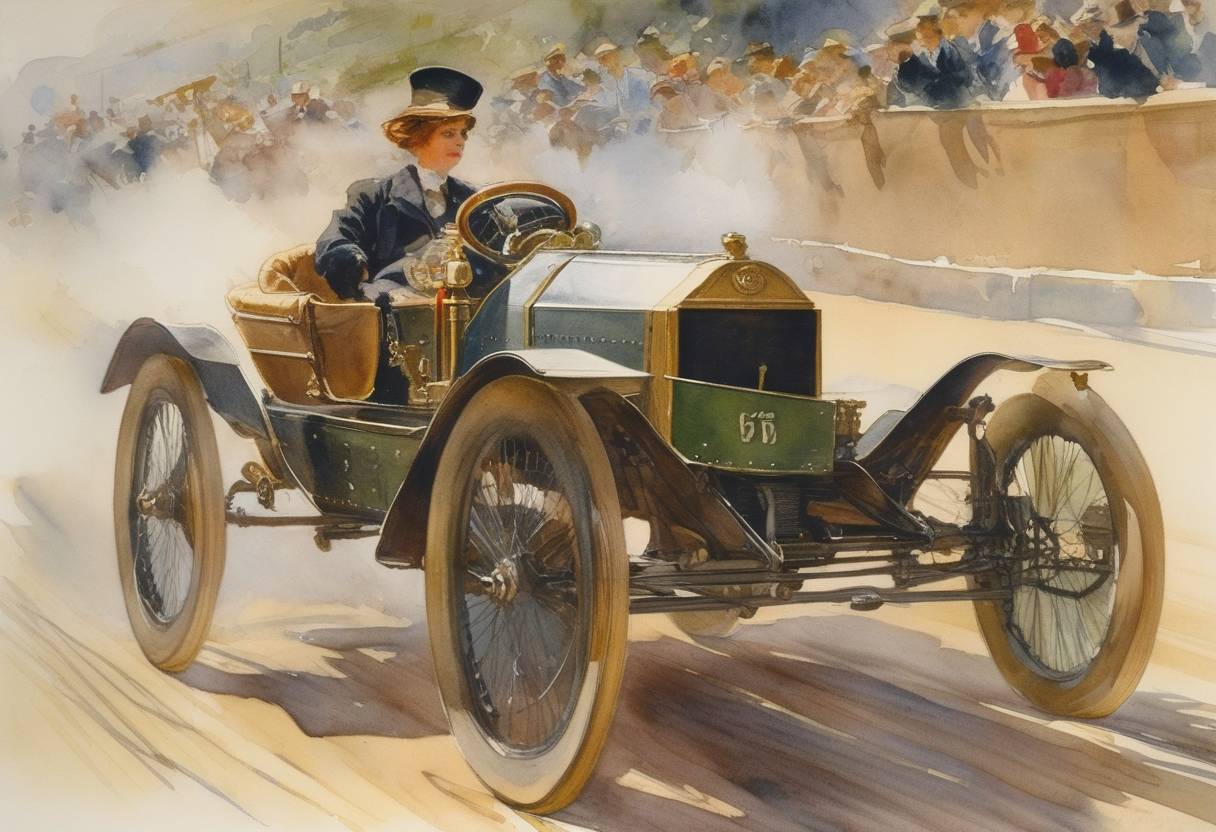
On April 7, 1903, British motorsport history was made when Dorothy Levitt became the first British woman to compete in a motor race. This landmark event took place at a speed trial in Nice, France. As a pioneering figure in the early days of motor racing, Levitt’s participation not only marked a breakthrough in women’s involvement in the sport but also underscored the changing perceptions of women’s roles in society.
Dorothy Levitt was born on January 5, 1882, in Hackney, London, into a well-off family. Despite societal expectations of women during her time, Levitt was drawn to the burgeoning automotive industry and quickly became associated with the Napier Company, a prominent car manufacturer. The company recognized her racing potential and provided her with vehicles specially engineered for competitive racing.
The speed trials in Nice were a significant event on the motor racing calendar, attracting enthusiasts and racers from various parts of Europe. Levitt participated in these trials driving a Napier car. Her involvement was groundbreaking, as it marked the first time a British woman had competed in such an event. Despite the social norms and challenging conditions of early motor racing, Levitt demonstrated exceptional skill and determination.
Dorothy Levitt’s participation in the 1903 Nice speed trials paved the way for future generations of women in motorsport. She would go on to achieve several racing accolades, adding to her reputation as a pioneer. Levitt became a public figure and an advocate for women drivers, authoring “The Woman and the Car: A Chatty Little Handbook for All Women Who Motor or Who Want to Motor,” published in 1909. Her contributions to motorsport and her efforts in advocating for women drivers have left an indelible mark on automotive history.
Levitt’s courage and pioneering spirit continue to inspire women in various fields, celebrating her as a symbol of breaking barriers and challenging societal norms.
Source: en.wikipedia.org