The Potsdam Declaration: July 26, 1945
1945 · Potsdam, Germany
The Potsdam Declaration was issued by the Allies, outlining the terms of surrender for Japan during World War II.
January 1, 1942
The United Nations Declaration was signed by 26 nations pledging to uphold the principles of the Atlantic Charter and fight against the Axis powers during World War II.
Washington, D.C., United States | Allied Powers
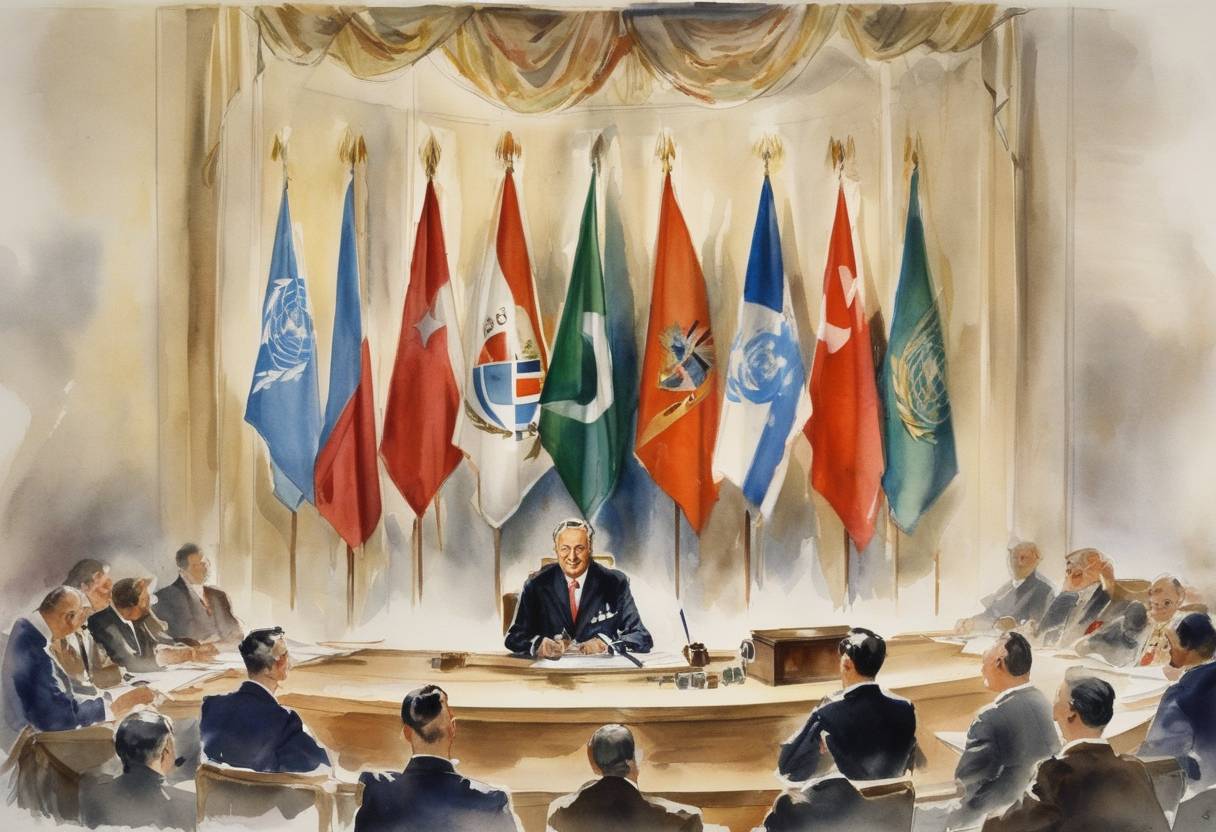
On January 1, 1942, in the midst of World War II, representatives from 26 Allied nations gathered in Washington, D.C., to sign the Declaration by United Nations. This historic document was a proclamation of resolve to defeat the Axis powers and laid the groundwork for international cooperation that would lead to the eventual creation of the United Nations.
As World War II ravaged Europe and parts of Asia, the idea of a unified front against the Axis powers—primarily Nazi Germany, Fascist Italy, and Imperial Japan—was deemed essential by the Allied nations. Prior to this declaration, the Atlantic Charter had been outlined earlier in August 1941, following a meeting between U.S. President Franklin D. Roosevelt and British Prime Minister Winston Churchill. The charter detailed the Allies’ goals for a post-war world, emphasizing disarmament, self-determination, economic cooperation, and lasting peace.
The 26 nations that signed the Declaration by United Nations were prominent and diverse, including major powers such as the United States, the United Kingdom, the Soviet Union, and China, as well as countries like Canada, Australia, India, South Africa, Norway, Greece, and others. Each nation brought its resources and strengths to the Allied effort against the Axis.
The signing of the United Nations Declaration represented a pivotal moment in the Allied campaign during WWII. It formalized the cooperation among nations with a shared commitment to victory and peace. This document was critical in fostering unity among diverse countries with varying interests and laid a foundation for post-war international cooperation.
The principles and spirit of this declaration would eventually inform the development of the United Nations in 1945, an institution aimed at promoting peace, security, and cooperation across the globe in the aftermath of the war.
Source: un.org