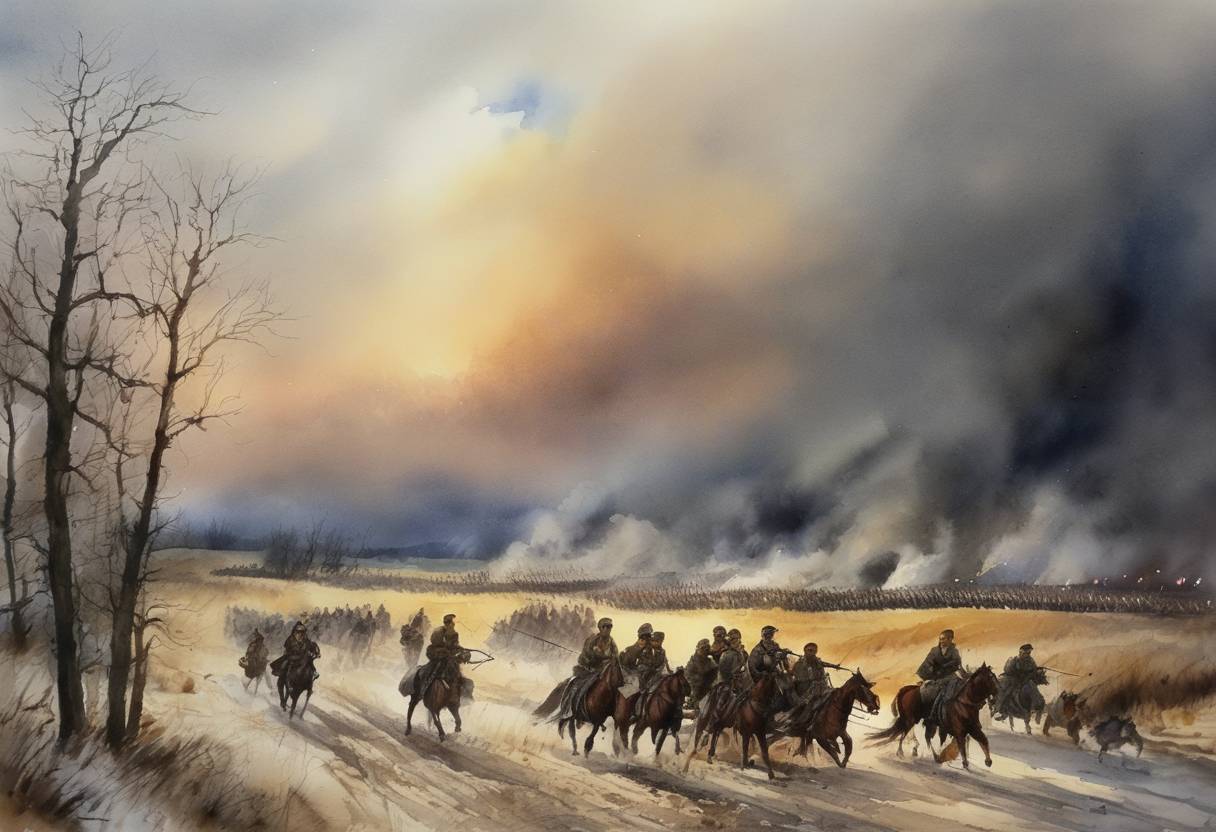
The Battle of Nakło - April 21, 1109
The Battle of Nakło, fought on April 21, 1109, was a significant encounter during the series of military confrontations known as the Polish-Pomeranian conflicts. These conflicts were primarily driven by territorial disputes and control over the Pomeranian region, which lay on the Baltic coast and was coveted for its strategic and economic importance.
Historical Context
In the early 12th century, the Kingdom of Poland, under the rule of Duke Bolesław III Wrymouth, sought to consolidate and expand its territories. The Pomeranians, residing in the northern territories adjacent to Poland, presented both a challenge and an opportunity for expansion due to their control over the Baltic trading routes. Bolesław III’s ambition was to secure Pomeranian lands as part of his domain, enhancing Poland’s political influence and economic strength.
The Battle
The Battle of Nakło took place near the town of Nakło nad Notecią, which served as a key fortified site within the Pomeranian territory. This battle was part of Bolesław III’s ongoing campaign to subdue Pomerania and bring its lands under Polish control.
Documentation of the battle specifics is sparse, but chroniclers indicate that Bolesław III strategically maneuvered his forces to outmatch the Pomeranian defenders. The Polish troops were likely well-prepared, combining their military prowess with strategic acumen to secure a favorable position during the engagement.
Consequences and Significance
Bolesław III’s victory at Nakło was pivotal in his efforts to assert dominance over the Pomeranian region. This battle further solidified his reputation as a formidable military leader and was a critical step in the Polish territorial expansion campaign.
The conquest of Nakło and surrounding areas facilitated Polish control over the sought-after trade routes in the Baltic. It also marked a turning point in the Polish-Pomeranian conflicts by weakening Pomeranian resistance and paving the way for subsequent negotiations that favored Polish interests.
In the broader scope of medieval European politics, the victory at Nakło contributed to the strengthening of the Polish state during a period characterized by fragmentation and regional skirmishes. It established Bolesław III as a significant power broker in Central Europe and foreshadowed further successes in his reign, which continued to shape the political landscape of the region.