Capture of Jefferson Davis - May 10, 1865
1865 · Irwinville, United States
Confederate President Jefferson Davis is captured by Union troops near Irwinville, Georgia, effectively ending the American Civil War.
February 17, 1865
Columbia, South Carolina, is burned as Confederate forces evacuate and Union forces move through. The responsibility for the burning remains a subject of historical debate.
Columbia, United States | Union Army
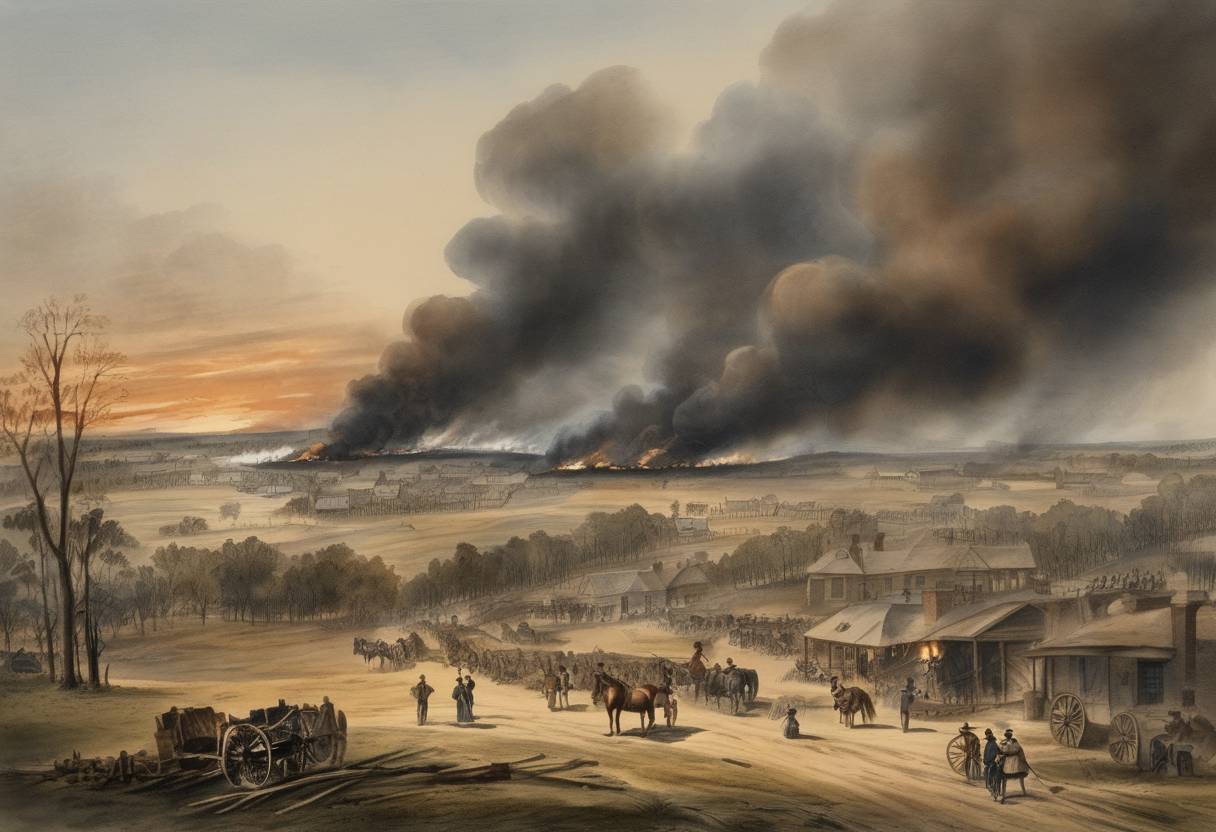
On February 17, 1865, during the final months of the American Civil War, Columbia, the capital of South Carolina, was engulfed in flames. This event occurred as Confederate forces evacuated the city, allowing Union forces under General William Tecumseh Sherman to enter. The ensuing fire destroyed much of Columbia, but the exact responsibility for the blaze has been a subject of debate among historians.
The burning of Columbia occurred during Sherman’s March to the Sea, a military campaign aimed at crippling the Confederacy’s war effort by destroying its resources and infrastructure. After the capture of Savannah in December 1864, Sherman turned his forces northward through the Carolinas.
Confederate Evacuation: As Sherman’s troops advanced, Confederate forces under Lieutenant General Wade Hampton began withdrawing from Columbia. In their retreat, they destroyed military supplies that could potentially benefit the Union army, which included setting fire to bales of cotton on the streets.
Union Entrance: Sherman’s forces entered Columbia on the morning of February 17. The city was formally surrendered to him by the mayor. Reports suggest that several factors contributed to the spread of fire later that night, including high winds and the presence of flammable materials such as cotton and alcohol.
The Fire: Multiple accounts from both Union and Confederate sources document the chaotic scene, with witnesses describing a large part of Columbia being consumed by flames. Although exact causes remain uncertain, some blamed retreating Confederate forces for starting the fire to destroy stores, while others accused Union troops of intentional arson.
Destruction: Approximately two-thirds of Columbia was destroyed, including public buildings, churches, and a significant portion of the residential area. The destruction contributed to the South’s post-war economic hardship and symbolized the Union’s total war strategy.
Historical Debate: The burning of Columbia has been a contentious topic. Sherman denied responsibility, attributing the event to accidental causes or acts by retreating Confederates. Some contemporary Southern accounts vilified Sherman, accusing his troops of wanton destruction.
Legacy: The debate over the burning reflects broader tensions surrounding the Civil War’s legacy. Columbia rebuilt in the years following, and the event became an enduring chapter in the memory of the Civil War, highlighting issues of accountability in wartime actions.
The burning of Columbia remains a potent symbol of the destruction wrought in the Civil War’s closing campaigns and illustrates the complexities of assigning responsibility in the theater of war.
Source: en.wikipedia.org