The Unveiling of the Sistine Chapel Ceiling
1512 · Vatican City, Vatican City
The ceiling of the Sistine Chapel, painted by Michelangelo, is exhibited to the public for the first time.
August 9, 1483
The Sistine Chapel in Vatican City was consecrated by Pope Sixtus IV. The chapel, named after Sixtus IV, has since become one of the most famous religious and cultural sites in the world, particularly renowned for its ceiling painted by Michelangelo.
Vatican City, Vatican City | Catholic Church
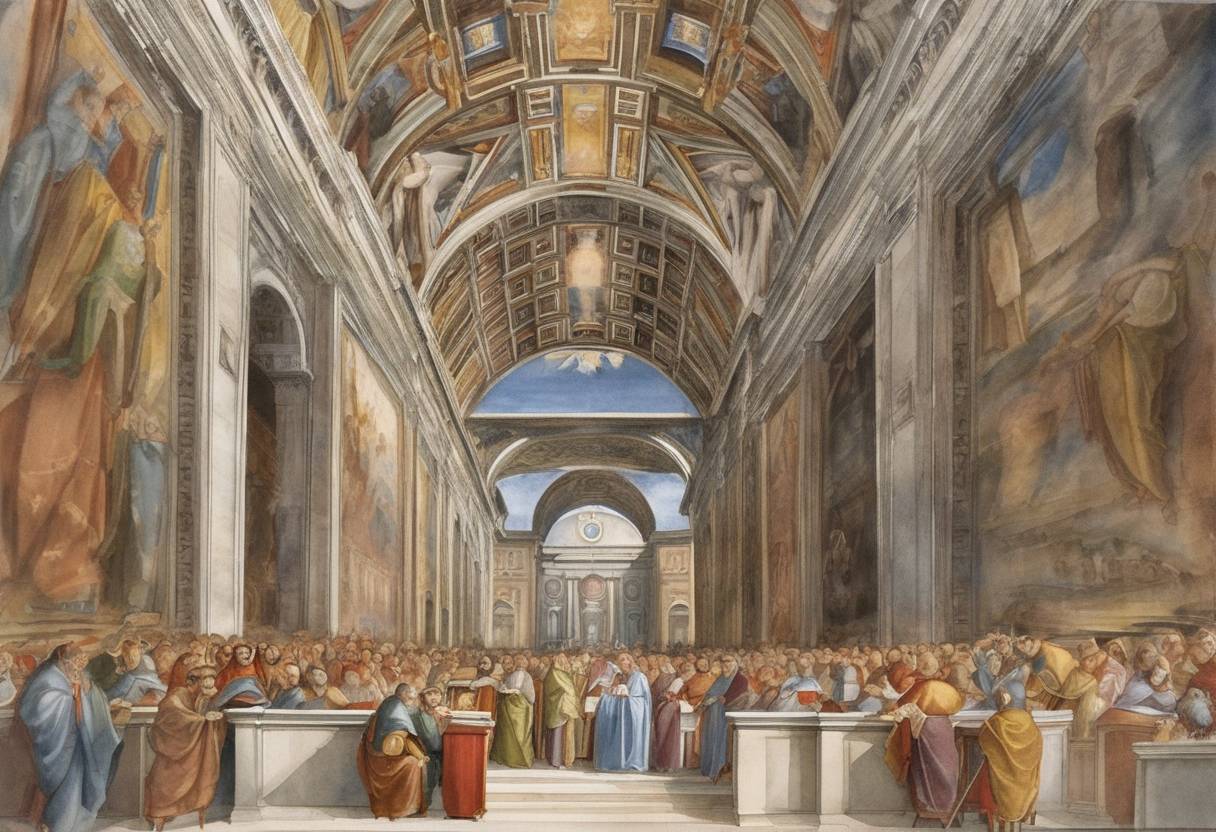
On August 9, 1483, the Sistine Chapel in Vatican City was consecrated by Pope Sixtus IV. This event marked the official dedication of what would become one of the world’s most iconic religious and artistic sites. Named after Pope Sixtus IV, the chapel serves both as a religious sanctuary and a significant place in art history.
The construction of the Sistine Chapel began in 1473 under the direction of the architect Giovanni dei Dolci. The chapel was built as part of a larger project to renovate the Vatican following the return of the papacy from Avignon. Pope Sixtus IV initiated the building to reinforce the papal authority and to serve as a venue for important religious ceremonies, including papal conclaves and other significant events within the Catholic Church.
The chapel’s design takes inspiration from the dimensions of Solomon’s Temple, emphasizing its religious importance. When it was first consecrated, the chapel’s interior was adorned with frescoes created by prominent artists of the time, such as Pietro Perugino, Sandro Botticelli, Domenico Ghirlandaio, and others. These early frescoes depicted scenes from the life of Moses and the life of Christ.
Though widely recognized for Michelangelo’s stunning ceiling frescoes, this work was not completed until later, in 1512. Michelangelo’s masterful ceiling paintings—including “The Creation of Adam” and “The Last Judgment,” completed in 1541—have elevated the chapel’s fame, making it a vital cultural and artistic destination. Michelangelo’s work dramatically expanded the chapel’s visual narratives and is celebrated for its profound influence on Western art.
Since its consecration, the Sistine Chapel has remained central to the activities of the Vatican. It continues to be used for religious ceremonies, notably the papal conclave, where new popes are elected. Its remarkable artwork attracts millions of visitors annually, serving as a testament to human creativity and spiritual devotion.
The consecration of the Sistine Chapel on August 9, 1483, set the stage for its enduring legacy as a religious site and a beacon of Renaissance artistry, cementing its position as a cultural and religious treasure within Vatican City and the world at large.
Source: en.wikipedia.org