December 14, 2021: Sudan Protests Against Military Coup
2021 · Khartoum, Sudan
A large demonstration formed in Sudan as thousands of citizens protested against the military coup and demanded the restoration of civilian rule.
June 2, 2019
In Sudan, security forces carried out a deadly crackdown on protestors outside the military headquarters in Khartoum. This event was part of a larger series of protests against military rule following the ousting of President Omar al-Bashir, and it resulted in significant casualties, prompting international condemnation.
Khartoum, Sudan | Sudanese Military
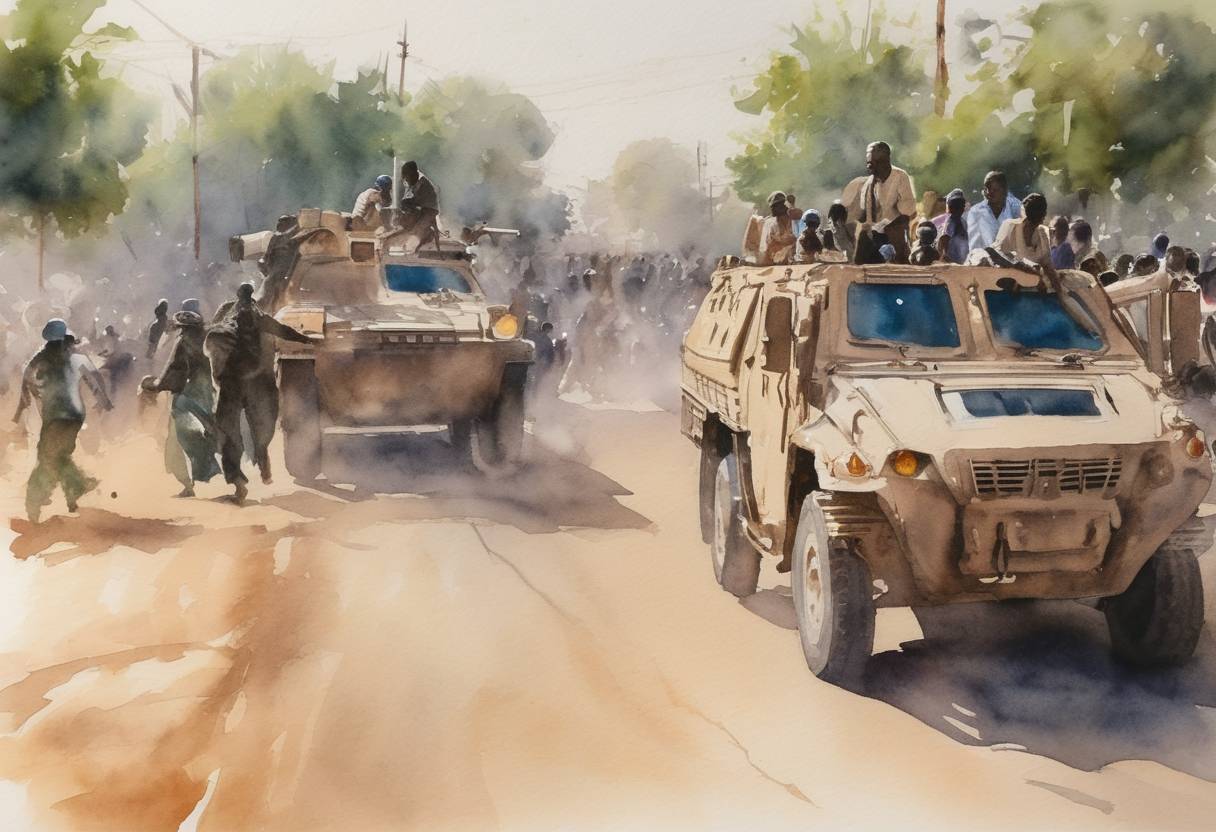
In a brutal crackdown on June 3, 2019, Sudanese security forces violently dispersed a sit-in of protestors who had positioned themselves outside the military headquarters in Khartoum. This tragic event, known as the Khartoum massacre, resulted in significant casualties and prompted widespread international condemnation.
The massacre occurred amid ongoing protests that began in December 2018 against the long-standing regime of President Omar al-Bashir. The protests, initially triggered by economic hardships and rising costs of living, quickly evolved into a broader movement demanding political change. On April 11, 2019, sustained public pressure led to Omar al-Bashir’s ousting. However, hopes for a democratic transition were dashed when a Transitional Military Council (TMC) assumed control, leading protestors to continue their demonstrations, calling for civilian rule.
In the early hours of June 3, 2019, heavily armed units, including the Rapid Support Forces (RSF), a paramilitary group with a notorious reputation for human rights abuses, were deployed to the protest site. They used live ammunition, tear gas, and batons against unarmed civilians who had been peacefully camping out. The attack was indiscriminate and particularly brutal, with reports of beatings, sexual violence, and bodies being tossed into the Nile River.
The exact number of casualties remains uncertain due to the chaotic nature of the event and subsequent crackdown on information. However, estimates suggest over 100 people were killed, with hundreds more injured. Many missing persons were never accounted for, fueling suspicions of systemic cover-ups by authorities.
The massacre led to a dramatic escalation in tension between the TMC and protest leaders, galvanizing both local resistance and international outcry. The African Union suspended Sudan’s membership, urging leaders to protect civilians and respect their rights. Numerous countries and human rights organizations condemned the violence, demanding accountability and the establishment of an independent investigation.
Internally, the massacre strengthened the resolve of pro-democracy groups, uniting them under the Forces of Freedom and Change (FFC) coalition. While tensions remained high, negotiations eventually led to a power-sharing agreement in August 2019, signaling a precarious but hopeful move towards civilian governance in Sudan. The event remains a poignant reminder of the country’s tumultuous struggle for democracy and justice.
Source: example.com