Hernando de Soto: Death on the Mississippi River - May 21, 1542
1542 · Mississippi River, United States
Spanish explorer Hernando de Soto died on the banks of the Mississippi River. He was the first European documented to have crossed the river.
October 31, 1541
Spanish conquistador Hernando de Soto entered Tula, an important Native American polity in present-day Arkansas.
Tula, present-day United States | Spanish Empire
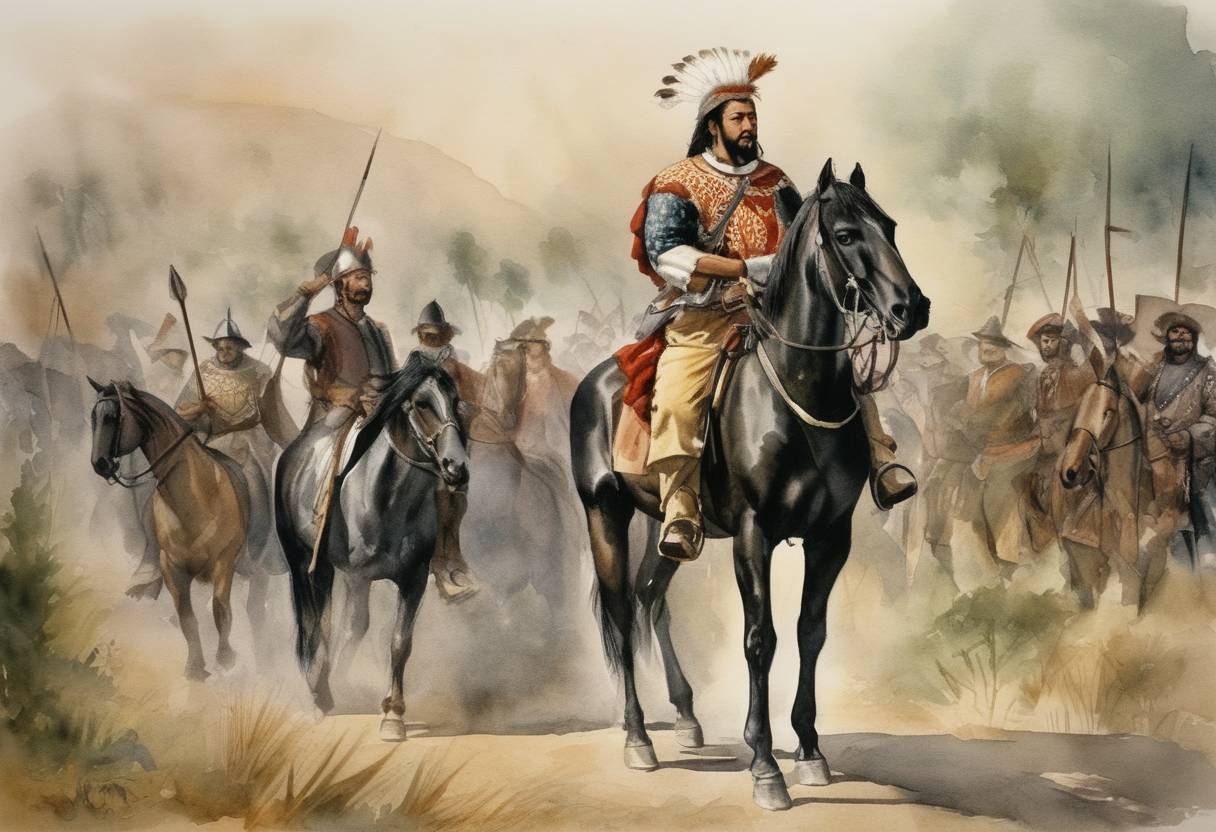
On October 31, 1541, Spanish conquistador Hernando de Soto reached the Tula province, an influential Native American polity located in what is now the state of Arkansas. This encounter was part of de Soto’s larger expedition through the southeastern United States, which he embarked upon in 1539 in search of wealth, akin to the fabled riches believed to rival those of the Incan and Aztec civilizations.
Hernando de Soto: A seasoned explorer, de Soto had previously been involved with Francisco Pizarro in the conquest of the Inca Empire in Peru. Utilizing his acquired wealth and experience, de Soto launched his own expedition into North America with the mission of discovering abundant resources and establishing colonial settlements.
The Expedition: Starting in Florida, de Soto’s expedition wound through present-day southeastern America, making forays into regions that are now Georgia, South Carolina, North Carolina, Tennessee, Alabama, Mississippi, Arkansas, and eventually Texas.
The Tula People: Known for their fortified villages, the Tula resistance was formidable. They were part of the larger Mississippian culture, which was characterized by mound-building, organized community structures, and a robust trade network.
Conflict and Skirmish: Upon entering Tula territory, de Soto’s advanced party was met by native warriors, ahead of any diplomatic engagement or trade. A skirmish ensued as the Tula, known for their warfare capabilities, resisted the incursion of these foreign invaders.
Military Strategies: De Soto’s troops, experienced in European battle tactics, faced difficulty in the dense and unfamiliar terrain. The engagement marked one of many instances where the technological superiority of the Spanish was challenged by the defensive prowess and local knowledge of native tribes.
Legacy of Contact: The encounter with the Tula exemplified the recurrent pattern of violent confrontations between European explorers and Native American polities.
Continued Journey: While the Tula conflict did not yield the riches or submission de Soto sought, the expedition continued westward, with de Soto dying the following year in 1542, never realizing the grand returns he envisioned.
Historical Impact: The expedition left a significant footprint in the southeastern United States, forever altering indigenous societies through disease, cultural exchanges, and eventual colonial incursions. It preluded the extensive European incursion and settlement in North America.
Contacts like those with the Tula were instrumental in shaping the interactions between Native Americans and Europeans. These events highlighted the resistance faced by European powers and foreshadowed the ensuing century’s complex dynamics of conquest, colonization, and cultural change.
Source: en.wikipedia.org