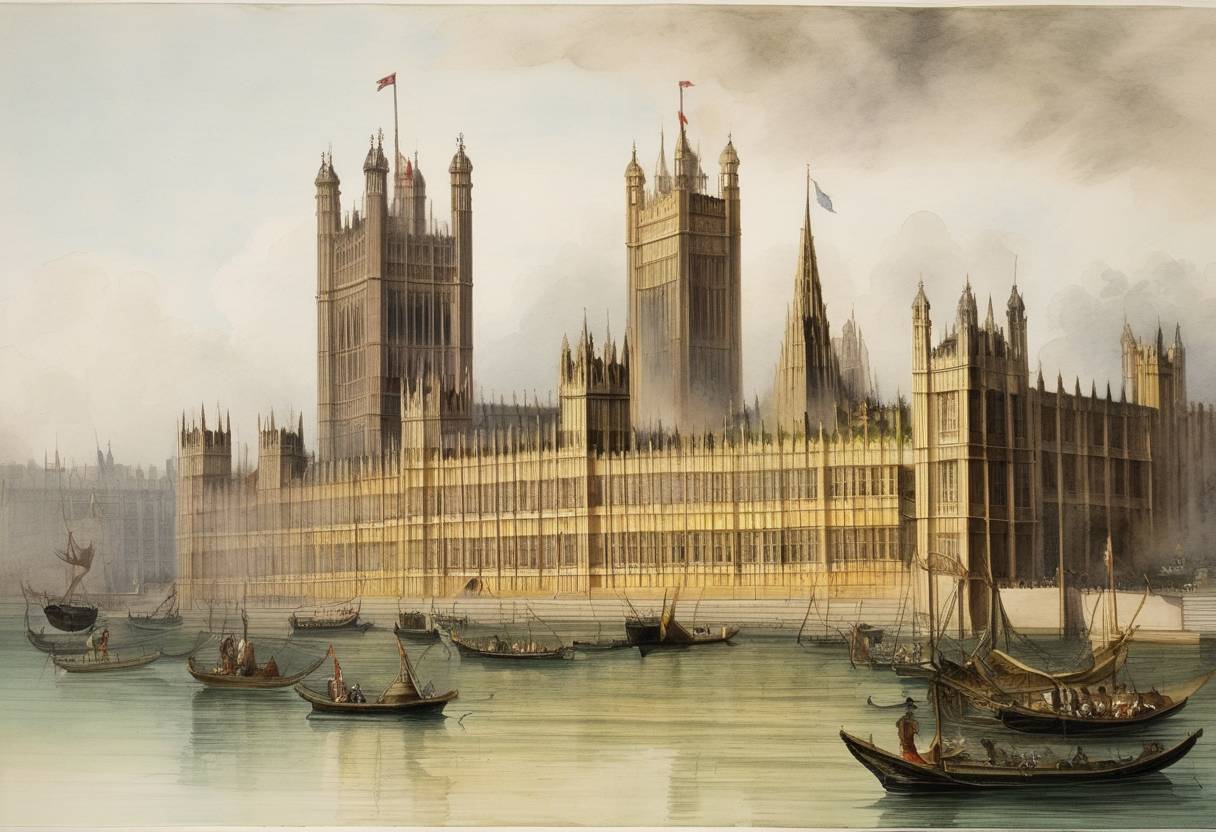
The English Parliament Passes the Acts of 1553
On May 14, 1553, a significant legislative development occurred within the Kingdom of England when the English Parliament passed acts permitting royal proclamations to hold the force of law. During this period, the political landscape of England was witnessing a consolidation of royal power under the Tudor dynasty. This act was indicative of the broader shifts towards centralization and the expansion of the monarch’s influence in governance.
Context
- Monarch: The ruling monarch at the time was Edward VI, though due to his minors and ill health, much of the power was exercised by his council, especially by the Lord Protector, John Dudley, Duke of Northumberland.
- Political Background: England was transitioning from the reign of Henry VIII and seeing the effects of the Reformation, which included the establishment of the Church of England. The Tudor period was characterized by significant religious and political reformations that often required swift and decisive governing action.
Key Provisions
- Royal Authority: The acts permitted proclamations made by the monarch to be as binding as if they were acts of parliament. This effectively allowed the king or queen to legislate without the immediate need for parliamentary approval, streamlining governance but also reducing checks on royal power.
- Enforcement: The practical enforcement meant that any proclamation made by the monarch could directly influence legal and social policies, theoretically without delay or legislative debate.
Significance
- Centralization of Power: This development played a crucial role in the centralization of political authority in England, setting precedents for the balance of power between the monarchy and the parliament.
- Historical Precedent: These acts were part of a trend towards increasing the power of the monarchy during the 16th century, which would later play a significant role in the tensions leading up to the English Civil War in the 17th century where issues of monarchical power vs. parliamentary sovereignty became critical.
Aftermath
- Edward VI’s Reign: As Edward VI’s health deteriorated and he was unable to govern effectively, the matters of succession and control became increasingly urgent. After Edward’s death in July 1553, England faced a succession crisis that brought Mary I to the throne briefly after Lady Jane Grey’s short reign. This act was one of many demonstrating the fragile balance of power and political maneuvering prevalent in this era.
- Impact on Governance: Subsequent monarchs and governments grappled with similar issues of governance, balancing the extent of royal authority versus parliamentary legislation, marking enduring constitutional questions in English history.
Overall, the acts that allowed royal proclamations to stand as law were a critical moment in the dynamic history of English governance, highlighting the ongoing struggle for power and the evolution of constitutional law in England.