Assassination of Roman Emperor Pertinax and the Auction of the Imperial Throne
193 · Rome, Roman Empire
The Roman Emperor Pertinax is assassinated by the Praetorian Guard, leading to the auction of the imperial throne.
January 24, 0041
Roman Emperor Caligula was assassinated by members of the Praetorian Guard, led by Cassius Chaerea, marking the end of his erratic and controversial reign that started in 37 AD.
Rome, Roman Empire | Praetorian Guard
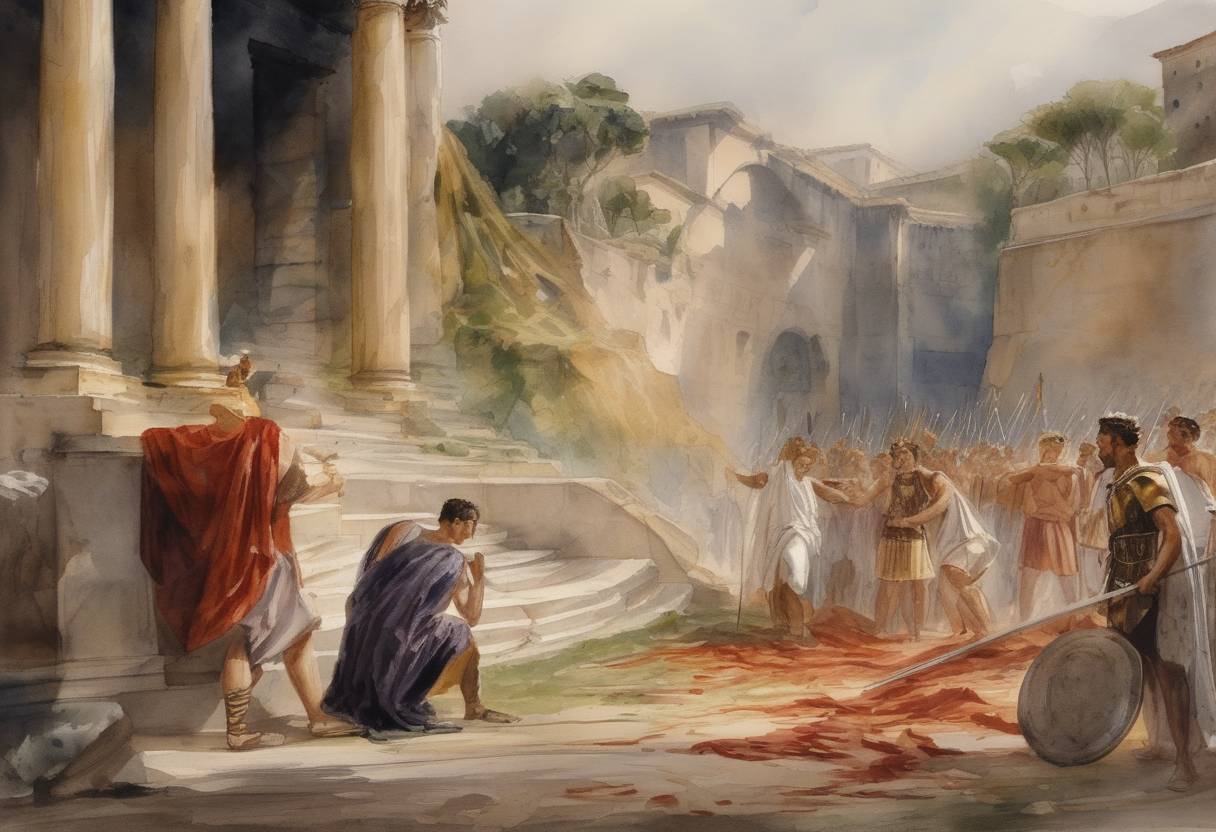
The assassination of Roman Emperor Caligula took place on January 24, 41 AD, marking a dramatic end to his tumultuous and controversial reign. Caligula, born Gaius Julius Caesar Augustus Germanicus, had ruled as emperor since 37 AD. His reign is often characterized by reports of madness, extravagance, and cruel despotism, although these accounts arise from historical narratives written by sources with varying perspectives and biases.
Caligula was the third Emperor of Rome, ascending to power following the death of his great-uncle and adoptive grandfather, Tiberius. Initially, he enjoyed popularity among the Roman populace due to his efforts to grant political reforms and relieve citizens from oppressive policies instituted by Tiberius.
However, the honeymoon period of his reign was short-lived as Caligula began exhibiting increasingly autocratic behavior. According to ancient historians like Suetonius and Cassius Dio, his rule soon descended into tyranny, marked by erratic actions, the execution of political rivals, and lavish spending on extravagant projects—such as the construction of ships praetorial in lavishness.
Caligula’s increasingly capricious rule incited dissatisfaction among various factions within the Roman military and Senate, including his personal bodyguard, the Praetorian Guard. This elite unit was responsible for the protection of Roman emperors but held significant political power themselves.
The conspiracy to assassinate Caligula was orchestrated primarily by Cassius Chaerea, a commander in the Praetorian Guard. Historical accounts suggest that Chaerea was personally aggrieved by Caligula’s mockery and insults. He, along with other conspirators from the Senate and the military, plotted to dispose of the emperor.
On January 24, 41 AD, Caligula was attacked after leaving a series of games at the Palatine Games held in his honor. The assassination took place in a secluded passageway beneath the palace, where he was stabbed to death by Chaerea and other conspirators. The attack was brutal and quick, signifying the attackers’ determination to end his reign decisively.
The immediate aftermath of Caligula’s assassination saw a brief period of chaos. The conspirators had hoped for a restoration of the Republic, but events unfolded otherwise. Claudius, Caligula’s uncle, was discovered hiding in the palace and was quickly declared emperor by the same Praetorian Guard responsible for his nephew’s death.
Claudius’s rise to power was a crucial moment in Roman history, as it set a precedent for the influence of the Praetorian Guard in selecting emperors, further solidifying their political sway within the Roman state.
The assassination of Caligula stands as a stark reminder of the volatility of imperial politics in Ancient Rome and the powerful role of military entities such as the Praetorian Guard in the maintenance and transition of power. It also served as an early indication of the limits of tyrannical rule, demonstrating that even emperors perceived as divine were not invulnerable to internal dissent and political machinations.
Source: en.wikipedia.org