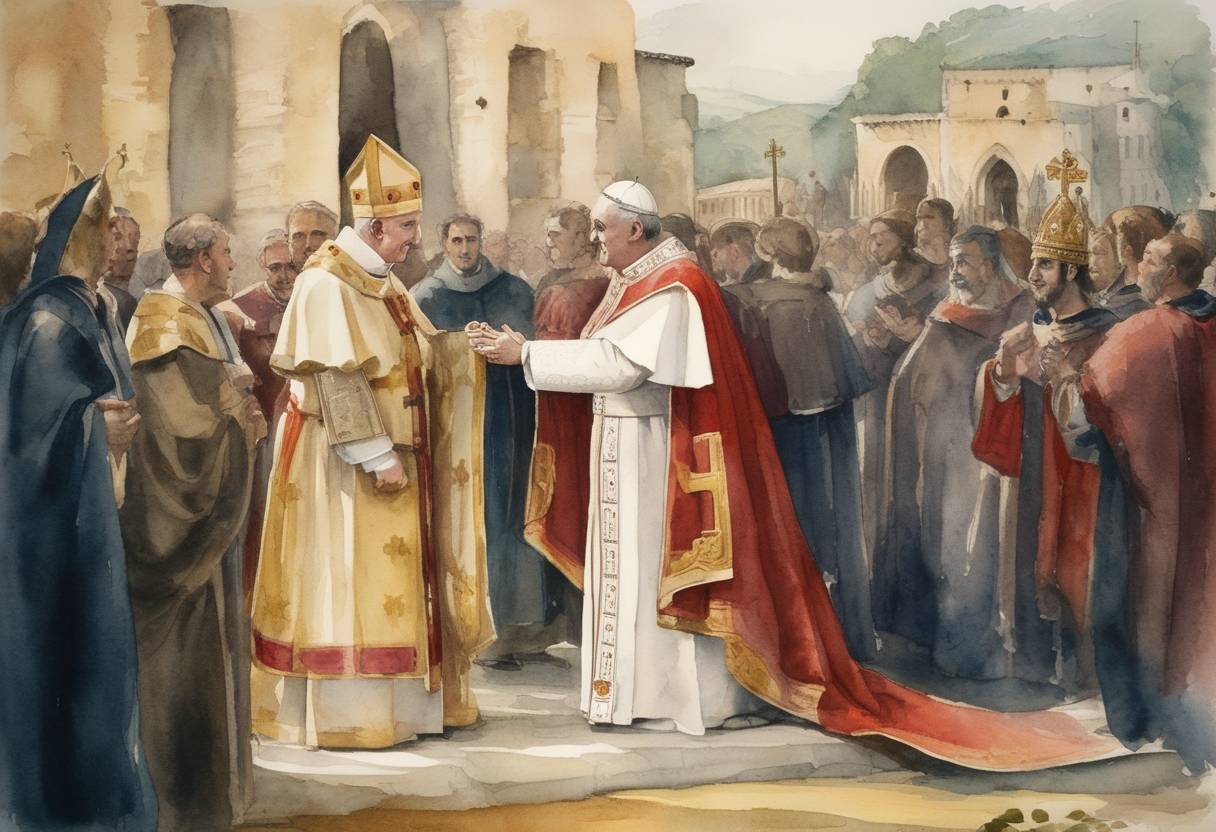
Concordat of Sutri - February 11, 1111
On February 11, 1111, a significant event took place in the context of the Investiture Controversy, a prolonged conflict between the papacy and secular European powers regarding the appointment of church officials. On this date, Pope Paschal II entered into an agreement with Henry V, the Holy Roman Emperor, known as the Concordat of Sutri.
Background of the Investiture Controversy
The Investiture Controversy was marked by a power struggle between the church and the Holy Roman Empire, beginning in the late 11th century. The primary issue was whether the pope or the emperor held the authority to appoint bishops and abbots, who wielded both religious and political power. This dispute was part of a larger struggle for control over the governance of Christendom and involved various efforts to delineate the boundary between secular and ecclesiastical authority.
The Concordat of Sutri
The Concordat of Sutri came amid ongoing tensions as Henry V continued his father’s (Henry IV) legacy of conflict with the papacy over investiture rights. In an effort to resolve the conflict temporarily, a meeting was convened at Sutri, near Rome. The agreement reached involved significant concessions by both parties:
- For the Papacy: Pope Paschal II agreed to crown Henry V as Holy Roman Emperor, providing him with legitimacy and recognition that were crucial during his reign.
- For the Empire: Henry V agreed to renounce the practice of lay investiture, symbolically allowing the pope the authority to appoint church officials. This was a major concession in favor of ecclesiastical independence from secular influence.
Significance and Aftermath
While the Concordat of Sutri was a temporary measure, it highlighted the ongoing power dynamics and struggles between church and state. It set a precedent for negotiations leading to further resolutions, most notably the Concordat of Worms in 1122, which provided a more lasting solution by distinguishing between secular and spiritual powers in the appointment of bishops.
Despite its temporary nature, the agreement at Sutri marked an important step toward defining the limits of secular influence over ecclesiastical appointments, reflecting the broader movement towards church reform and autonomy. The resolution of such disputes eventually led to the strengthening of papal authority and the reformation movements of the 12th century, influencing the political and religious landscape of medieval Europe.