Establishment of Full Diplomatic Relations between Egypt and Israel
1980 · Cairo, Egypt
Egypt and Israel established full diplomatic relations following the Camp David Accords.
May 23, 1967
Egyptian President Gamal Abdel Nasser closed the Straits of Tiran to Israeli shipping, leading to military escalation preceding the Six-Day War.
Cairo, Egypt | Egyptian Government
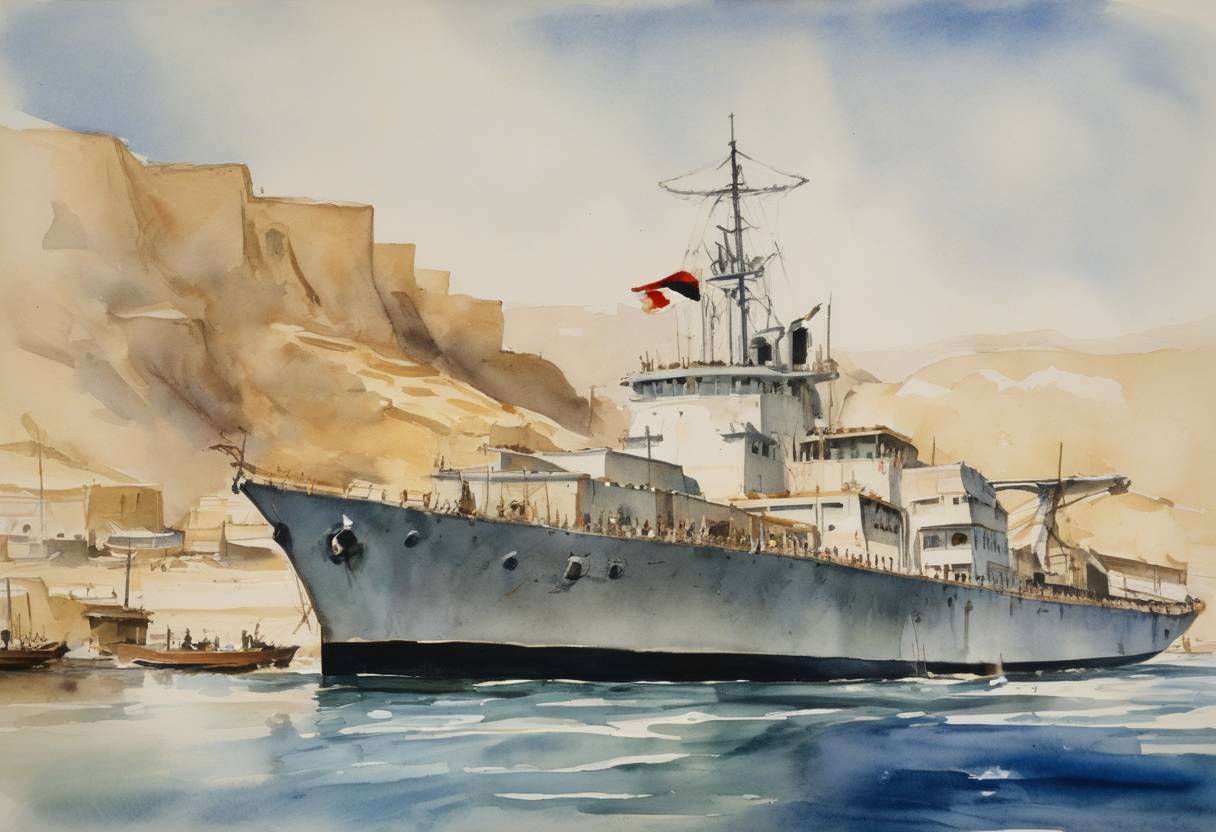
On May 23, 1967, Egyptian President Gamal Abdel Nasser made a pivotal decision that significantly escalated tensions in the Middle East by announcing the closure of the Straits of Tiran to Israeli shipping. This strategic move effectively blockaded the Israeli port of Eilat, crippling Israel’s maritime access to the Red Sea and its essential supply routes for oil and other goods.
The Straits of Tiran, a narrow sea passage between the Sinai and Arabian peninsulas, were crucial for Israeli maritime traffic. Israel considered them vital for its shipping routes to Asia and Africa. Since the 1956 Suez Crisis and subsequent agreements, the Straits had remained open to Israeli vessels, a status safeguarded by international guarantees.
However, tension escalated following the mobilization of Egyptian forces into the Sinai Peninsula and the removal of the United Nations Emergency Force (UNEF) at Nasser’s request earlier in May 1967. This strategic redeployment sought to demonstrate Egyptian strength and solidarity with other Arab nations against perceived Israeli aggression.
Nasser’s closure of the Straits was perceived by Israel as a casus belli, or an act justifying war. Israeli Prime Minister Levi Eshkol, under intense political and military pressure, saw the blockade as an existential threat to Israel’s economy and national security.
International diplomatic efforts swiftly ensued, with the United States and other nations attempting to negotiate a peaceful resolution to the crisis. However, the lack of immediate success in reopening the waterways further heightened tensions.
Nasser’s blockade directly contributed to the escalation that led to the outbreak of the Six-Day War on June 5, 1967. Israel launched preemptive air strikes against Egypt, quickly followed by ground operations that expanded throughout the region. This decisive military engagement resulted in a substantial territorial and geopolitical shift, reshaping Middle Eastern geopolitics in the following decades.
The closure of the Straits of Tiran remains a critical moment in Middle Eastern history, illustrating the complex interplay of military strategy, international diplomacy, and regional politics that marked the lead-up to the Six-Day War.
Source: www.history.com