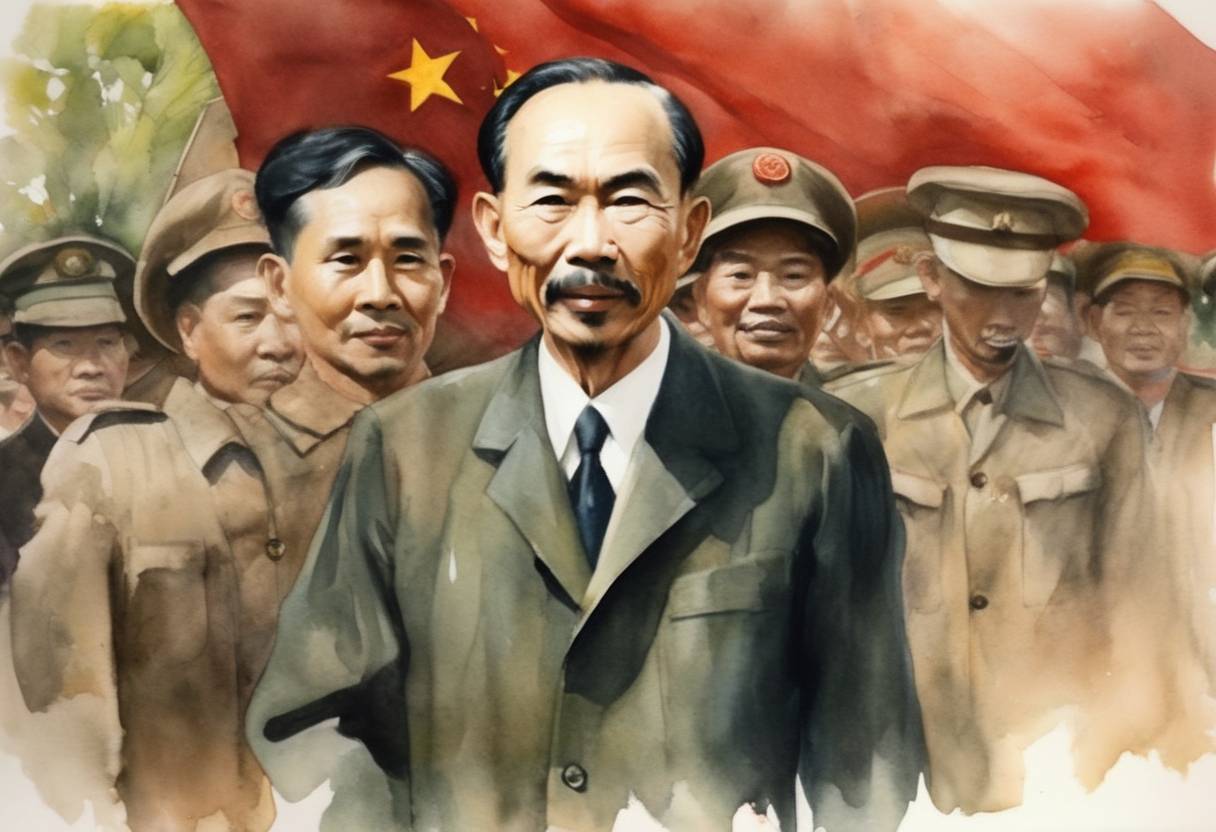
Ho Chi Minh was not elected President of North Vietnam on March 6, 1946. Instead, the historical event of significance relating to Ho Chi Minh on this date is the signing of the Ho-Sainteny Agreement between the Democratic Republic of Vietnam and France.
Ho-Sainteny Agreement (March 6, 1946)
On March 6, 1946, a pivotal agreement known as the Ho-Sainteny Agreement was signed between Ho Chi Minh, representing the Democratic Republic of Vietnam, and Jean Sainteny, representing the French government. This agreement played a significant role in the early post-World War II period as Vietnam sought to establish its independence.
Context
- In 1945, following the surrender of Japan and the power vacuum it left in Southeast Asia, Ho Chi Minh declared Vietnamese independence in September. However, the region was complex, with various foreign powers interested in exerting influence.
- France was looking to reassert its colonial control over Indochina, while Vietnam was pushing for self-rule.
- Negotiations between Ho Chi Minh and French representatives were an attempt to stave off an immediate conflict while addressing Vietnam’s aspirations for sovereignty.
Key Provisions
- French Recognition: The agreement acknowledged the Democratic Republic of Vietnam as a “free state,” part of the French Union, granting Vietnam some level of autonomy but still recognizing French interests.
- Troop Presence: It allowed for the temporary re-entry of French forces into northern Vietnam; ostensibly, these troops would replace Chinese Nationalist forces and maintain order during the transition period.
- Negotiations for Future Status: The agreement laid the groundwork for future negotiations regarding the ultimate political status of Vietnam.
Consequences and Aftermath
- While the agreement initially helped de-escalate tensions and forestalled immediate conflict, it did not resolve fundamental differences between the Vietnamese desire for full independence and French colonial ambitions.
- Subsequent talks in Fontainebleau later in 1946 failed to reach a lasting resolution, leading to the outbreak of the First Indochina War in December 1946.
- The agreement was a diplomatic maneuver, reflecting the complexities of post-war decolonization and Cold War geopolitics.
This event marks a critical juncture in Vietnam’s ongoing struggle for independence and highlights the challenges facing newly emerging nations in negotiating colonial legacies and asserting their self-determination.