The End of the U.S. Military Mission in Iraq: December 18, 2011
2011 · Baghdad, Iraq
The last convoy of U.S. troops left Iraq, marking the official end of the U.S. military mission in the country after nearly nine years of war.
November 8, 2006
A batter Marine expedition lands on Anbar Province to search for suspected insurgents.
Anbar Province, Iraq | United States Marine Corps
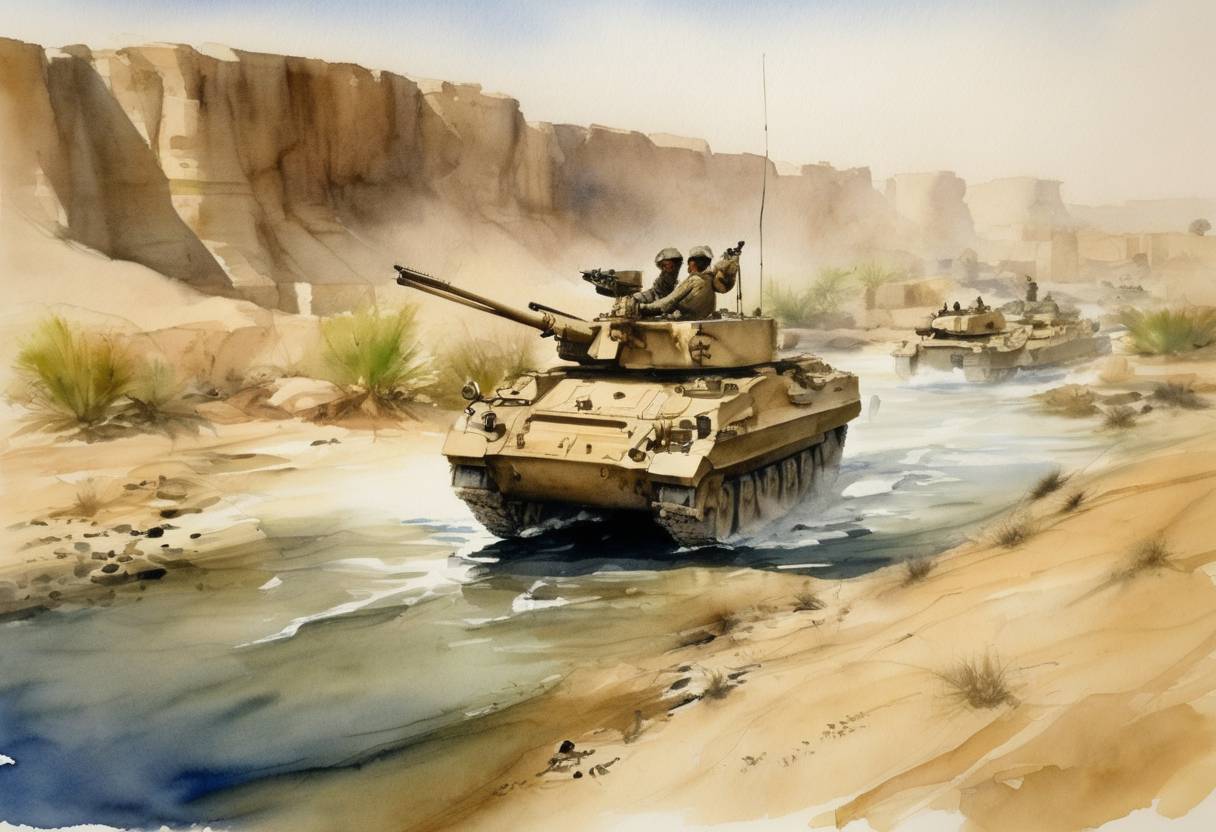
By November 2006, the Iraq War, which had begun in 2003 with the toppling of Saddam Hussein’s regime, continued with significant conflict and instability. Anbar Province, located in western Iraq, emerged as a focal point of insurgency, primarily due to its geographic size, strategic position, and largely Sunni Arab population opposed to the U.S.-led coalition presence.
On November 8, 2006, U.S. Marine units conducted a military operation in Anbar Province. This expedition was part of ongoing efforts to combat and dismantle insurgent groups operating in the region. The Marines targeted specific areas suspected of harboring insurgents, focusing on capturing or eliminating individuals affiliated with groups that were actively resisting coalition forces and the nascent Iraqi government.
Disrupt Insurgent Activities: The primary goal was to disrupt the operations of militant groups, thereby reducing their ability to plan and execute attacks against coalition forces and local civilians.
Gather Intelligence: The expedition aimed to gather valuable intelligence about the networks and logistics of insurgent groups, supporting broader strategic efforts in the region.
Stabilize Anbar Province: By targeting insurgents, the operation sought to help stabilize Anbar Province, contributing to larger efforts to bring security and governance to Iraq.
The operation in November 2006 was part of a series of military campaigns known collectively as the “Anbar Campaign.” These operations were crucial in reducing insurgent influence and eventually led to the so-called “Anbar Awakening,” where local Sunni tribal leaders began to turn against insurgent groups like Al-Qaeda in Iraq (AQI).
The Marine expedition, and similar operations in Anbar and beyond, played a critical role in the evolution of U.S. military strategy in Iraq. They underscored the complexities of asymmetric warfare and highlighted the importance of indigenous support in counter-insurgency efforts. The eventual reduction of violence in Anbar set a precedent for operations in other volatile regions of Iraq, illustrating the potential for collaboration between foreign forces and local actors in stabilizing conflict zones.
Source: en.wikipedia.org