First Electric Streetcar Operates in Berlin: May 3, 1880
1880 · Berlin, Germany
The first electric streetcar, built by Werner von Siemens, begins operating in Berlin, Germany, signaling a major advancement in urban transportation technology.
August 19, 1854
The First Siemenststadtbahn, an early commuter train in Berlin, Germany, began operations.
Berlin, Germany | Siemens & Halske
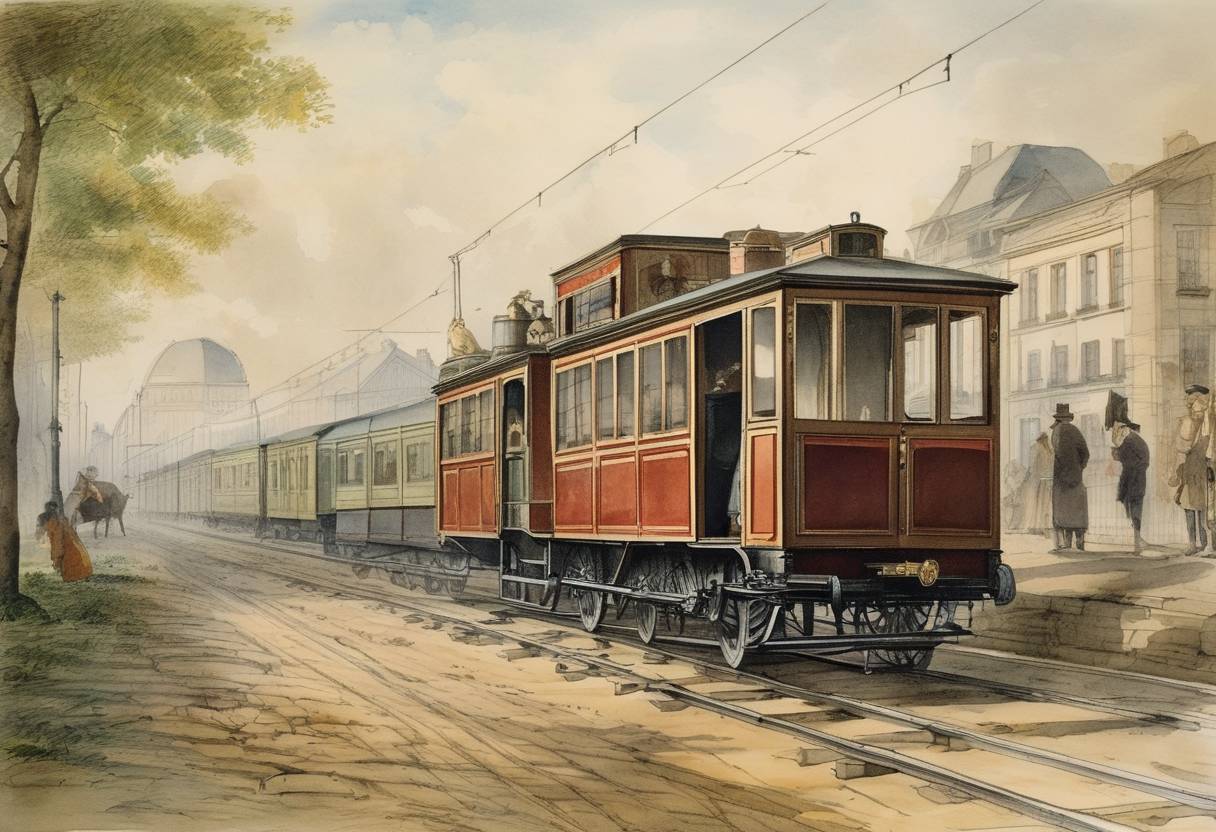
The Siemensstadtbahn, an early German commuter rail line, began operations on August 19, 1854. Established to facilitate efficient transportation for workers and materials between key industrial zones, this rail line was a significant development for the burgeoning industrial city.
During the mid-19th century, Berlin was rapidly industrializing, necessitating improved transportation infrastructure to support the movement of its workforce and goods. Siemens, a leading company in the region, recognized the need for a dedicated transportation line to connect factories and residential areas. This foresight represented a broader trend across Europe where burgeoning industrial hubs sought efficient urban transit solutions.
The Siemensstadtbahn was engineered to accommodate both passengers and freight, reflecting the mixed-use nature of early commuter rail systems. Its operation utilized steam-powered locomotives, a hallmark of the era’s railway technology, providing a vital link between Siemens’ main factory complex in Siemensstadt and other parts of Berlin.
The opening of the Siemensstadtbahn represented a pivotal moment in Berlin’s urban and industrial development, illustrating the integral role of transportation in shaping city dynamics. It not only facilitated more efficient labor mobility but also set a precedent for future commuter rail initiatives in Germany and beyond.
Following its success, the Siemensstadtbahn inspired further expansions and similar projects across Germany, contributing to the country’s reputation for efficient infrastructure. Over time, rail technology evolved, leading to the electrification and modernization of commuter lines. The foundation laid by pioneering projects like the Siemensstadtbahn continues to influence transport infrastructure planning in metropolitan areas worldwide today.
Source: en.wikipedia.org