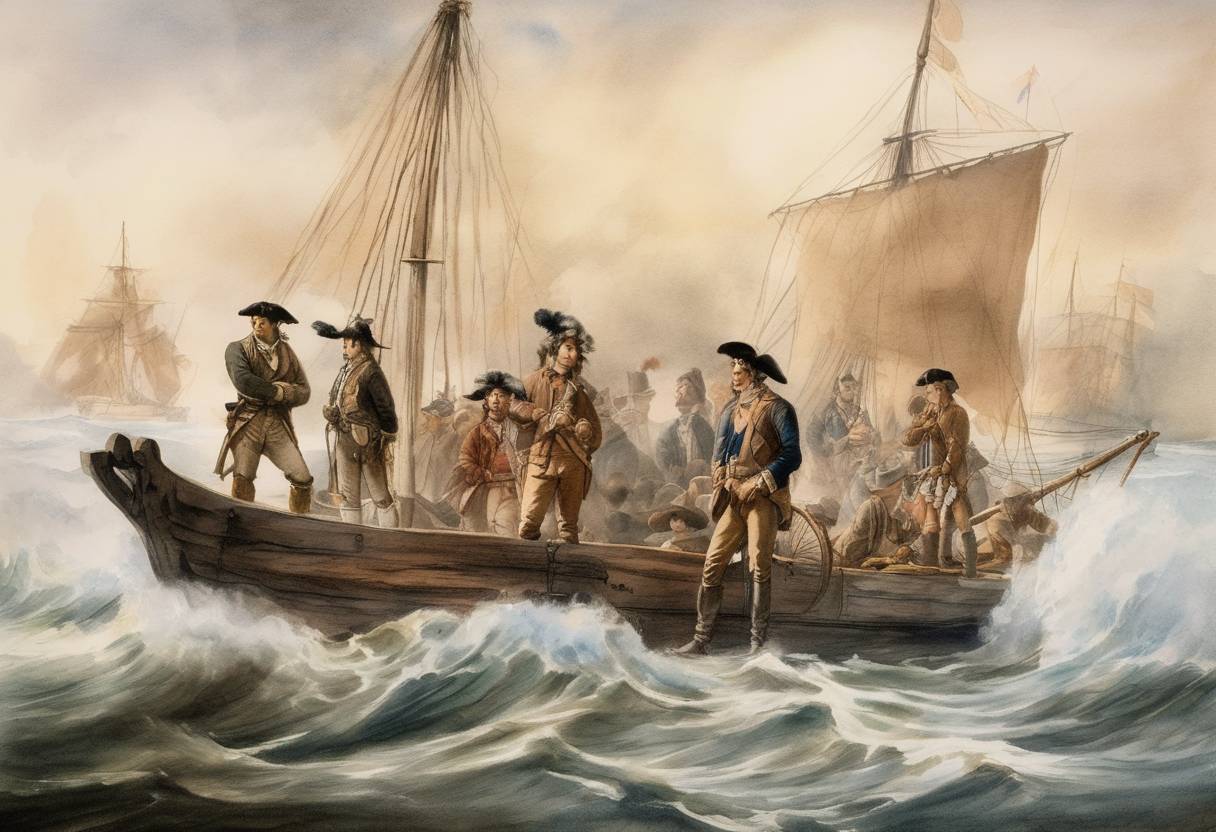
Lewis and Clark Expedition: Reaching the Pacific Ocean on the Return Journey
On March 23, 1806, the Lewis and Clark Expedition, also known as the Corps of Discovery, began its return journey after having reached the Pacific Ocean. This milestone marked a significant phase in the exploration of the vast western territories that had been acquired by the United States through the Louisiana Purchase.
The Corps of Discovery
Commissioned by President Thomas Jefferson, the Corps of Discovery was led by Meriwether Lewis and William Clark. The expedition, which began in May 1804, was tasked with mapping the newly acquired land, establishing trade with Native American tribes, and asserting American presence in the western territories.
Journey to the Pacific
After a strenuous journey across the continent, the Corps of Discovery first reached the Pacific Ocean at the mouth of the Columbia River in November 1805. They established Fort Clatsop near present-day Astoria, Oregon, where they spent the winter months of 1805-1806. The fort served as their base of operations as they awaited favorable conditions for their return journey.
Return Journey
On March 23, 1806, Lewis and Clark and their team began their return expedition. They dismantled Fort Clatsop and proceeded eastward, enthusiastically embarking on the journey to report their findings back to President Jefferson. The expedition would traverse familiar and new routes as they navigated the wilderness back to St. Louis, Missouri.
Significance and Legacy
The achievements of the Lewis and Clark Expedition were momentous. They succeeded in mapping extensive areas of the western territories, establishing trade and diplomatic relations with numerous Native American tribes, gaining valuable scientific and geographic knowledge, and documenting the region’s natural resources, flora, and fauna.
The successful return of the Corps in September 1806 contributed significantly to the expansion and development of the United States, facilitating westward expansion and reinforcing the young nation’s claim to the Pacific Northwest.
This journey underscored the bravery, resilience, and pivotal role of Lewis, Clark, their team, and the indigenous peoples who aided them, most notably Sacagawea. Their contributions have left an enduring legacy in American history and exploration.