The Firebombing of Tokyo: March 10, 1945
1945 · Tokyo, Japan
The U.S. Army Air Forces firebomb Tokyo, resulting in the deaths of an estimated 100,000 people.
March 27, 1945
The United States Army Air Forces began Operation Starvation, an aerial mining campaign to blockade Japanese shipping routes during World War II.
Pacific Ocean, Japan | United States Army Air Forces
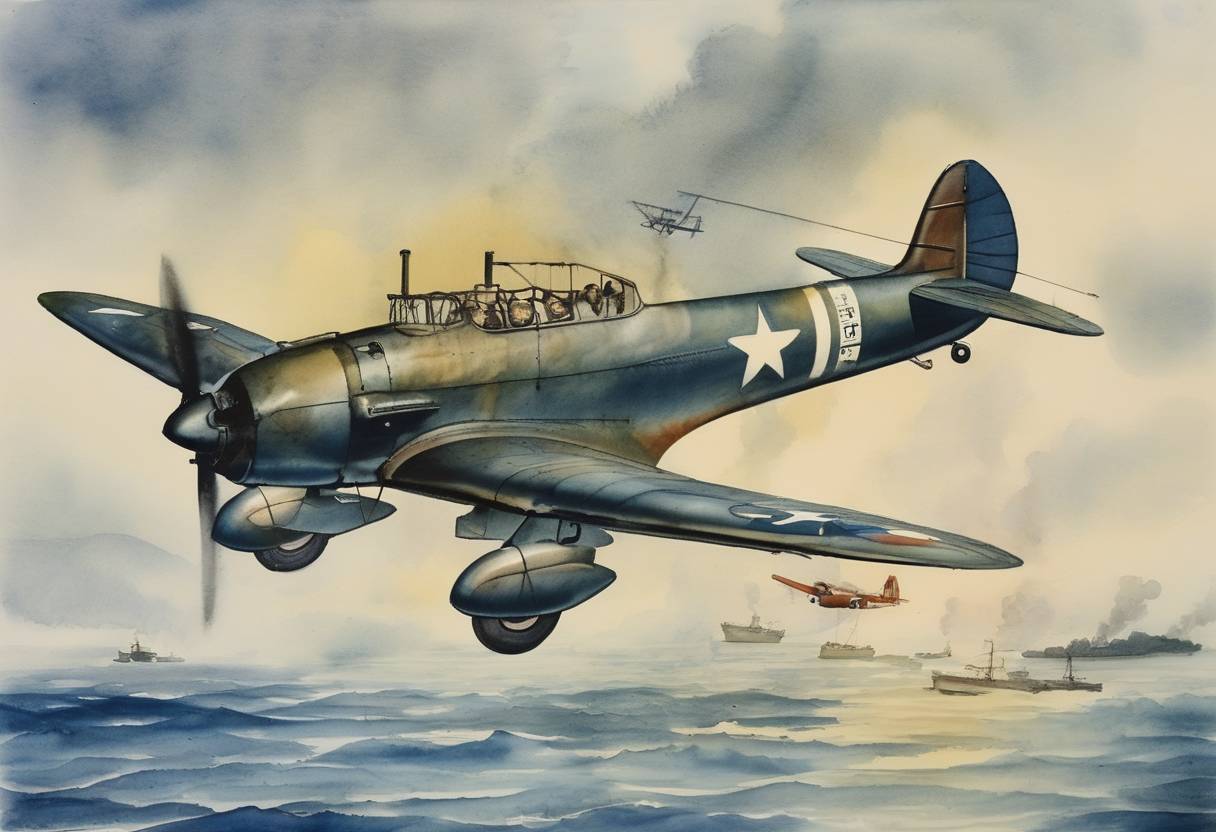
On March 27, 1945, the United States Army Air Forces initiated Operation Starvation, an aerial mining campaign designed to disrupt Japanese shipping routes during World War II. This strategic initiative was led by Major General Curtis LeMay and constituted a critical component of the broader Allied efforts to weaken Japan’s military and industrial capabilities as the war approached its final stages.
Operation Starvation was developed to reduce Japan’s ability to import essential raw materials and goods, thereby crippling its war production efforts and weakening its military endurance. The operation was distinctive because it employed aerial minelaying, a technique that had not been intensively utilized against Japan prior to this campaign. The use of B-29 Superfortress bombers to lay mines from the sky leveraged the aircraft’s long-range capability and technical sophistication.
On the starting date, the first mines were dropped into Japanese waters by 160 B-29 bombers. These aircraft deployed naval mines in strategic shipping lanes, ports, and waterways around the Japanese archipelago, including the approaches to major ports like Kobe, Hiroshima, and the Inland Sea. The mines were of several types, including influence mines activated by magnetic or acoustic signals from passing ships.
The mines were laid precisely to maximize disruption; pilots employed extensive planning and rehearsals to ensure precise placement. The effectiveness of Operation Starvation was enhanced by the B-29’s ability to fly long distances and carry significant loads, which allowed repeated sorties deep into enemy territory.
Operation Starvation had a profound impact on Japan’s shipping capabilities. It is estimated that the mining campaign was responsible for the sinking or damaging of over 1,200 vessels by August 1945, effectively choking off key supply lines and exacerbating shortages of critical materials. This outcome accelerated Japan’s logistical and economic deficiencies, contributing significantly to the overall Allied strategy of attrition against Japanese forces.
In addition to immediate effects on wartime logistics, the operation demonstrated the innovative use of strategic bombardment technology for non-conventional warfare purposes. It highlighted the growing importance of air power in modern military strategy and presaged future applications in asymmetric warfare and broader military deterrence operations.
Operation Starvation continued until Japan’s surrender in September 1945. The campaign showcased the effectiveness of aerial mining as a complement to conventional bombing, setting a precedent for future military campaigns. The use of mines laid from aircraft proved to be a cost-effective method of naval blockade, influencing post-war Cold War strategic doctrines.
Operation Starvation remains a notable example of tactical innovation and strategic genius, signifying a pivotal juncture in the application of air power during World War II.
Source: www.history.com