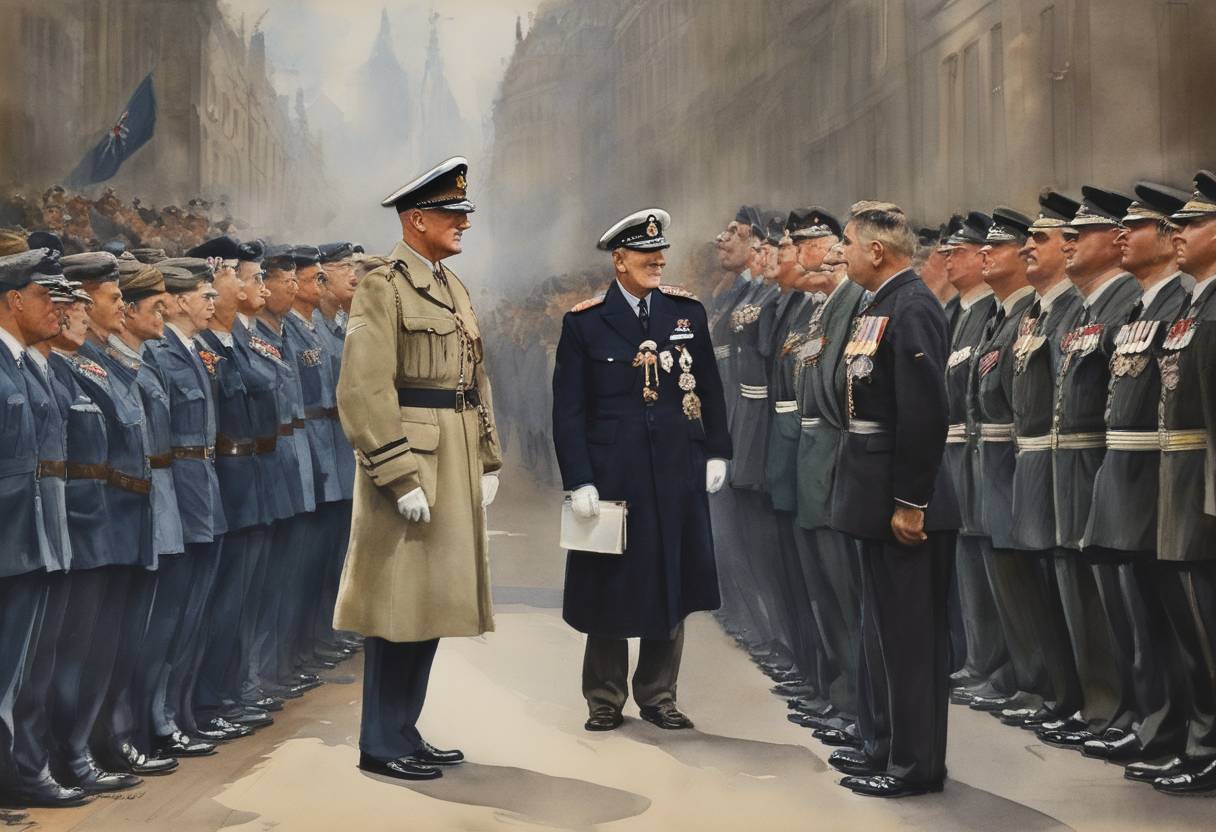
Appointment of Sir Arthur Travers Harris as Chief of the Air Staff
Marshal of the Royal Air Force Sir Arthur Travers Harris, commonly known as “Bomber Harris,” was appointed as the Chief of the Air Staff of the Royal Air Force on July 23, 1945.
Background
- Arthur Travers Harris had a distinguished military career, primarily as a leading proponent and executor of strategic bombing during World War II. Before his 1945 appointment, Harris had served as the Air Officer Commanding-in-Chief of RAF Bomber Command from 1942 to 1945.
- Known for his role in implementing the area bombing strategy against Germany, Harris was instrumental in campaigns such as the bombing of Dresden and other German cities, aiming to disrupt the German war effort by targeting industrial and civilian infrastructure.
Appointment Context
- His appointment came at a crucial transitional period soon after the end of World War II in Europe, with the military gearing towards post-war restructuring and demobilization.
- Harris’s strategies during his command had been controversial and subject to debate, both for their military effectiveness and for the moral implications due to high civilian casualties.
Aftermath and Historical Significance
- Harris’s tenure as Chief of the Air Staff was brief, as he was not confirmed in the post and retired from active service shortly thereafter in September 1945.
- Post-war, Harris remained a figure of contention. While some viewed him as a war hero who contributed significantly to the Allied victory, others criticized the destructiveness and ethics of his methods.
- His legacy illustrates the complex ethical and strategic dimensions of aerial warfare, which continue to be studied in military and historical contexts.
Sir Arthur Travers Harris’s contribution to military strategy and his brief appointment as Chief of the Air Staff underscore the dynamics of leadership in wartime and its immediate aftermath, reflecting the challenges faced in transitioning from military conflict to peace.