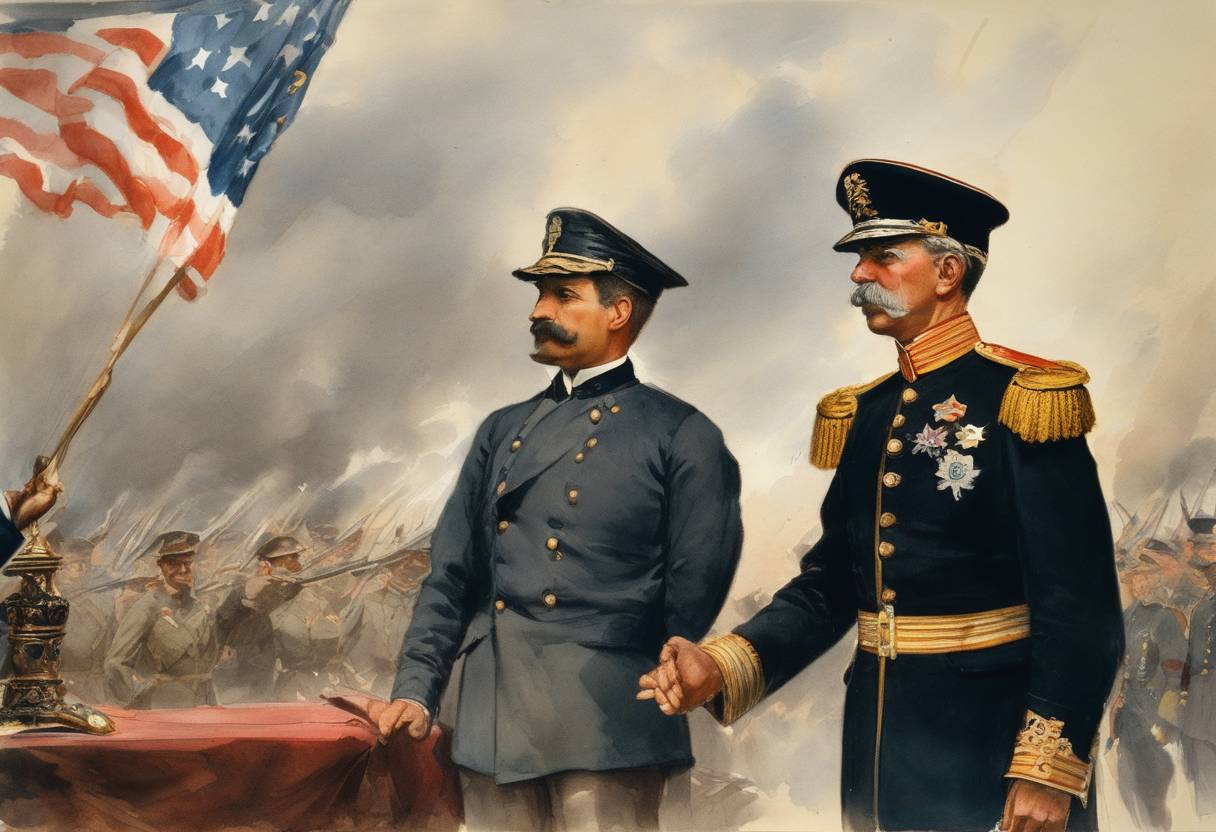
The Spanish-American War: Armistice Signed on August 11, 1898
On August 11, 1898, an armistice was signed between Spain and the United States, marking the cessation of hostilities in the Spanish-American War. This agreement was a pivotal step toward the formal peace treaty that would be known as the Treaty of Paris. The conflict, which began in April 1898, was a result of mounting tensions over issues such as the struggle for independence in Cuba and the mysterious sinking of the USS Maine.
Context and Lead-Up to the Armistice
The Spanish-American War was primarily driven by American support for the Cuban struggle for independence from Spanish rule. Tensions were exacerbated following the destruction of the USS Maine in Havana harbor, which was widely blamed on Spain despite unclear circumstances. Amidst growing public pressure and the influence of yellow journalism, the U.S. Congress passed resolutions leading to a declaration of war in April 1898.
The war itself was relatively brief but intense, characterized by major battles in both the Caribbean and Pacific theaters, including the successful naval blockade of Cuba and decisive victories at San Juan Hill and Manila. American naval superiority and the deteriorating position of Spanish forces worldwide hastened the conflict’s conclusion.
Signing of the Armistice
Negotiations for an armistice began as the United States and Spain recognized the unsustainable nature of continued conflict. The terms of the August 11 armistice included the cessation of hostilities and ultimately paved the way for peace talks in Paris.
Consequences and Significance
The armistice laid the groundwork for the Treaty of Paris, signed on December 10, 1898. This treaty officially ended the war and resulted in Spain relinquishing its sovereignty over Cuba, ceding Puerto Rico and Guam to the United States, and selling the Philippines to the United States for $20 million.
The Spanish-American War and its conclusion marked a significant turning point for both participating nations. For Spain, it signaled the end of its colonial empire in the Americas and a shift toward domestic modernization. For the United States, it marked the emergence of the nation as a global power with overseas territories, influencing its foreign policy and expanding its influence in international affairs. The acquisition of the Philippines, in particular, sparked domestic debate over imperialism and American ideals.
The armistice of August 11, 1898, was a crucial step in this transformative period, ending open conflict and beginning a new era in global geopolitics.