1356 · Basel, Holy Roman Empire (modern-day Switzerland)
The Basel earthquake, one of the most significant seismic events in Central Europe, struck the region, causing widespread destruction in Basel and surrounding areas.
April 1, 1700
April Fools' Day became more widespread in terms of celebration as pranks started to gain prominence across Europe. Although its precise origins remain unclear, by the 18th century, the tradition of playing practical jokes on the first of April had become common in several countries, including England, Scotland, and France.
Various, Various | N/A
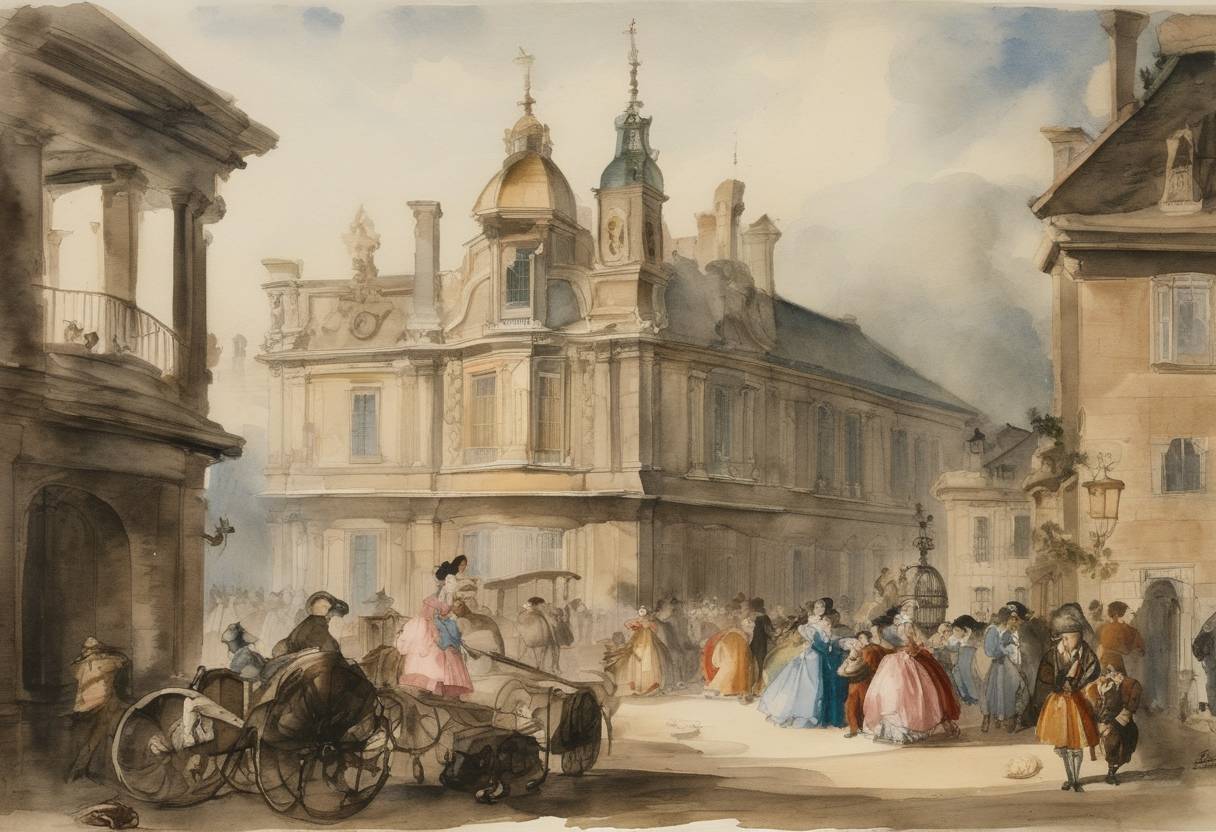
Although the exact origins of April Fools’ Day are uncertain, the tradition of celebrating April 1st with pranks and jokes became more widespread by the 18th century. Several theories attribute the day’s origins to the transition from the Julian calendar to the Gregorian calendar in France in 1582. Under the old system, the new year was celebrated around the end of March, and those who continued to observe it on April 1st were referred to as “April fools.”
By the early 1700s, April Fools’ Day customs had firmly established themselves across various European countries. In England, prank-playing on April 1st became a common tradition during the 18th century. These tricks ranged from simple jests to elaborate hoaxes. Conversely, the Scots used the occasion to mark a two-day event starting with “Huntigowk Day,” where people were sent on fake errands, followed by “Tailie Day,” which involved pranks aimed at people’s posteriors, such as pinning fake tails or “kick me” signs.
In France, the day is referred to as “Poisson d’Avril” or “April Fish.” One popular prank involves placing paper fish on people’s backs as a joke. These customs highlighted the friendly jest and lighthearted mischief that characterized the day’s spirit. The term “poisson d’avril” is still used today to describe such pranks.
The growth of April Fools’ Day across Europe during the 18th century is indicative of the cultural exchanges occurring between European nations at the time. The tradition emphasized humor, common cultural practices, and an outlet for people to indulge in lighthearted behavior. The day’s popularity provided a respite from the everyday routines and tensions of the period, allowing people across social strata to engage in playful revelry.
April Fools’ Day continues to be celebrated worldwide, evolving to include both simple pranks and elaborate media hoaxes, maintaining its status as a beloved tradition of humor and playfulness.
Source: www.britannica.com