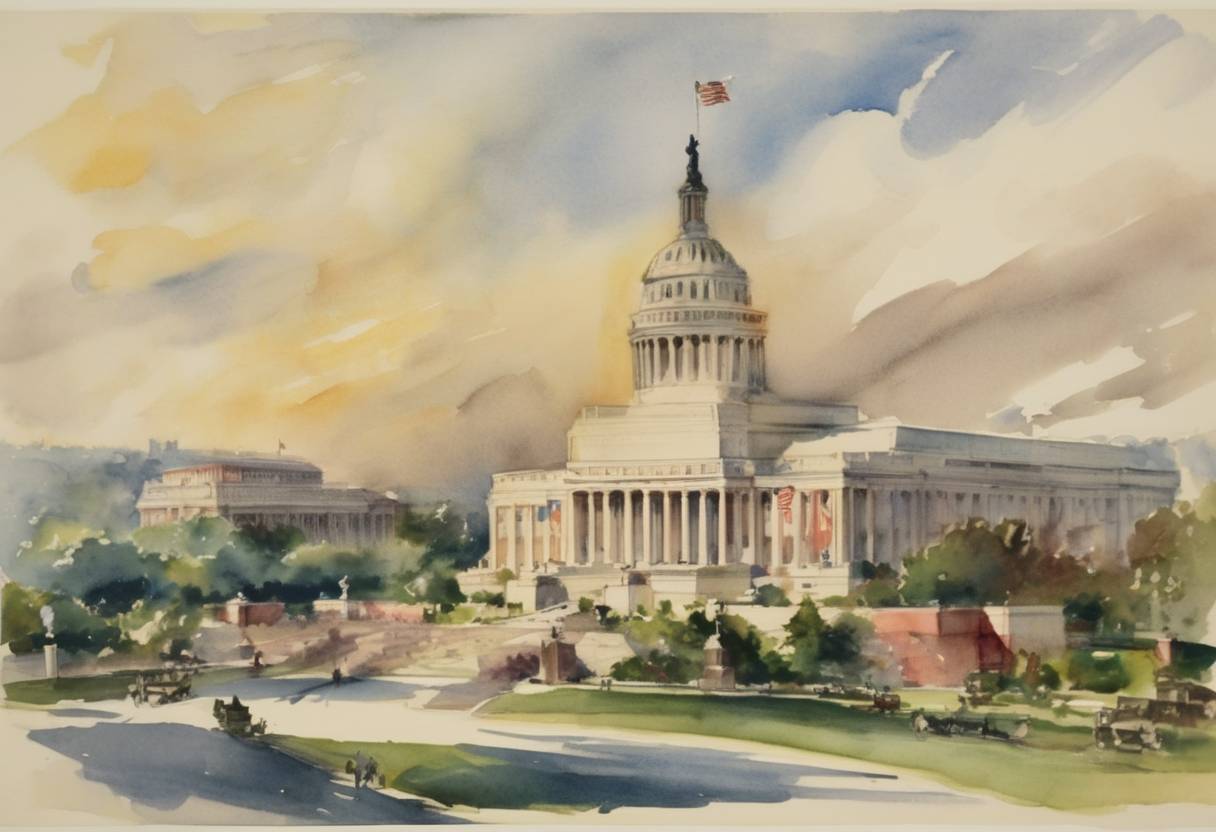
The American League Against War and Fascism Conference - November 13, 1935
On November 13, 1935, the American League Against War and Fascism held a pivotal conference in the United States that underscored its commitment to opposing the spread of war and fascism globally. This organization, established in 1933, was rooted in the growing discontent with rising militarism and totalitarian regimes across Europe, particularly in Nazi Germany and Fascist Italy.
Background
The early 1930s saw an increasing alarm at the global shifts towards conflict, as nations began expanding their military capabilities. This conference took place against the backdrop of the Great Depression, which had already heightened international tensions and economic nationalism. In the United States, there was a substantial inclination towards isolationism, coupled with a strong desire to avoid entanglement in another devastating conflict, as had been experienced during World War I.
Key Objectives
The conference aimed to unify various anti-war and anti-fascist sympathizers, including socialists, communists, labor activists, religious leaders, and pacifists. The League sought not only to promote peace but also to alert the American public to the dangers of fascist ideologies and their potential threat to democracy.
- Promotion of Disarmament: Advocating for worldwide disarmament to prevent the escalation of conflicts.
- Expansion of Democracy: Pushing for policies that would fortify democratic ideals and institutions, while opposing authoritarian governments.
- Public Awareness: Using this event as a platform to disseminate information on the threats posed by fascist regimes and the risks of U.S. involvement in foreign entanglements.
Attendees and Influence
The conference drew numerous influential figures from diverse backgrounds, emphasizing a broad coalition that could appeal to a wide range of political and social groups. It included intellectuals, writers, and activists who were not merely focused on anti-fascism but were also advocating for broader civil liberties and social justice reforms.
Legacy and Impact
This conference was pivotal in bolstering the American League’s efforts and setting the stage for its eventual rebranding as the American League for Peace and Democracy in 1937. The organization became an essential voice in the prelude to World War II, highlighting the interplay between domestic politics and international conflict.
In the years that followed, the League would face scrutiny, especially during the Cold War, as its ties with leftist movements and opposition to U.S. foreign policy often placed it at odds with mainstream political currents. Nonetheless, its 1935 conference remains a significant milestone in the history of American political activism, reflecting the complexities of advocating peace in an increasingly polarized world.