The Treaty of Edinburgh: August 21, 1560
1560 · Edinburgh, Scotland
The Treaty of Edinburgh, aimed at ending the fighting between Scotland, France, and England, was signed and required French and English troops to withdraw from Scotland.
August 8, 1503
King James IV of Scotland concludes peace negotiations with England by agreeing to the Treaty of Everlasting Peace. This treaty sought to end hostilities and was marked by the marriage of James IV to Margaret Tudor, daughter of Henry VII, symbolizing a strengthened relationship between the two kingdoms.
Edinburgh, Scotland | Kingdom of Scotland
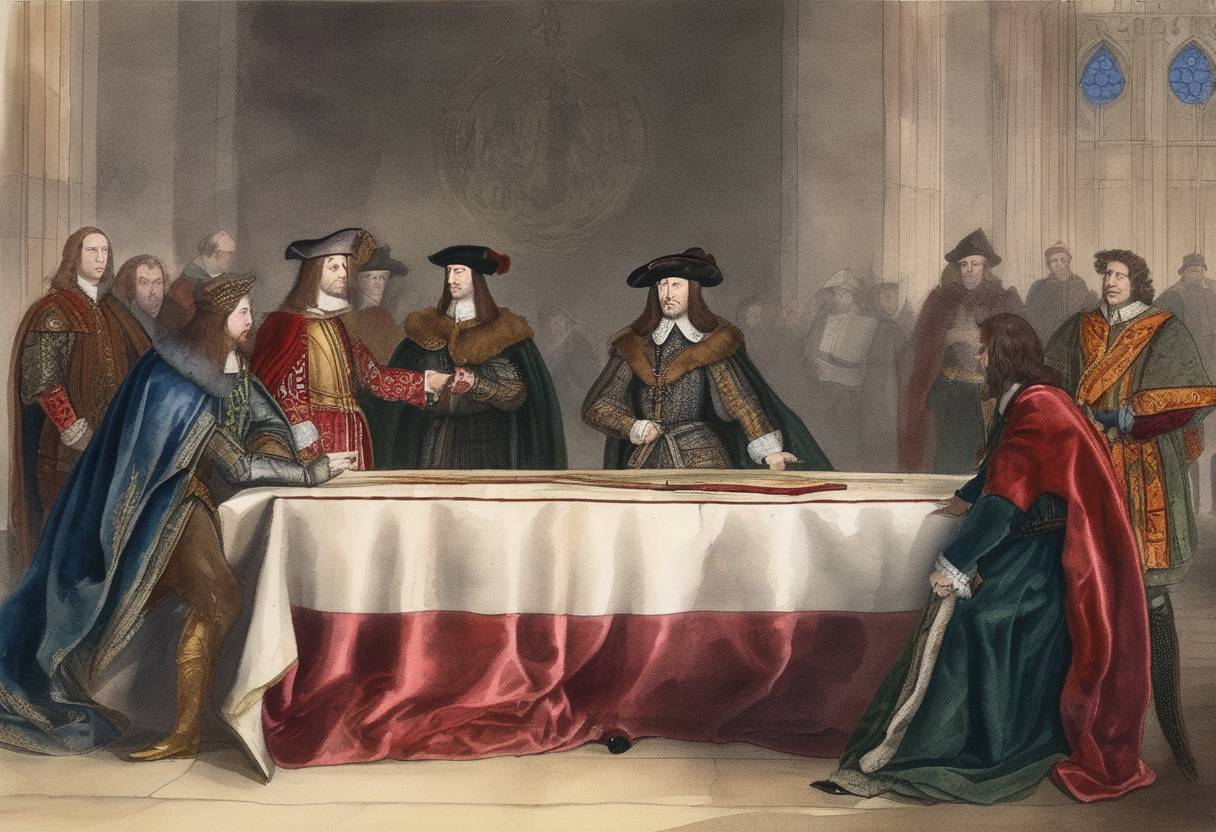
On 8 August 1503, a significant historical event unfolded as King James IV of Scotland and Henry VII of England finalized a treaty that aimed to foster enduring peace between their two kingdoms. Known as the Treaty of Everlasting Peace, this agreement marked a crucial diplomatic achievement with far-reaching implications for both Scotland and England.
Throughout the late 15th century, relations between Scotland and England were fraught with conflict and hostility, often manifesting in border wars and raids. The accession of the Tudor dynasty with Henry VII ascending the English throne in 1485 opened new possibilities for improved relations. Both monarchs recognized the advantages of a stable and peaceful relationship, not only to secure their reigns but also to bolster economic and military strength.
The Treaty of Everlasting Peace represented a formal cessation of hostilities between the two nations. Its primary conditions included:
The diplomatic negotiations were underscored by the nuptials of James IV and Margaret Tudor, celebrated on the same day as the treaty. This matrimonial alliance was not merely ceremonial but held substantial political weight. By uniting the royal families, the marriage introduced the possibility of a future dynastic union between the two nations. It symbolized a mutual commitment to maintaining harmonious relations.
In the immediate aftermath, the treaty and marriage temporarily eased tensions and instilled a sense of optimism regarding Scottish-English relations. However, the peace was eventually disrupted in the following decades due to changing political dynamics and renewed conflicts.
Despite its eventual breakdown, the Treaty of Everlasting Peace and the marriage alliance remain significant. The marriage of James IV and Margaret Tudor eventually contributed to the Union of the Crowns in 1603, when their great-grandson, James VI of Scotland, ascended to the English throne as James I, marking a permanent personal union between the two kingdoms. This treaty is thus viewed as a pivotal step towards greater cooperation and integration between Scotland and England.
Source: en.wikipedia.org