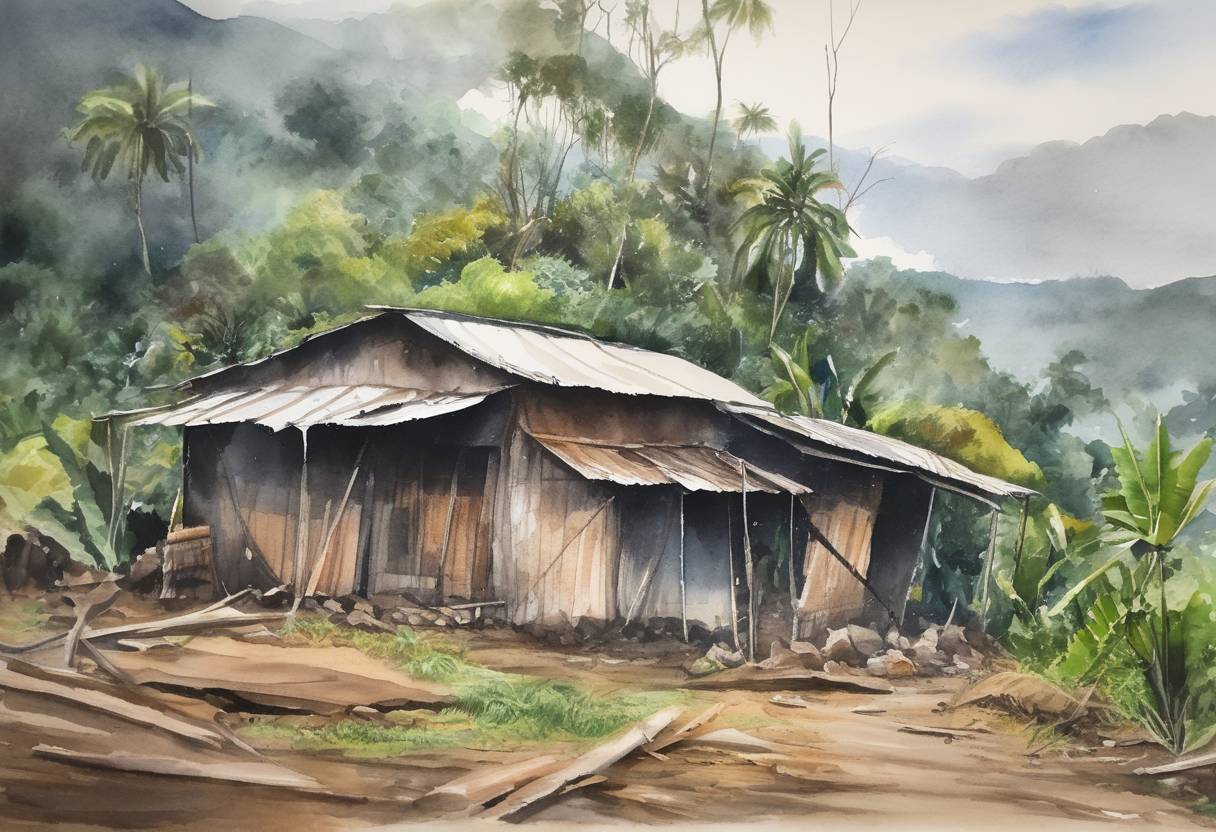
February 26, 2018: 7.5-Magnitude Earthquake in Papua New Guinea
On February 26, 2018, Papua New Guinea was struck by a powerful 7.5-magnitude earthquake. The epicenter of this seismic event was located in the Hela Province, a region known for its rugged terrain and remote communities. This disaster triggered numerous landslides and caused extensive damage across the affected areas, exacerbating the already challenging living conditions.
Context and Immediate Impact
- Epicenter and Intensity: The earthquake’s epicenter was approximately 89 kilometers southwest of Porgera, a key mining town in Enga Province. The considerable depth of 35 kilometers did not prevent the earthquake from causing severe shaking that was felt extensively across the Highlands region.
- Landslides: The earthquake-induced landslides destroyed homes and infrastructure, blocking roads and making it difficult for rescue and relief operations to reach the affected areas.
- Casualties and Displacement: Official reports confirmed dozens of fatalities, with many more injured. Thousands were left homeless, their villages and livelihoods disrupted. The remote nature of many communities hindered immediate aid efforts, leaving affected populations vulnerable.
Humanitarian Crisis
- Infrastructure Damage: Critical infrastructure, including roads, bridges, and communication lines, sustained significant damage. The destruction further isolated communities, complicating emergency service delivery.
- Response and Relief Efforts: The Papua New Guinea government declared a state of emergency in the affected provinces. International aid organizations, along with domestic groups, mobilized efforts to provide food, water, medical aid, and temporary shelters.
- Challenges: The access issues posed by landslides and damaged infrastructure delayed the delivery of necessary assistance. The response was further impeded by the region’s geographical challenges and the indigenous populations’ remote locations.
Aftermath and Long-Term Consequences
- Economic Impact: The earthquake significantly affected the local economy, particularly impacting the oil and gas sectors, as operations had to be suspended due to damage to facilities.
- Rebuilding and Resilience: The recovery process required substantial resources to rebuild homes and infrastructure. Efforts were made to not only restore but also enhance the resilience of communities to future seismic events.
- Ongoing Vulnerability: The disaster highlighted Papua New Guinea’s vulnerability to natural disasters, raising awareness of the need for improved disaster preparedness and response infrastructure.
This earthquake underscored the vital need for robust emergency response systems and the importance of international cooperation in addressing the immediate aftermath and supporting longer-term recovery efforts.