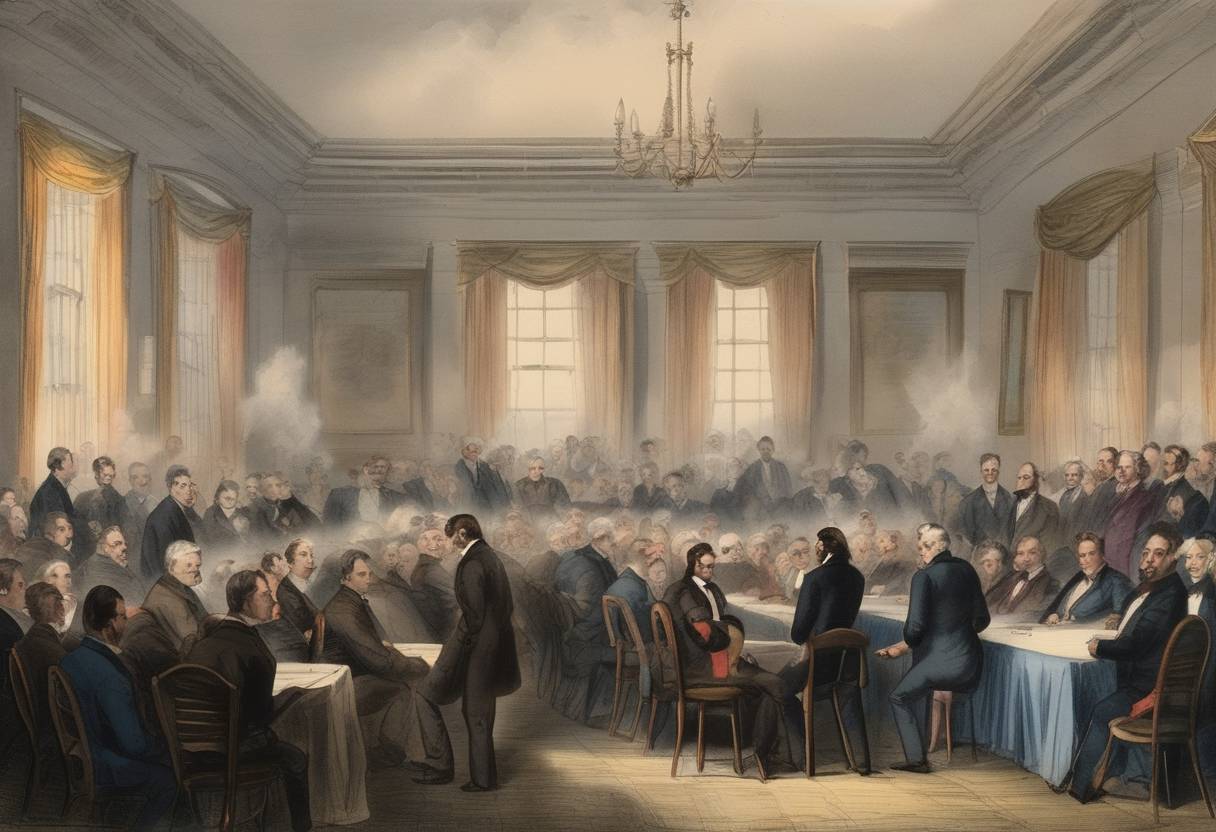
The First National Meeting of the Republican Party: February 22, 1856
On February 22, 1856, the newly formed Republican Party held its first national meeting in Pittsburgh, Pennsylvania. This gathering marked a pivotal moment in American political history, setting the stage for the emergence of a major political force that would soon challenge the dominance of the Democratic Party and the declining Whig Party.
Background
The Republican Party was established in the early 1850s in response to the divisive issue of slavery and the Kansas-Nebraska Act of 1854, which effectively repealed the Missouri Compromise by allowing territories to decide on the legality of slavery through popular sovereignty. This act galvanized anti-slavery advocates who sought to form a new political coalition dedicated to preserving the Union and opposing the expansion of slavery into the Western territories.
The Meeting
- Location and Date: The national meeting took place on February 22, 1856, in Pittsburgh, Pennsylvania, coinciding with the anniversary of George Washington’s birthday, an intentional symbol of patriotism and unity.
- Agenda: The primary objective was to establish a national presence, coordinate strategies for the upcoming 1856 presidential election, and unify various anti-slavery factions under one banner.
- Participants: The meeting attracted a diverse group of former Whigs, Free Soilers, anti-slavery Democrats, and abolitionists, reflecting the party’s broad coalition against the expansion of slavery.
Outcomes and Significance
Planning for the National Convention: The Pittsburgh meeting laid the groundwork for the first official Republican National Convention, which would be held later that year in Philadelphia. The convention was set to nominate a presidential candidate and formalize the party’s platform.
Platform and Policies: While the detailed platform was to be finalized at the Philadelphia convention, the meeting in Pittsburgh helped cement the party’s stance on several critical issues: halting the spread of slavery, promoting modernization, and supporting liberal economic policies.
Legacy: The establishment of the Republican Party at this meeting contributed to reshaping the American political landscape. It was only four years later that the party would see its first presidential victory with the election of Abraham Lincoln in 1860, leading to further polarization around the issue of slavery.
Conclusion
The Republican Party’s first national meeting in Pittsburgh set in motion a series of events that would lead to significant shifts in American politics. It captured the growing anti-slavery sentiment in the North and solidified the party’s role as a major contender in the national political arena, eventually leading to its profound impact on the Civil War and the preservation of the Union.