Napoleon's Retreat from Moscow: October 19, 1812
1812 · Moscow, Russia
Napoleon Bonaparte begins his retreat from Moscow after a failed invasion of Russia, marking a turning point in the Napoleonic Wars.
June 7, 1810
The French began the occupation of Amsterdam during the Napoleonic Wars.
Amsterdam, Netherlands | French Empire
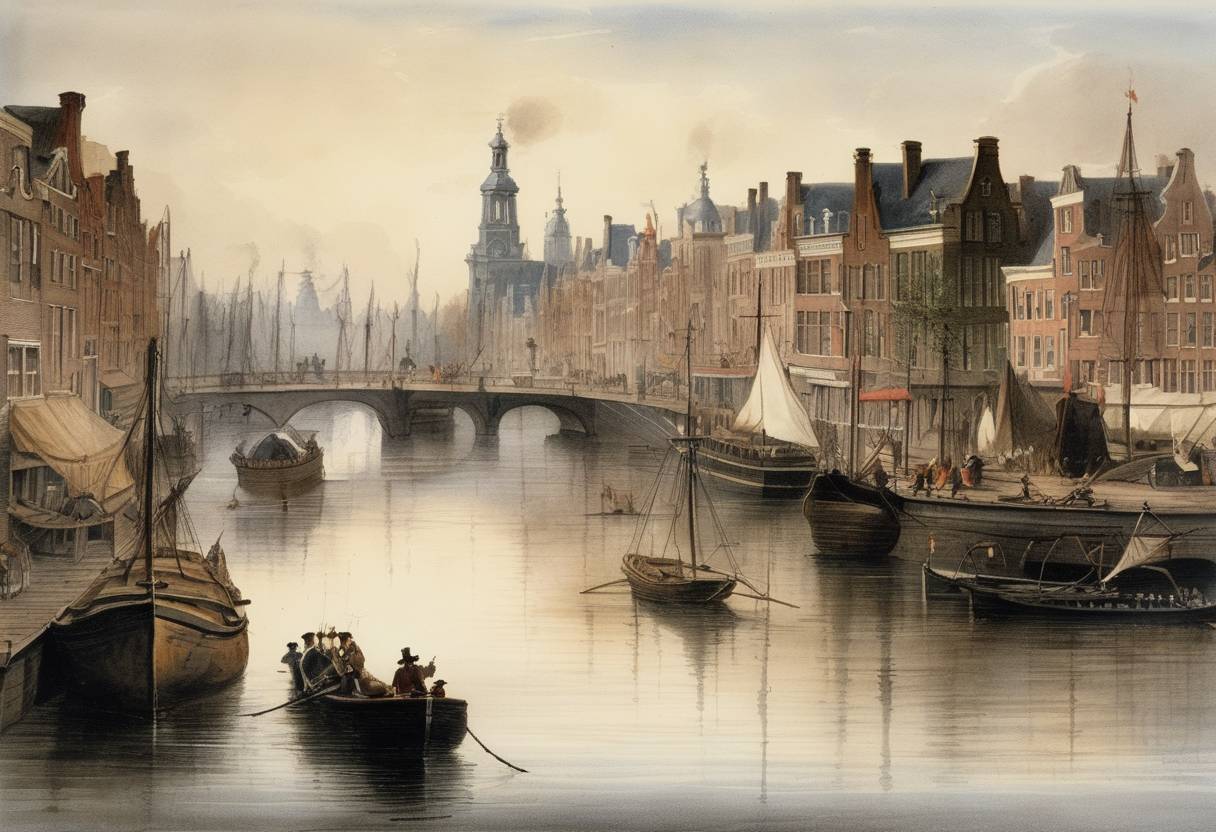
On June 7, 1810, the French forces under Emperor Napoleon Bonaparte began the occupation of Amsterdam during the Napoleonic Wars. This significant event was a part of Napoleon’s broader strategy to consolidate his control over Europe and integrate the Netherlands into the French Empire.
The occupation of Amsterdam occurred in the midst of the Napoleonic Wars, a series of conflicts involving Napoleon’s French Empire against various European coalitions. Prior to this event, the Netherlands had been transformed into the Batavian Republic in 1795, a client state loyal to France, following its invasion and the influence of revolutionary ideals. In 1806, Napoleon installed his brother, Louis Bonaparte, as the King of Holland, effectively making the Kingdom of Holland a satellite state.
However, tensions grew between Napoleon and King Louis, who pursued policies that occasionally conflicted with the interests of the French Empire. This friction culminated in Napoleon’s decision to dissolve the Kingdom of Holland and incorporate Dutch territories directly into the French Empire.
The direct incorporation of the Dutch territories into the French Empire had profound effects:
The occupation of Amsterdam highlights the expansive reach of the Napoleonic Empire and its ability to reshape European political boundaries and systems. The annexation exemplifies how Napoleon extended his hegemony across Europe, disrupting traditional monarchies and establishing new political orders.
After Napoleon’s eventual defeat in 1815, the Congress of Vienna would restore the independence of the Netherlands, leading to the establishment of the United Kingdom of the Netherlands. This historical episode is crucial in understanding the dynamics of power, sovereignty, and cultural shifts in Europe during the early 19th century.
Source: www.britannica.com