Texas Secedes from the United States: February 1, 1861
1861 · Austin, United States
Texas secedes from the United States, joining the Confederate States of America.
November 6, 1861
Jefferson Davis is elected as the President of the Confederate States of America.
Richmond, Confederate States of America | Confederate States of America
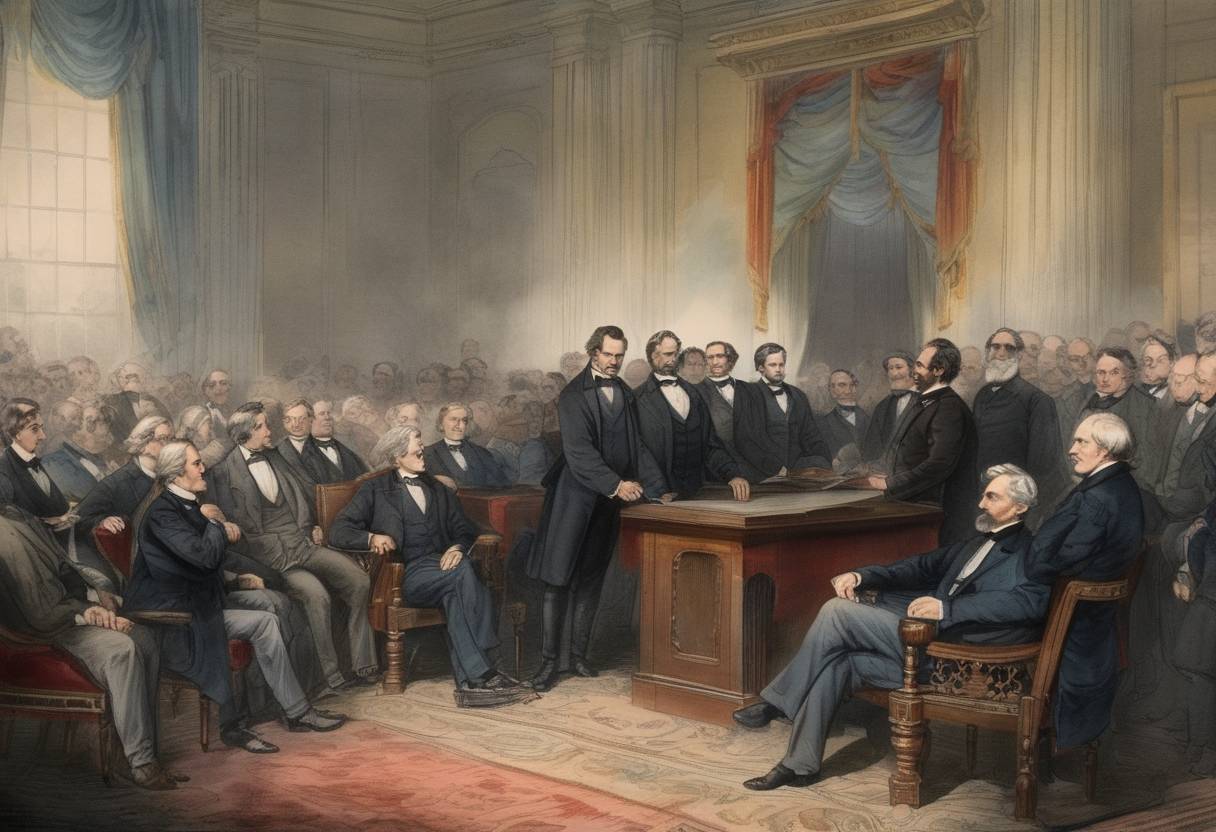
On November 6, 1861, Jefferson Davis was elected as the first and only President of the Confederate States of America. This election formalized Davis’ leadership, as he had already been serving as the provisional president since February 18, 1861, following his inauguration by the Confederate Congress after the secession of southern states from the Union.
The Confederate States of America was formed in response to the election of Abraham Lincoln in November 1860, which triggered the secession of several southern states. These states, motivated by the desire to preserve the institution of slavery and resist perceived threats to their autonomy, formed a new government. The Confederate Constitution, a document closely modeled on the United States Constitution but with greater emphasis on states’ rights and explicitly safeguarding slavery, provided the legal and governmental framework for the Confederacy.
The electoral process for the Confederate presidency was conducted in a manner similar to that of the United States. However, the political landscape was markedly different due to the ongoing American Civil War and the lack of organized opposition parties within the Confederacy. As a result, Jefferson Davis ran unopposed and was elected with overwhelming support from the Confederate electorate.
Davis’ election held significant symbolic and practical importance. As a former U.S. Senator and Secretary of War, Davis brought experience and legitimacy to the nascent Confederate government. His presidency, however, was fraught with challenges. The ongoing Civil War tested his leadership skills and the viability of the Confederacy. Davis faced considerable difficulty in uniting the states under a single national effort due to strong regional loyalties and differing war strategies among Confederate leaders.
Despite these challenges, Davis’ presidency shaped the course of the Civil War and impacted the political landscape of the Confederacy. His leadership style, decisions, and the eventual defeat of the Confederacy left a lasting imprint on American history.
The Confederate States struggled throughout Davis’ presidency due to economic hardship, military defeats, and internal dissent. The Confederacy ultimately surrendered in April 1865, marking the end of the Civil War. Davis was captured by Union forces in May 1865 and was imprisoned for two years before being released. He spent the rest of his life advocating for the Lost Cause narrative, which sought to justify and romanticize the Confederate cause and the Southern way of life.
The election of Jefferson Davis as President of the Confederate States of America remains a pivotal episode in the history of the United States, reflecting the deep divisions that led to the Civil War and the enduring impact of that conflict on American society.
Source: www.britannica.com