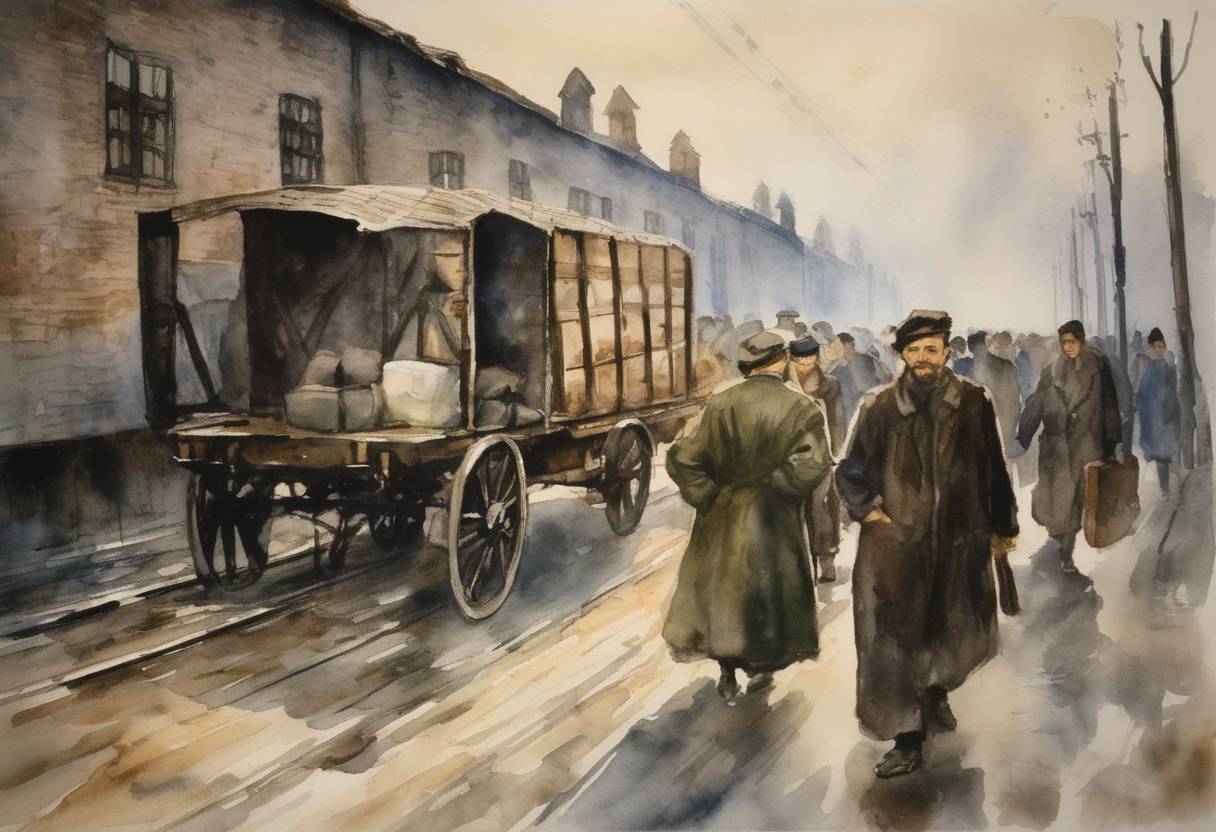
Arrival of the First Transports of Jewish People from Greece at Auschwitz
On April 14, 1944, the first transports of Jewish people from Greece to Auschwitz concentration camp marked a somber chapter in the Holocaust during World War II. This event was part of the broader Nazi effort to systematically exterminate the Jewish population across Europe, a tragic initiative orchestrated under Adolf Hitler’s regime.
Context
By early 1944, Nazi Germany was implementing the “Final Solution,” the code name for the genocide of Jews across territories under German control. Greece had been under Axis occupation since April 1941, and the Jewish community, particularly in Thessaloniki, faced increasing oppression and dispossession as anti-Jewish measures intensified.
The Deportation from Greece
The first mass deportation of Greek Jews from Thessaloniki began in March 1943. By April 1944, additional deportations were occurring, and communities in Athens, Ioannina, and other regions were being systematically rounded up for transport to extermination centers. Jews were forced onto overcrowded trains in inhumane conditions, traveling for days with scarce food, water, or sanitation facilities.
Arrival at Auschwitz
Upon arrival at Auschwitz-Birkenau, the largest of the Nazi concentration camps, the Greek Jews faced separation, selection, and immediate execution or forced labor. The camp administration conducted selections in which many were sent directly to the gas chambers, while those deemed fit for work were subjected to the brutal conditions of forced labor camps.
Aftermath and Significance
The Holocaust resulted in the deaths of approximately six million Jews, including the vast majority of Greece’s pre-war Jewish population of around 77,000. The arrival of Greek Jews at Auschwitz on April 14, 1944, exemplifies the far-reaching scale and systematic nature of the Nazi genocide machinery.
This deportation and subsequent murder of Greek Jews at Auschwitz are reminders of the importance of Holocaust remembrance and education in preventing future genocides and fostering tolerance and understanding across cultures and communities.
Legacies
Survivors and descendants have worked to preserve the memory of these events through memorials and educational initiatives to ensure that the horrors of the Holocaust and the stories of its victims and survivors remain a poignant aspect of historical consciousness. The Greek Jewish community remains dedicated to rebuilding and honoring its rich cultural heritage while commemorating those lost in the Holocaust.