Western Union Discontinues Telegram Service: January 27, 2006
2006 · Englewood, United States
Western Union discontinues its telegram service, marking the end of an era for the telegraph industry.
October 24, 1861
The first transcontinental telegraph message was sent successfully, marking a significant milestone in communication technology in the United States.
Salt Lake City, United States | Western Union
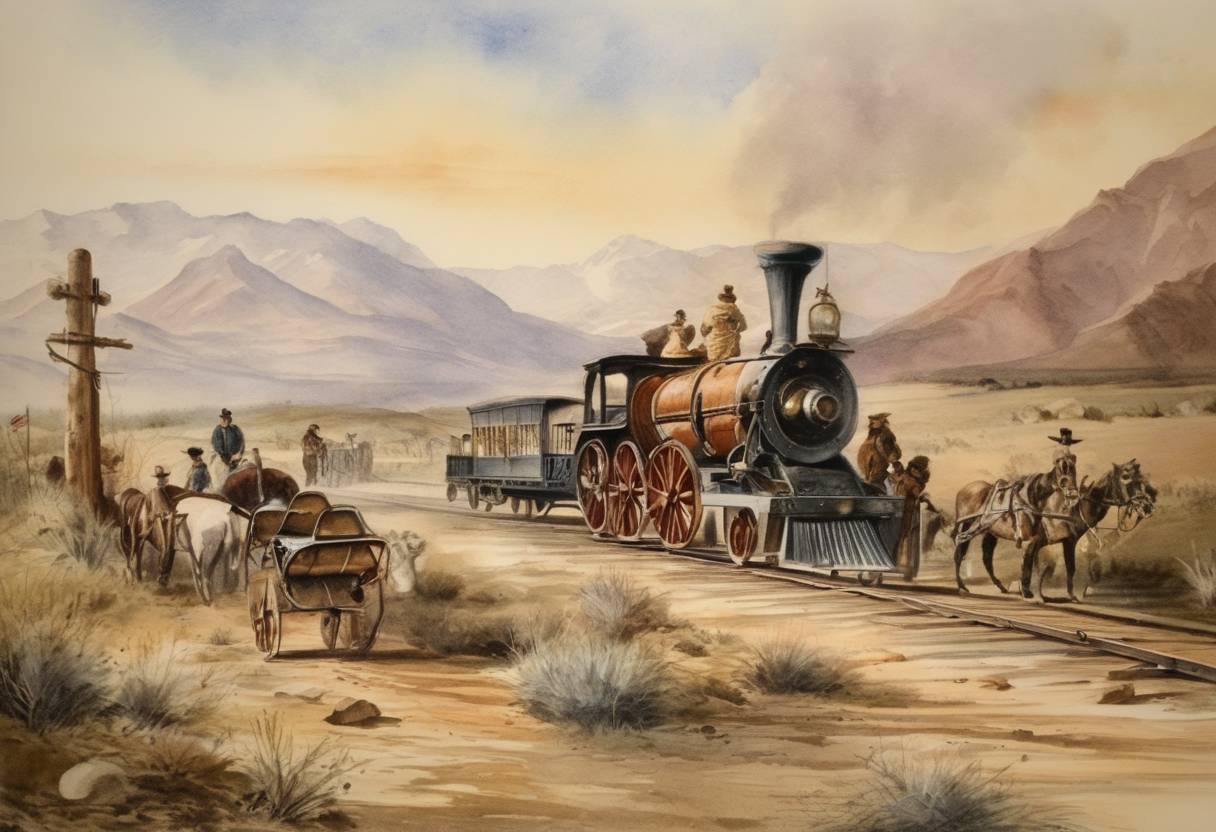
On October 24, 1861, the first transcontinental telegraph message was successfully sent in the United States, marking a pivotal moment in the evolution of communication technology. This achievement brought an end to the Pony Express and revolutionized how information was transmitted across long distances in America.
The idea of constructing a transcontinental telegraph line emerged from the necessity to link the eastern and western parts of the United States more efficiently. Prior to this, communication across the continent relied on the Pony Express, which, although innovative, was slow and costly, taking about ten days to deliver messages from coast to coast.
The project to build a telegraph line across North America was propelled by the Pacific Telegraph Act of 1860, which authorized the extension of a telegraph line from Missouri to California. A substantial financial subsidy was offered by the U.S. government to incentivize construction.
The final segment of the telegraph line was completed on October 24, 1861, when construction crews from the east and west met near Salt Lake City, Utah. The first message was sent by Judge Stephen J. Field in San Francisco to President Abraham Lincoln in Washington, D.C. It read: “The Pacific to the Atlantic sends greetings.” This message symbolized the newfound unity and connection between the eastern and western United States.
The successful transmission of the first transcontinental telegraph message is a landmark moment that significantly improved communications in the United States, setting the stage for subsequent advancements in telecommunications.
Source: en.wikipedia.org