1520 · London, England
King Henry VIII of England ordered a royal inquiry into the legitimacy of his marriage to Catherine of Aragon.
November 14, 1501
Prince Arthur, eldest son of Henry VII of England, marries Catherine of Aragon.
London, England | Tudor monarchy
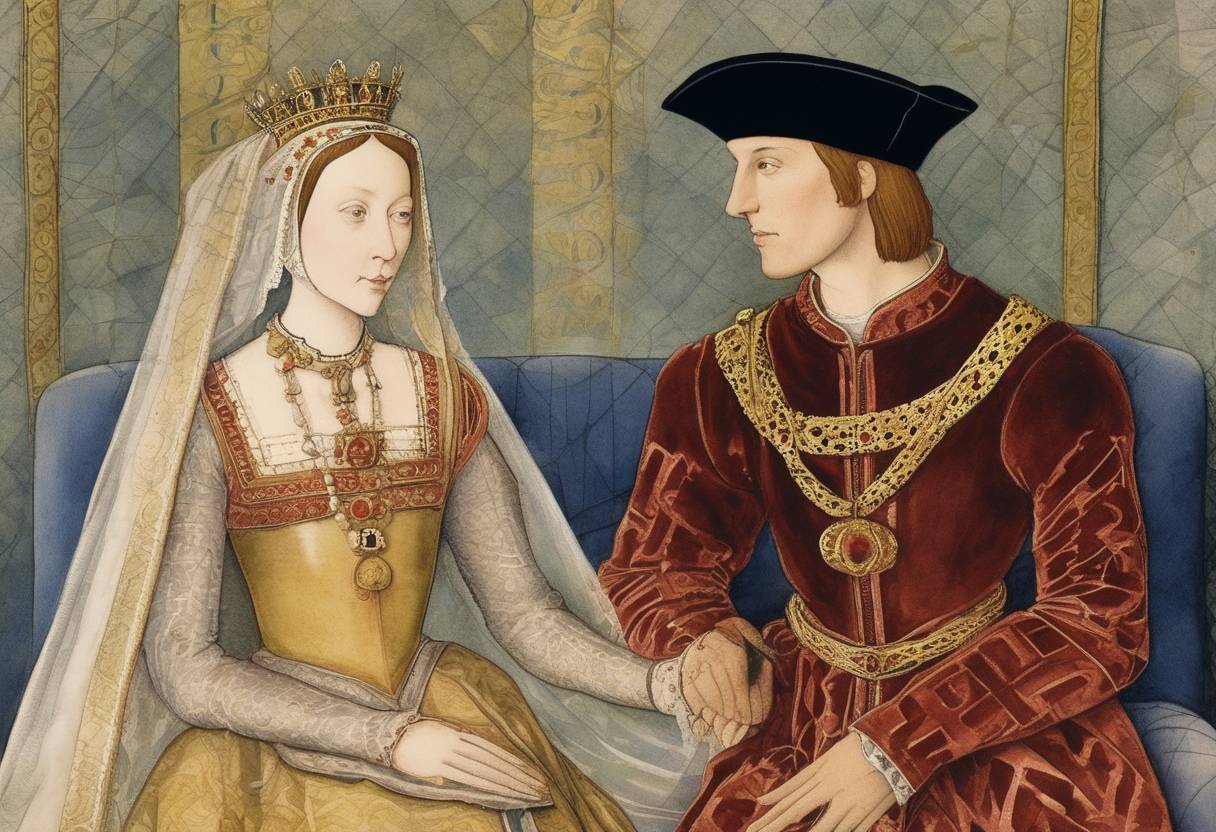
On November 14, 1501, Prince Arthur, the eldest son of King Henry VII of England and Elizabeth of York, married Catherine of Aragon at St. Paul’s Cathedral in London. This union was a significant diplomatic alliance between England and Spain, marking a pivotal moment in early Tudor dynasty politics.
The marriage was intended to strengthen the ties between England and Spain, major European powers, in face of the shifting political landscape of late 15th century Europe. Catherine was the daughter of Ferdinand II of Aragon and Isabella I of Castile, whose own marriage had unified Spain. Negotiations for the marriage began in 1489, formalized through the Treaty of Medina del Campo, which set out mutual defense and trade agreements as well as the marriage contract.
The lavish ceremony took place in the historic St. Paul’s Cathedral, and was attended by many of the nobility from both England and Spain. This event symbolized the union of two powerful dynasties and showcased the wealth and grandeur of the Tudor court. Catherine, aged 15, and Arthur, aged 14, both donned luxurious garments that emphasized the splendor of the occasion.
Despite the grand preparations and expectations, the marriage was short-lived. Arthur fell ill and died on April 2, 1502, just months after their wedding, at Ludlow Castle. Catherine’s future became uncertain, prompting negotiations and complications regarding her dowry and plans for remarriage to Arthur’s brother, Henry, the future Henry VIII.
The untimely death of Arthur had significant long-term ramifications. Catherine’s subsequent marriage to Henry VIII faced numerous challenges and ultimately took centre stage in the English Reformation when Henry sought annulment 24 years later, leading to England’s break with the Catholic Church. This marriage’s failure to produce a surviving male heir also significantly contributed to the Tudor dynasty’s eventual end.
Source: en.wikipedia.org