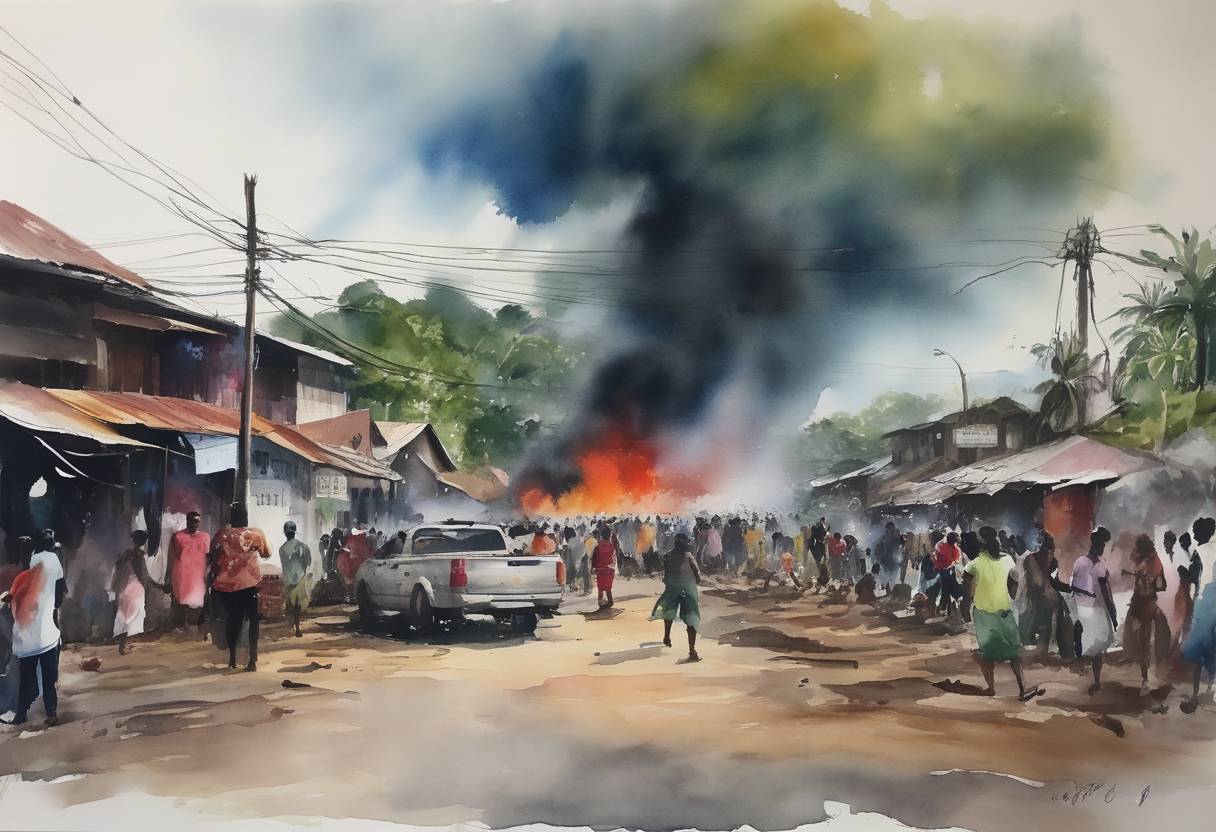
Unrest in Honiara, Solomon Islands on November 21, 2021
On November 21, 2021, the capital of the Solomon Islands, Honiara, experienced significant unrest characterized by protests and extensive looting, particularly targeting the city’s Chinatown district. The upheaval was driven by a mix of domestic dissatisfaction and international geopolitical tensions.
Background and Causes
Tensions had been simmering in the Solomon Islands due to a variety of factors, key among them being dissatisfaction with Prime Minister Manasseh Sogavare’s government. Critics of the government accused it of corruption and poor governance, which had exacerbated economic and social challenges across the islands.
Geopolitical Tensions: One of the primary international issues exacerbating local discontent was the Solomon Islands’ diplomatic switch in 2019 from recognizing Taiwan to establishing formal relations with China. This decision had alienated certain factions within the islands, particularly leaders from the province of Malaita, which continued to support Taiwan and felt marginalized by the central government’s pivot towards Beijing.
Events of November 21
The protests that began on November 21 were the culmination of brewing tensions. Initially peaceful gatherings quickly escalated into violent confrontations with police forces, leading to widespread vandalism and looting. Although the unrest had local roots, the targeting of Chinatown underscored the broader geopolitical undercurrents that were influencing domestic politics in the Solomon Islands.
Key Developments
- Targeting of Chinatown: The looting in Honiara’s Chinatown was symbolic of the local frustration with perceived Chinese influence in the nation’s political and economic sphere.
- Government Response: The Solomon Islands government declared a curfew in an attempt to contain the violence but faced difficulties in reasserting control over the capital.
Aftermath and Consequences
The events highlighted deep-seated issues within the Solomon Islands, from political instability to foreign influence, which were stoking public dissatisfaction. In the aftermath, there was an urgent call for dialogue and restructuring to address the grievances of the population, particularly those in Malaita province.
International Reaction: The unrest drew international attention, prompting responses from various nations concerned about the stability of the region and the potential for further conflicts stemming from geopolitical rivalries.
Broader Historical Significance
The violence in Honiara was not just a reflection of domestic political struggles but also indicative of the broader impact of international diplomatic maneuvers in small Pacific nations. It highlighted the geopolitical chessboard wherein larger powers like China and Taiwan exercise influence through diplomatic allegiance and aid, deeply affecting local politics and stoking internal divisions.
The events of November 21, 2021, in Honiara thus serve as a critical point of reference in understanding the complexities of internal and external political dynamics in the Pacific region.