Richard Branson's Flight to the Edge of Space
2021 · Truth or Consequences, United States
Richard Branson flew to the edge of space aboard Virgin Galactic's VSS Unity, marking a milestone in commercial space travel.
July 10, 2021
Richard Branson flew to space aboard Virgin Galactic's SpaceShipTwo, marking a milestone for space tourism.
Truth or Consequences, United States | Virgin Galactic
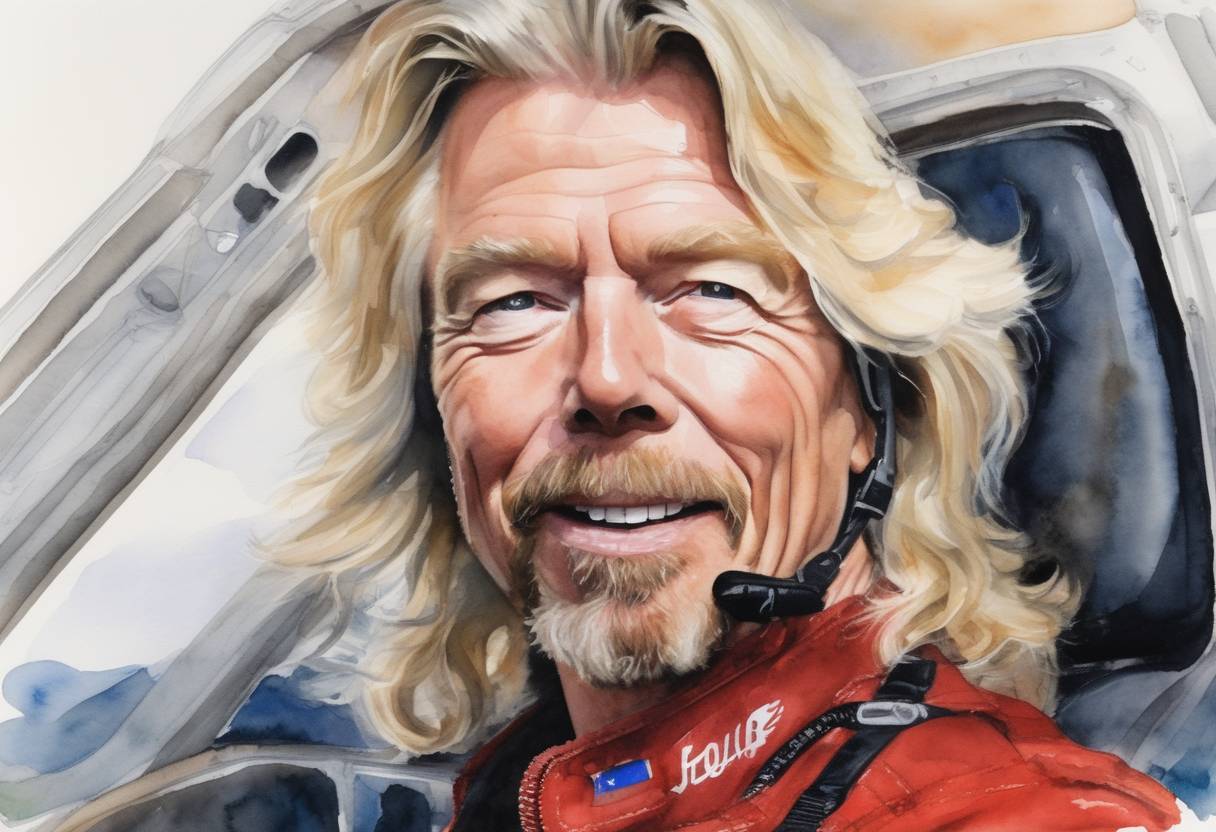
On July 11, 2021, Richard Branson, the founder of Virgin Group, made history by flying to the edge of space aboard Virgin Galactic’s SpaceShipTwo, a milestone for commercial space tourism. This event marked the first time a billionaire flew into space aboard his own spacecraft, setting the stage for a new era of privately funded space exploration.
The mission, named “Unity 22,” was the twenty-second flight test for the VSS Unity, Virgin Galactic’s reusable spaceplane. The spacecraft was carried aloft by the mothership VMS Eve from Spaceport America in New Mexico. After reaching an altitude of approximately 50,000 feet (15,240 meters), VSS Unity was released from the mothership and ignited its rocket motor, soaring upwards to the edge of space.
The crew reached a peak altitude of about 53 miles (approximately 86 kilometers), slightly above the boundary recognized by NASA and the U.S. Air Force as the edge of space, known as the Kármán line. During the flight, the crew experienced approximately four minutes of weightlessness, where they floated in microgravity and observed the curvature of the Earth and the expanse of space.
Alongside Branson, the mission included three Virgin Galactic employees: Beth Moses, the Chief Astronaut Instructor; Colin Bennett, the Lead Operations Engineer; and Sirisha Bandla, the Vice President of Government Affairs and Research Operations. These personnel served to evaluate the astronaut experience and future customer spaceflights.
Branson’s flight represented a significant milestone in the burgeoning field of space tourism. By successfully demonstrating Virgin Galactic’s capability to transport civilians to space, the mission underscored the potential accessibility of space travel beyond professional astronauts and government programs. It also heightened competition with other private space companies, such as Blue Origin and SpaceX, led by billionaires Jeff Bezos and Elon Musk, respectively.
The flight’s success helped validate Virgin Galactic’s business model and its ambition to offer commercial spaceflights for paying customers, advancing the dream of accessible space travel for non-professional astronauts. This event captured global interest, highlighting both the technological achievements and the burgeoning possibilities of commercial human spaceflight.
Source: www.virgingalactic.com