Advisory Opinion on the Israeli West Bank Barrier
Date: July 8, 2004
Background
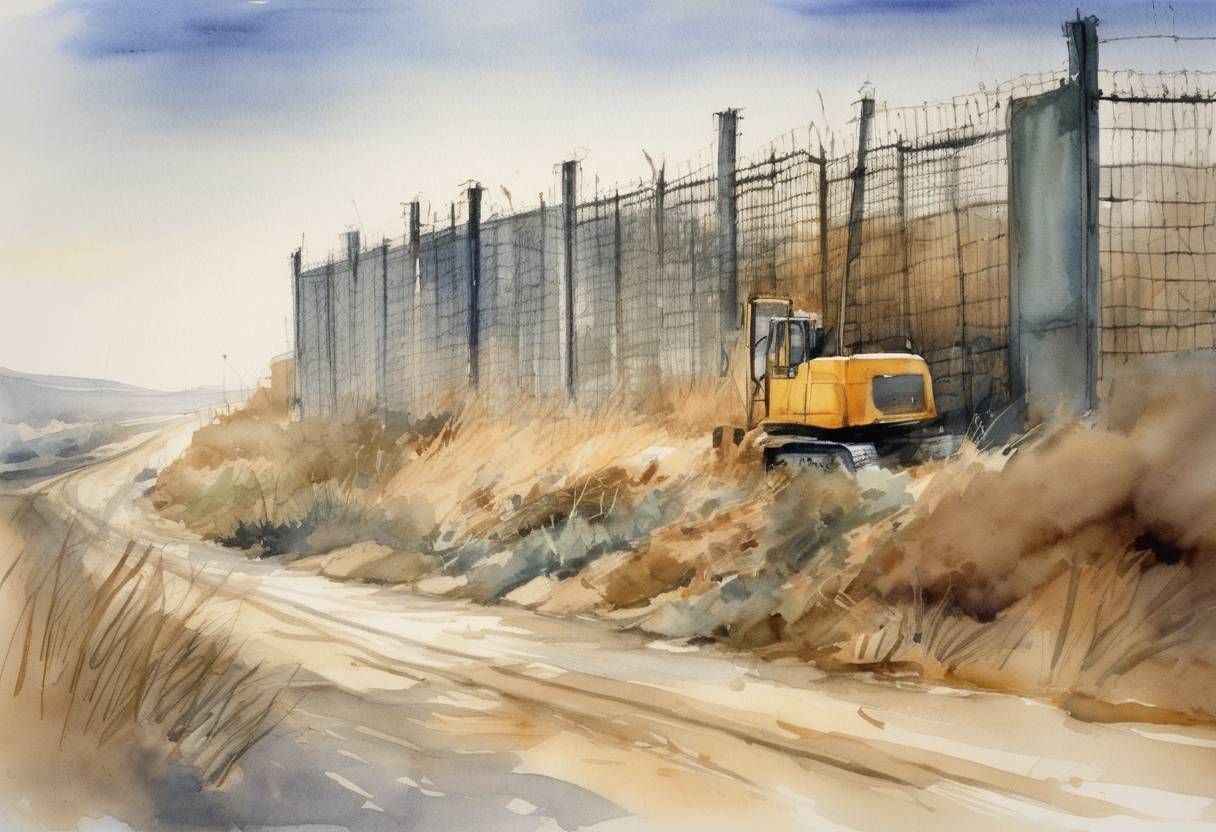
On July 8, 2004, the International Court of Justice (ICJ), the principal judicial organ of the United Nations, issued an advisory opinion concerning the legality of the construction of a barrier by Israel in the Occupied Palestinian Territory, primarily along and within the West Bank.
The construction of the barrier, often referred to as a “security fence” by Israel and as an “apartheid wall” by its critics, began in 2002 during the Second Intifada, a period of intensified Israeli-Palestinian violence. Israel argued that the barrier’s purpose was to protect its civilians from Palestinian militant attacks, including suicide bombings.
Key Findings of the ICJ
International Law Violation: The ICJ concluded that the construction of the barrier violated international law, particularly international humanitarian law and international human rights law.
Breach of Rights: The Court highlighted that the barrier severely restricted the rights of the inhabitants in the West Bank and constituted a de facto annexation of Palestinian territory.
Obligations of Israel: The ICJ advised that Israel must cease construction of the barrier, dismantle sections already built within the Occupied Territories, and compensate Palestinians who suffered material losses due to the construction.
Obligations of Other States: It called upon the international community not to recognize the illegal situation resulting from the construction and refrain from assisting in its maintenance.
Significance and Aftermath
The ICJ’s advisory opinion, although non-binding, held significant moral and political weight. It reinforced the stance held by multiple United Nations resolutions and international entities regarding the nature of the Israeli occupation and the principle of self-determination for Palestinians.
The decision drew varied international reactions. Many countries and organizations viewed it as a reaffirmation of international law principles, while Israel and some allies criticized it for leaning on political considerations rather than security facts. Despite the ICJ’s findings, construction of the barrier continued, leading to ongoing debates about sovereignty, human rights, and security in the region.
The advisory opinion remains a crucial document in discussions about the Israeli-Palestinian conflict and the application of international law to state actions within contested territories.