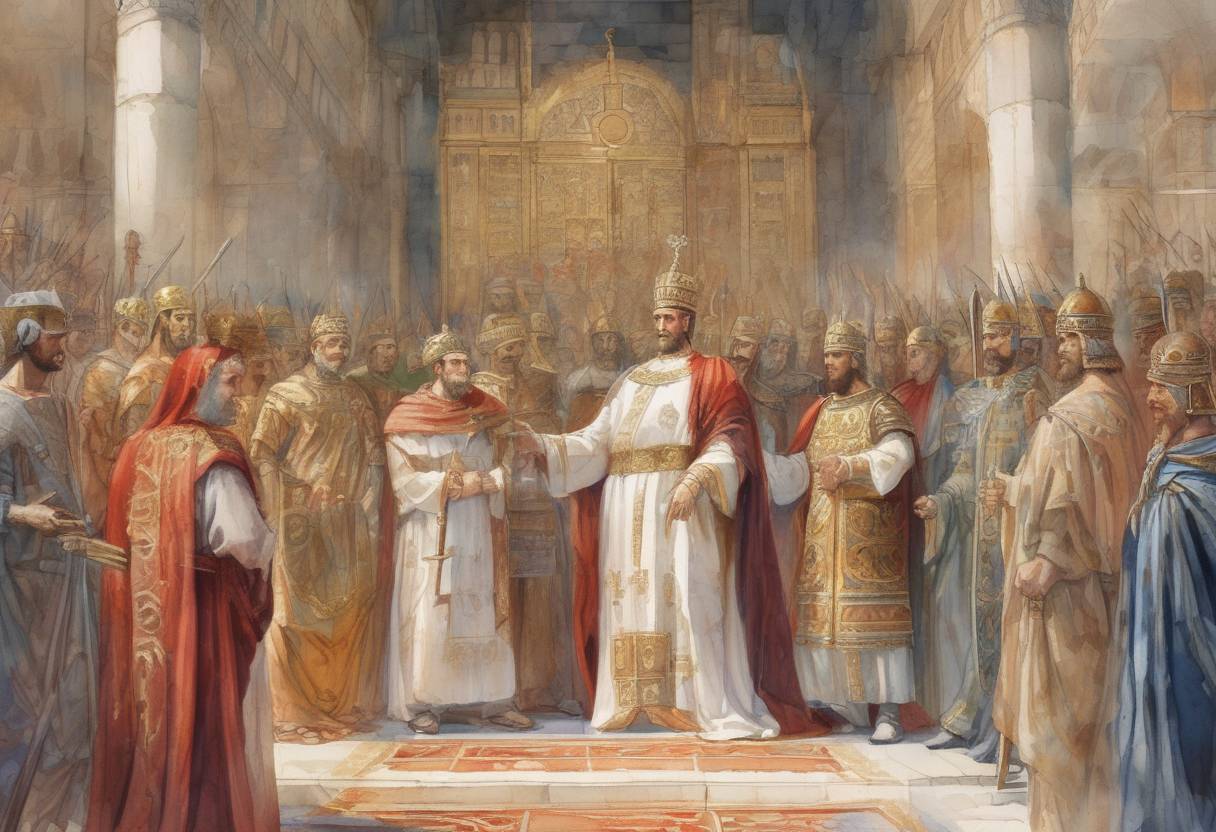
Tiberius II Constantine Crowned as Byzantine Emperor
On August 14, 582, Tiberius II Constantine was crowned as the Byzantine Emperor, succeeding Justin II. This event marked a significant transition in the Byzantine Empire’s leadership during a period of considerable challenges and transformations.
Background
Tiberius II Constantine was born around 520 in Thrace. He rose to prominence in the Byzantine court through his military and administrative skills. Under the reign of Justin II, Tiberius served as a trusted general and was appointed as the comes excubitorum, the commander of the imperial guard. His loyalty and competence earned him the position of Caesar in 574, effectively making him the designated successor to the ailing Justin II.
Justin II’s Reign
Justin II, who became emperor in 565, faced numerous difficulties during his reign, including military conflicts and internal strife. His mental health deteriorated over time, leading to erratic decision-making. Recognizing his incapacity to rule effectively, Justin II adopted Tiberius as his son and co-emperor in 574, entrusting him with the responsibilities of governance.
Tiberius II Constantine’s Ascension
Upon Justin II’s death on August 14, 582, Tiberius II Constantine was formally crowned as the sole emperor. His ascension was characterized by a continuation of policies aimed at stabilizing the empire, which was under threat from external forces such as the Lombards in Italy, the Avars and Slavs in the Balkans, and the Persians in the east.
Reign and Policies
Tiberius II Constantine’s reign, although brief, was marked by efforts to strengthen the empire’s defenses and improve its financial situation. He is noted for his attempts to reform the tax system and his generous distribution of wealth to the poor, which earned him popularity among the populace.
Military Campaigns: Tiberius sought to defend the empire’s borders through strategic military campaigns. He appointed capable generals, such as Maurice, to lead efforts against the Persians, achieving some successes in stabilizing the eastern frontier.
Economic Reforms: Recognizing the empire’s financial strains, Tiberius implemented measures to alleviate the tax burden on his subjects and sought to replenish the imperial treasury through more efficient administration.
Legacy
Tiberius II Constantine’s reign lasted until his death on August 14, 582. Although his time as emperor was relatively short, his efforts to address the empire’s challenges laid the groundwork for his successor, Maurice, who continued many of his policies. Tiberius is remembered for his benevolence and dedication to the welfare of his subjects, leaving a positive legacy in Byzantine history.
His reign is a testament to the complexities of leadership during a turbulent period in the Byzantine Empire, highlighting the importance of strategic governance and reform in maintaining the stability of a vast and diverse realm.