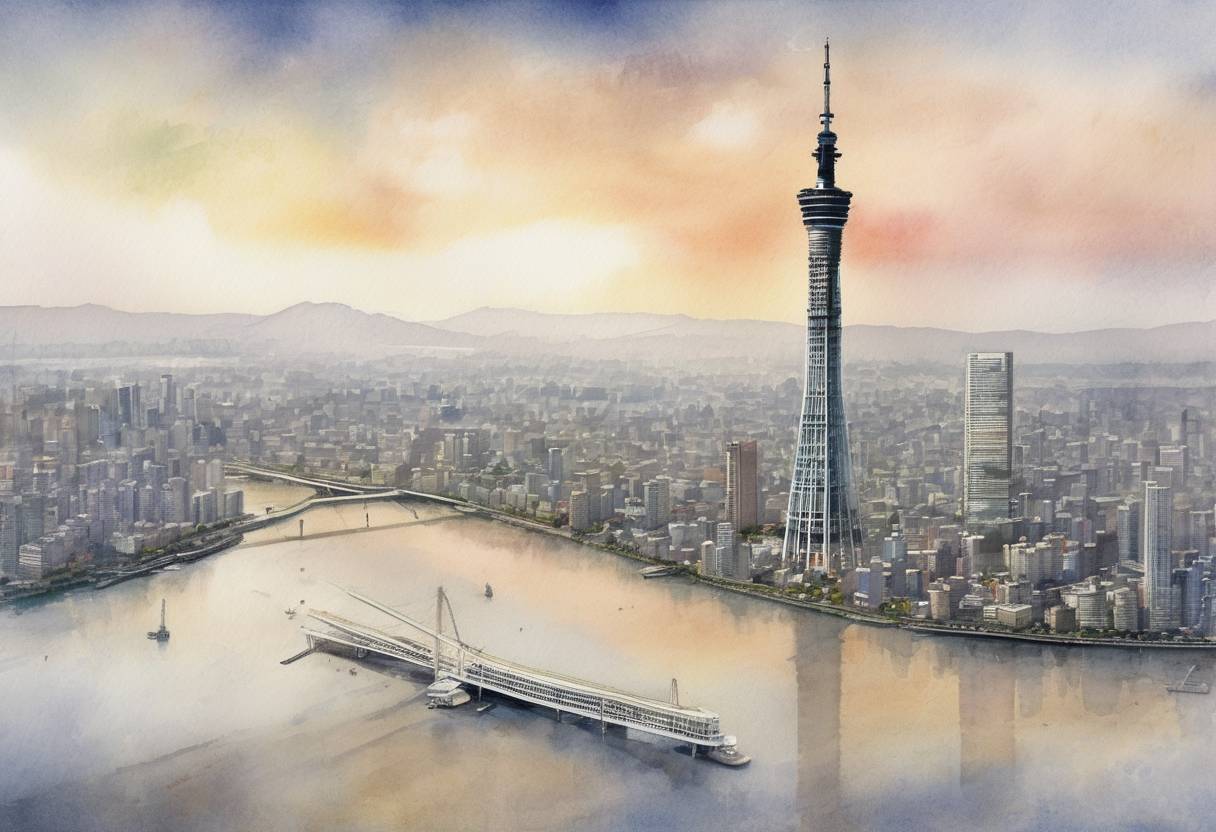
Tokyo Skytree Opens to the Public
On May 21, 2012, the Tokyo Skytree, the tallest tower in the world, officially opened its doors to the public. This monumental event marked a significant achievement in architectural and engineering prowess, as well as a new era for broadcasting and tourism in Japan.
Background and Construction
- Location: The Tokyo Skytree is situated in the Sumida district of Tokyo, Japan.
- Purpose: Primarily constructed as a broadcasting tower, it was designed to provide clear television and radio transmission signals, overcoming the interference caused by the city’s numerous skyscrapers.
- Design: The tower was designed by the architectural firm Nikken Sekkei, with a futuristic aesthetic that blends traditional Japanese design elements.
- Construction Timeline: Construction began in July 2008 and was completed in February 2012.
Specifications
- Height: The Tokyo Skytree stands at 634 meters (2,080 feet), making it the tallest tower in the world and the second tallest structure overall, after the Burj Khalifa in Dubai.
- Structure: The tower features a central column and a lattice structure, providing both stability and aesthetic appeal.
- Observation Decks: It has two main observation decks at 350 meters and 450 meters, offering panoramic views of Tokyo and beyond.
Opening Day
- Ceremony: The opening ceremony was attended by dignitaries and officials, celebrating the tower’s completion and its significance to Tokyo’s skyline.
- Public Access: On its first day open to the public, the tower attracted thousands of visitors eager to experience its breathtaking views and state-of-the-art facilities.
Significance and Impact
- Broadcasting: The Tokyo Skytree plays a crucial role in broadcasting, ensuring high-quality signal transmission across the Kanto region.
- Tourism: As a major tourist attraction, it has significantly boosted local tourism, drawing millions of visitors annually.
- Cultural Symbol: The tower has become an iconic symbol of Tokyo, representing the city’s blend of tradition and modernity.
Aftermath
Since its opening, the Tokyo Skytree has continued to be a focal point for both locals and tourists. It hosts various events and exhibitions, contributing to Tokyo’s cultural and economic landscape. The tower’s success has also inspired other cities to pursue ambitious architectural projects, highlighting the global trend towards constructing iconic urban landmarks.
In summary, the opening of the Tokyo Skytree on May 21, 2012, was a landmark event that underscored Japan’s commitment to innovation and excellence in engineering and design. Its impact on broadcasting, tourism, and cultural identity continues to be felt today.