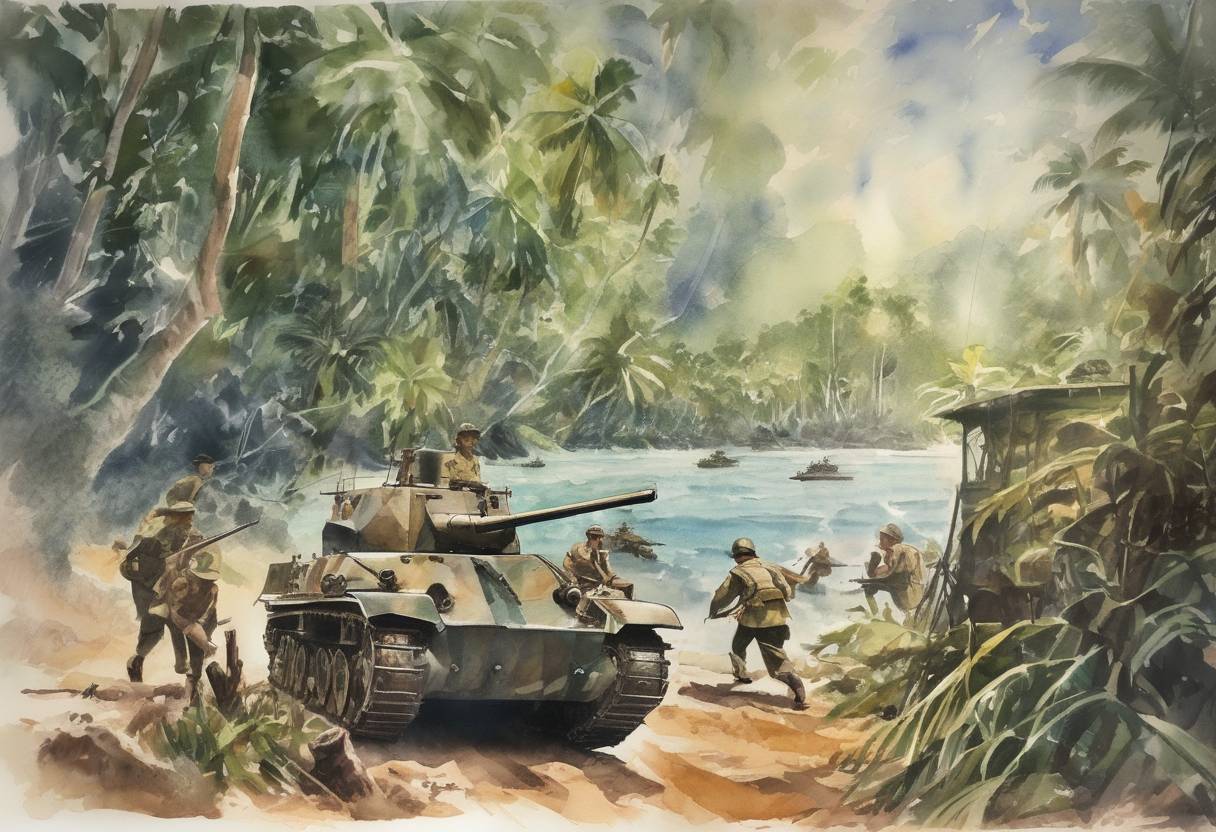
The Battle of Guadalcanal: A Strategic Victory for the Allies
Overview
The Battle of Guadalcanal, which concluded on February 8, 1943, marked a pivotal turning point in the Pacific Theater during World War II. This battle was part of the larger Guadalcanal Campaign, which lasted from August 7, 1942, to February 9, 1943. The campaign was the first major offensive by Allied forces against the Empire of Japan and was crucial in shifting the momentum in favor of the Allies in the Pacific.
Context and Prelude
- Strategic Importance: Guadalcanal, part of the Solomon Islands, held significant strategic value due to its location. The Japanese had begun constructing an airfield on the island, which threatened Allied supply and communication lines between the United States, Australia, and New Zealand.
- Allied Objectives: The primary objective for the Allies was to seize control of the airfield (later named Henderson Field by the Allies) to prevent Japanese expansion and to establish a base for further operations in the Pacific.
Key Events
- Initial Landings: On August 7, 1942, U.S. Marines landed on Guadalcanal, catching the Japanese by surprise. The initial phase saw the successful capture of the airfield.
- Prolonged Engagement: The battle was characterized by intense ground combat, naval battles, and air engagements. Both sides suffered heavy casualties, and the struggle for control of the island was fierce.
- Naval Battles: Several significant naval battles occurred during the campaign, including the Battle of Savo Island and the Naval Battle of Guadalcanal, which were crucial in determining control of the surrounding waters.
Conclusion and Aftermath
- Japanese Withdrawal: By early February 1943, the Japanese, recognizing the untenable situation and the heavy toll on their forces, decided to evacuate their remaining troops from Guadalcanal.
- Allied Victory: The successful conclusion of the campaign on February 8, 1943, marked the first major strategic victory for the Allies in the Pacific. It halted Japanese expansion and began a series of offensive operations by the Allies.
Significance
- Turning Point: The victory at Guadalcanal was a turning point in the Pacific War. It boosted Allied morale and demonstrated that Japanese forces could be defeated in large-scale engagements.
- Strategic Advantage: Control of Guadalcanal allowed the Allies to launch further offensives in the Pacific, eventually leading to the recapture of other territories and the eventual defeat of Japan.
The Battle of Guadalcanal remains a testament to the resilience and determination of Allied forces and is remembered as a critical moment in the broader context of World War II.