The Luftwaffe Bombs Paris: June 3, 1940
1940 · Paris, France
World War II: The Luftwaffe bombs Paris, France, as part of the German offensive in Western Europe.
May 26, 1940
Operation Dynamo, the evacuation of Allied soldiers from Dunkirk, France, began during World War II.
Dunkirk, France | British Armed Forces
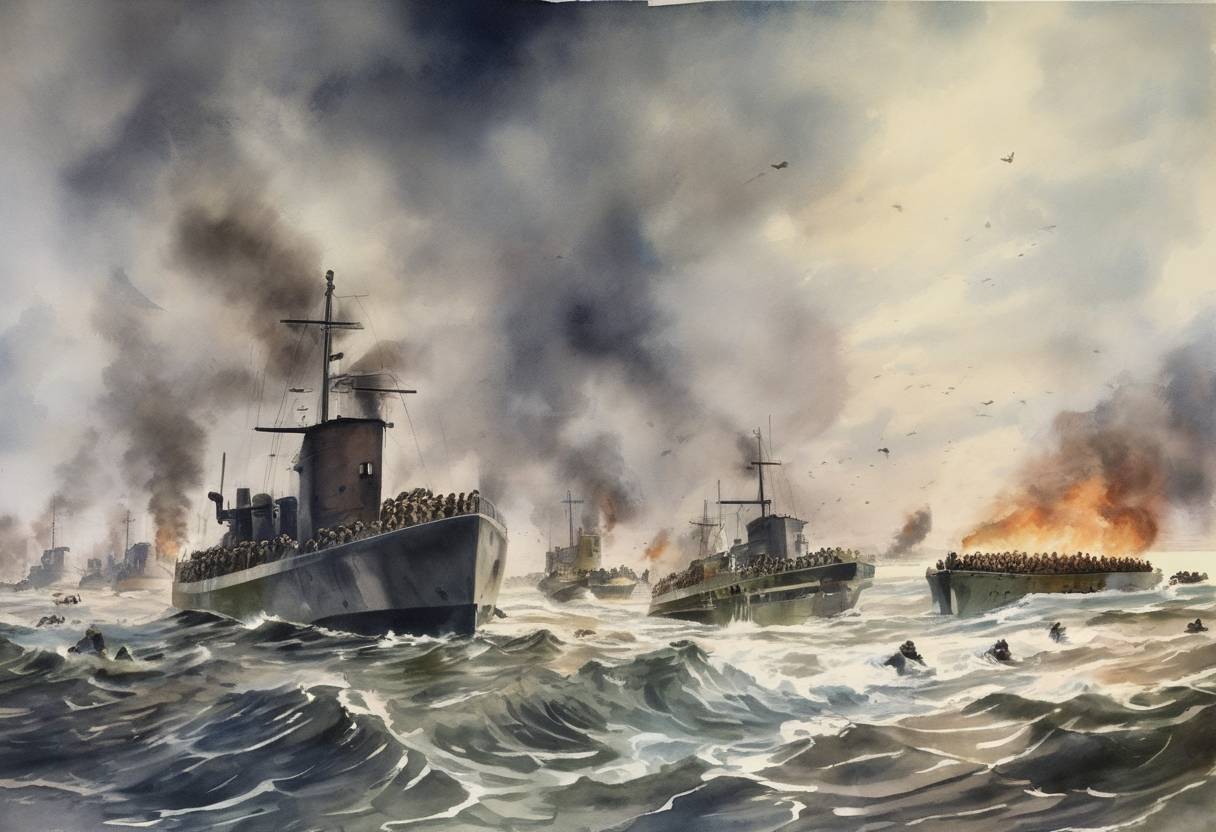
Operation Dynamo, also known as the Dunkirk Evacuation, was a critical military operation during World War II that took place from May 26 to June 4, 1940. The operation involved the evacuation of Allied soldiers from the beaches and harbor of Dunkirk, France, as German forces advanced through Europe.
Prelude to the Evacuation: In May 1940, German forces launched a rapid and highly effective invasion of France and the Low Countries, utilizing blitzkrieg tactics. The German Army quickly outflanked the Maginot Line and pushed the British Expeditionary Force (BEF), along with French and Belgian troops, towards the northern coast of France.
Encirclement at Dunkirk: By late May, approximately 400,000 Allied troops were trapped in a shrinking pocket around Dunkirk. The German advance threatened to annihilate the BEF and its allies, which would have been a catastrophic loss for the Allied war effort.
Initiation of Operation Dynamo: On May 26, 1940, Vice Admiral Bertram Ramsay, operating from the naval headquarters beneath Dover Castle, initiated Operation Dynamo. The plan aimed to evacuate as many troops as possible using a combination of naval vessels and civilian boats.
The “Little Ships”: A remarkable aspect of the evacuation was the involvement of civilian vessels, known as the “Little Ships of Dunkirk.” These included fishing boats, pleasure craft, and merchant marine boats, which played a crucial role in ferrying soldiers from the beaches to larger ships offshore.
Challenges and Execution: The evacuation faced numerous challenges, including constant attacks from the German Luftwaffe, difficult weather conditions, and logistical hurdles. Despite these obstacles, the operation was executed with remarkable efficiency.
Successful Evacuation: By June 4, 1940, approximately 338,000 Allied soldiers had been successfully evacuated to Britain. This included around 198,000 British and 140,000 French and Belgian troops.
Strategic Impact: Although the evacuation was a tactical withdrawal, it was hailed as a “miracle” and a significant morale booster for the Allies. It allowed Britain to preserve a substantial portion of its military forces, which would be crucial for future engagements.
Continued Conflict: Following the evacuation, France continued to resist the German invasion but eventually fell on June 22, 1940. The successful evacuation at Dunkirk allowed Britain to continue the fight against Nazi Germany, setting the stage for future Allied operations, including the D-Day invasion in 1944.
Cultural Legacy: The Dunkirk evacuation became a symbol of resilience and solidarity. It demonstrated the importance of civilian involvement in wartime efforts and highlighted the strategic value of maintaining a strong naval presence.
Operation Dynamo remains a pivotal moment in World War II history, illustrating the complexities of warfare and the capacity for human ingenuity and courage in the face of overwhelming odds.
Source: en.wikipedia.org