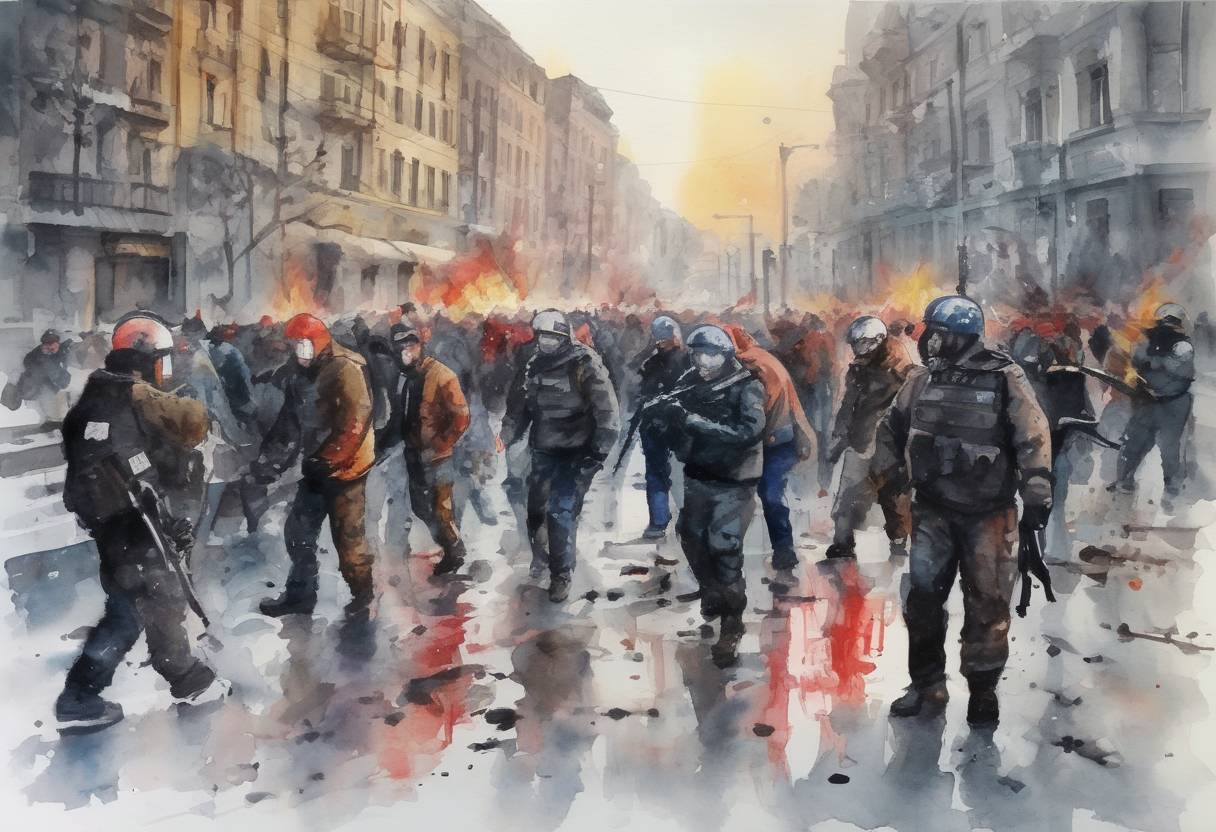
February 20, 2014: Escalation of Violence in Ukraine’s Euromaidan Protests
On February 20, 2014, Ukraine witnessed one of the deadliest days during the Euromaidan protests, a pivotal moment that significantly altered the country’s political landscape. The Euromaidan movement, which began in November 2013, was initially sparked by President Viktor Yanukovych’s decision to suspend an association agreement with the European Union, opting instead for closer ties with Russia. This decision ignited widespread protests, primarily centered in Kyiv’s Maidan Nezalezhnosti (Independence Square).
Context Leading Up to February 20
The protests, which started as peaceful demonstrations advocating for European integration and government transparency, gradually escalated into a broader movement against corruption and authoritarianism. As the protests continued, tensions between demonstrators and the government intensified, leading to violent confrontations.
In January 2014, the Ukrainian government enacted anti-protest laws, further inflaming public dissent. Clashes between protesters and security forces became increasingly violent, with both sides suffering casualties. By mid-February, the situation had reached a boiling point.
Events of February 20, 2014
On February 20, violence peaked as security forces and protesters engaged in deadly clashes. The day began with a tense standoff, but soon erupted into chaos as government snipers reportedly opened fire on demonstrators. The violence resulted in the deaths of over 50 people, including both protesters and police officers, and left hundreds injured.
Eyewitness accounts and video footage from the scene depicted harrowing images of bloodshed and chaos, as protesters attempted to shield themselves with makeshift barricades and shields. The use of live ammunition by security forces marked a significant escalation in the conflict.
Aftermath and Consequences
The events of February 20 had profound implications for Ukraine:
Political Changes: The violence intensified international pressure on President Yanukovych, leading to his eventual ousting. On February 22, 2014, Yanukovych fled Kyiv, and the Ukrainian parliament voted to remove him from office, citing his inability to fulfill his duties.
Formation of a New Government: Following Yanukovych’s departure, an interim government was established, and Oleksandr Turchynov was appointed as acting president. This transition paved the way for new presidential elections, which were held in May 2014, resulting in the election of Petro Poroshenko.
Geopolitical Tensions: The political upheaval in Ukraine heightened tensions between Western countries and Russia. In the weeks following Yanukovych’s removal, Russia annexed Crimea, leading to a protracted conflict in Eastern Ukraine and ongoing geopolitical strife.
Legacy of the Euromaidan: The Euromaidan protests and the events of February 20 became symbols of Ukraine’s struggle for democracy and sovereignty. They highlighted the deep divisions within the country and underscored the challenges of transitioning from a post-Soviet state to a more democratic society.
The tragic events of February 20, 2014, remain a significant chapter in Ukraine’s history, marking a turning point in its quest for political reform and alignment with Western Europe.